Adventures in Church Planting
What Are You Waiting For — A Burning Bush?
It wasn’t that long ago that I sat in a meeting at one of our Open Bible national conventions and saw a graph displaying the decline of our movement — a movement I’ve grown up in and cherish. It was both difficult and saddening to watch that presentation. I appreciated the honesty of our leadership in not sugarcoating the statistics. But at the same time, I saw it as a challenge to rise up and take back what we’ve given up.
I’ve been an Open Bible pastor for many years and am currently doing part-time missions work in Africa via our Church Planters Training Academy.
As we prepare for another church planting academy in Liberia this summer, I find myself wanting to issue a challenge closer to home — to the men and women of Open Bible, USA. Specifically, I want to challenge you to seek God’s call on your life to plant a new church.
This isn’t a small ask. But it may be the most important one I can make.
Few tasks in ministry carry higher stakes — or greater promise — than planting a new church. As Tim Keller wrote in his article “Why Plant Churches?” “Virtually all of the great evangelistic challenges of the New Testament are basically calls to plant churches, not simply to share the faith.” That conviction is baked into our own denominational DNA. Our mission statement says it right out loud: make disciples, develop leaders, and multiply churches.

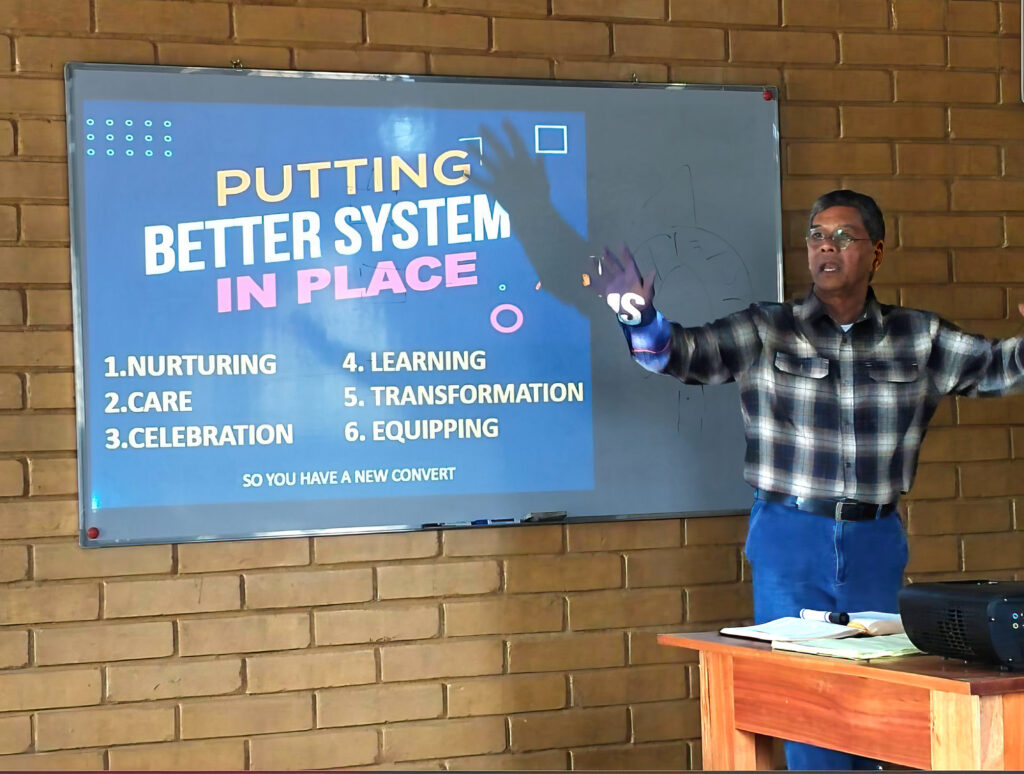
We currently have roughly a dozen active church plants across the United States: multicultural works, Hispanic congregations, urban plants, rural plants. My mother, Marcy Kopp, started what became the Church Planting Endowment Fund years ago to underwrite grants for exactly these kinds of works. That fund exists because she believed Open Bible should be planting churches. She was right. The question is whether we’re doing enough of it.
The most important factor in church planting isn’t what you think.
From years of researching church planting — research we use directly in guiding our efforts in Africa — I’ve learned something that surprises most people. The number one factor in a successful church plant isn’t the right location. It isn’t the budget. It isn’t even denominational support. Those things matter. But the single most important factor is the church planter.
John Maxwell has famously said of leadership, “Everything rises and falls on leadership.” The same is true of church planting. Research consistently confirms that in the early life of a new church the readiness of the primary leader is the single most important factor in its success or failure. No other variable comes close.
So, the question worth asking is this: Are you that person?
Dr. Charles Ridley spent years studying effective church planters and identifying the characteristics that distinguish those most suited for the work. His research led to thirteen behavioral characteristics, including visioning capacity, the ability to relate to the unchurched, flexibility and adaptability under pressure, the capacity to build deep relationships, and the ability to recognize, develop, and release others into ministry according to their gifts. These aren’t personality preferences. They are field-tested predictors of whether a plant lives or dies.
Are you called?
Calling matters more than any characteristic on Ridley’s list. But calling rarely arrives in a vacuum. Someone usually names it first.

Years ago, a young evangelist named Butch Pluimer challenged me (and many others) to consider entering the ministry. We answered the call. I don’t know where I’d be without that challenge. The Apostle Paul did the same for Timothy. He pursued him, shaped him, and held him accountable. In his final letter, he charged Timothy directly: “Preach the word. Be ready in season and out of season” (2 Timothy 4:2 NKJV). And in 2 Timothy 2:2 he gave us the multiplication principle in a single sentence: “The things you have heard me say in the presence of many witnesses entrust to reliable people who will also be qualified to teach others” (NIV). Four generations of ministry transmission in one verse.
That’s the model: seasoned leaders who are passionate about church planting, deliberately seeking out the next generation of planters and issuing the challenge — not waiting for volunteers to raise their hands.
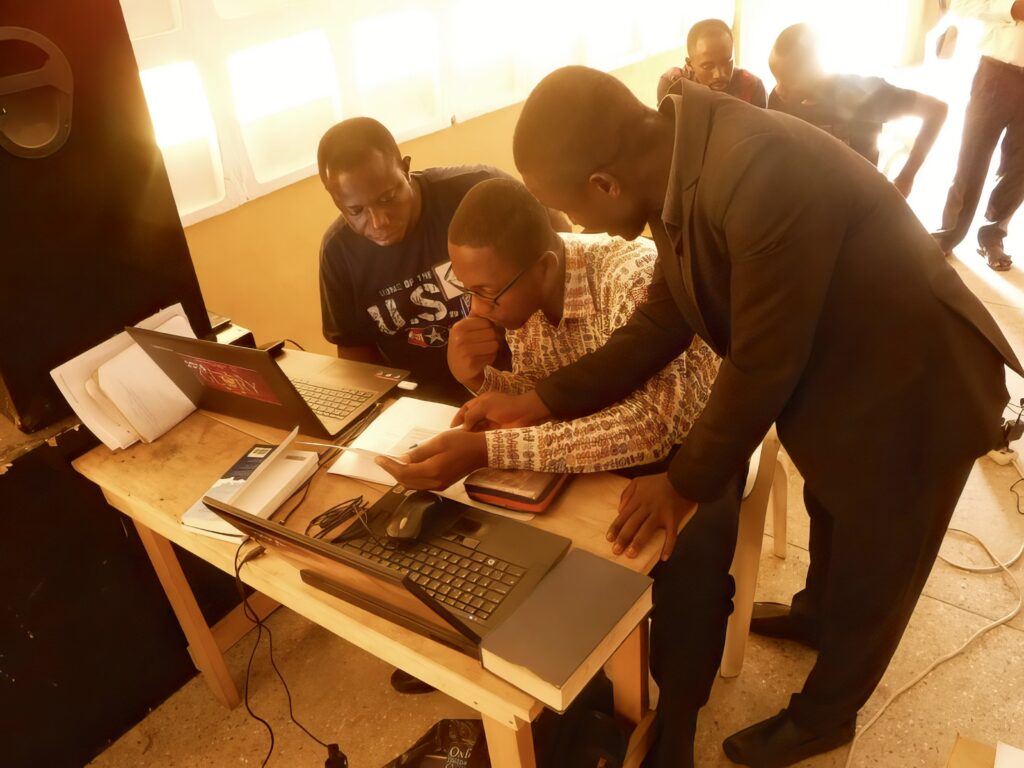
But let me say this plainly: every planter needs a coach. A mentor. Timothy needed Paul. A young person stepping into ministry needed someone older, wiser, steadier — someone who had already walked through the fire and could show him how to stand in it. Nothing has changed. A call to plant churches is vital, but so is having a mature believer to guide, correct, encourage, and steady the work. At the Academy, we insist that every planting team has a coach.
The single most important factor is the church planter.
Coaching is a gift and a calling, and it could be the perfect fit for retired pastors and missionaries. All that wisdom, all those miles, all those scars — someone starting their first church could draw from a seasoned minister’s lifetime of experience.
We need more Butch Pluimers. We need mature men and women in Open Bible who will look a younger leader in the eye and say: I think God has called you to plant a church. Have you prayed about it?
That challenge changed my life. It can change someone else’s. Is it your challenge to give? Don’t wait for a burning bush.
About the Author


Rich Kopp was born and raised in Rapid City, South Dakota, where he grew up attending Open Bible Church. After graduating from high school, he attended Open Bible College and went on to pastor Open Bible churches in Kansas, Iowa, Montana, and Colorado. Although retired from full-time ministry, Rich and his wife, Patti, now reside in Windsor, Colorado, where they continue serving part time as at-large missionaries with the Open Bible Missions Department. In 2016, Kopp and longtime friend and fellow alumnus Nicholm Mahabir founded the Church Planters Training Academy, which has since launched academies in Ghana, Liberia, and Kenya. Drawing from their own church planting experience, they have trained more than one hundred men and women, many of whom have gone on to plant churches across Africa. Their work is built on a simple conviction: churches should plant churches.