


Adventures in Church Planting
When Church Moved to the Neighborhood: Lessons in Love and Mission

When God called me and my wife, Tammie, to start Green Branch Church in 2020, we knew He was leading us to do things differently than we had done before. He didn’t ask us to be edgy or creative. He didn’t ask us to research the latest church planting trends or analyze innovative social media algorithms. God simply asked us to be obedient and follow Him every step of the way. In Matthew 16:18, Jesus told His disciples, “…I will build my church, and all the powers of hell will not conquer it” (NLT). We chose to believe Him and follow His lead.
In the early season of planting Green Branch, we would meet weekly at a leader’s house, eat amazing food, and live in community with people we loved. We would have awesome biblical discussions and invest in each other’s lives. (Oh, and did I mention the food? We were loving God with all our hearts, souls, minds, and stomachs.) But there was a problem. We were spending so much time with other Christians we had no room in our lives to reach our neighbors.

We were putting so much time and energy into keeping the first greatest commandment that we were overlooking the second. In fact, we were not loving our neighbors at all. We were liking them; we were not loving them. We waved at our neighbors, were polite, spoke kindly to them, and invited them to church, but none of that was love. We would literally drive past the forty-six houses in our neighborhood to be part of a community of Christ followers in a different part of the city. The Holy Spirit was telling us to stop doing so much church stuff and step back into our neighborhood.
The Holy Spirit was telling us to stop doing so much church stuff and step back into our neighborhood.
Tammie and I have been going to church all our lives. We’ve taken classes on evangelism, read books, listened to podcasts, and sat through hundreds of sermons on how to reach the lost. But this knowledge did nothing to foster God’s love for our neighbors in us. We were feeling the tension that exists between designing programs to help Christians reach people and actually reaching them. Sometimes it’s easy to see people as projects.
The first thing God did to help us reach our neighbors was show us the hard truth about ourselves. We had taken the “love your neighbor as yourself” commandment passively and not actively. We were waiting for them to come to us: to show up at our door with a spiritual question, initiate some deep spiritual conversation at the grocery store, or show up at a church gathering. That just wasn’t going to happen. The Holy Spirit reminded us we were God’s plan “A” on how He would reach our neighbors.

When I was growing up, my youth pastor used to say, “The best way to spell love is T-I-M-E.” We remembered that advice and started looking for excuses to spend time with our neighbors. We asked ourselves how we could love our neighbors “as we love ourselves.” The idea of “same way, same time, same place” kept coming to mind. What were things we could do with our neighbors at the same time, in the same place, and in the same way we would do them for ourselves? The answer was FOOD! We all must eat, so why not eat the food we love, together, at the same time. We started inviting our neighbors to our house for dinner on Thursday nights. God gave us two goals for these neighbor nights: love your neighbors and eat delicious food.
The next thing God did to help us reach our neighbors was give us His love for them. Each dinner brought more connection and commonality as our combined history was being made. The spiritual conversations did not start happening right away. What happened was WE began to change. That elusive love for our neighbors began to bloom with every bite. The more time we spent, the more God’s love grew in us. At the same time, our neighbors’ love for us was growing. Simply obeying God had turned our neighbors into friends, and now we love our friends!

Before each dinner, we would pray and ask God to turn up the spiritual temperature. We would walk around our neighborhood praying for our friends as we passed their houses. It was a slow process. We kept reminding ourselves that we were responsible to be faithful while God was responsible for the fruit. Over time, we have begun to see evidence of that fruit.
We were asked to perform a memorial service for the father of one of our neighbor friends. They held the service at their house one Saturday afternoon. It was an amazing time of love, grief, and healing for the family. We listened to stories about their Pop and joined them in their sorrow. They gave us the opportunity to show the love of Jesus and explain the gospel to twenty people in their living room.
God changed our lives through the second greatest commandment. Our mission field did not change; God changed us within our mission field.
Other friends have asked us to teach their kids about Jesus. People that formerly would not set foot in our “Bible House” now ask if we will pray at the neighborhood block parties. On Thursday nights we’ve begun praying over specific neighbors who come. I cannot wait to see what God is going to do throughout this next year!
God changed our lives through the second greatest commandment. Our mission field did not change; God changed us within our mission field. His call to us is simple: love your neighbor the same way you love yourself, at the same time, in the same place.
About the Author

Davy Saunders
Davy and Tammie Saunders planted Green Branch Church, a micro church community, in 2022. They concentrate on making disciples, building community, and joining Jesus on mission. They live and minister in Williamsburg, Virginia, where Tammie is a kidney resource nurse case manager and Davy is a co-vocational roofing pastor. They have been married for thirty-five years and have two adult children and two amazing grandchildren.






It wasn’t that long ago that I sat in a meeting at one of our Open Bible national conventions and saw a graph displaying the decline of our movement — a movement I’ve grown up in and cherish. It was both difficult and saddening to watch that presentation. I appreciated the honesty of our leadership in not sugarcoating the statistics. But at the same time, I saw it as a challenge to rise up and take back what we’ve given up.
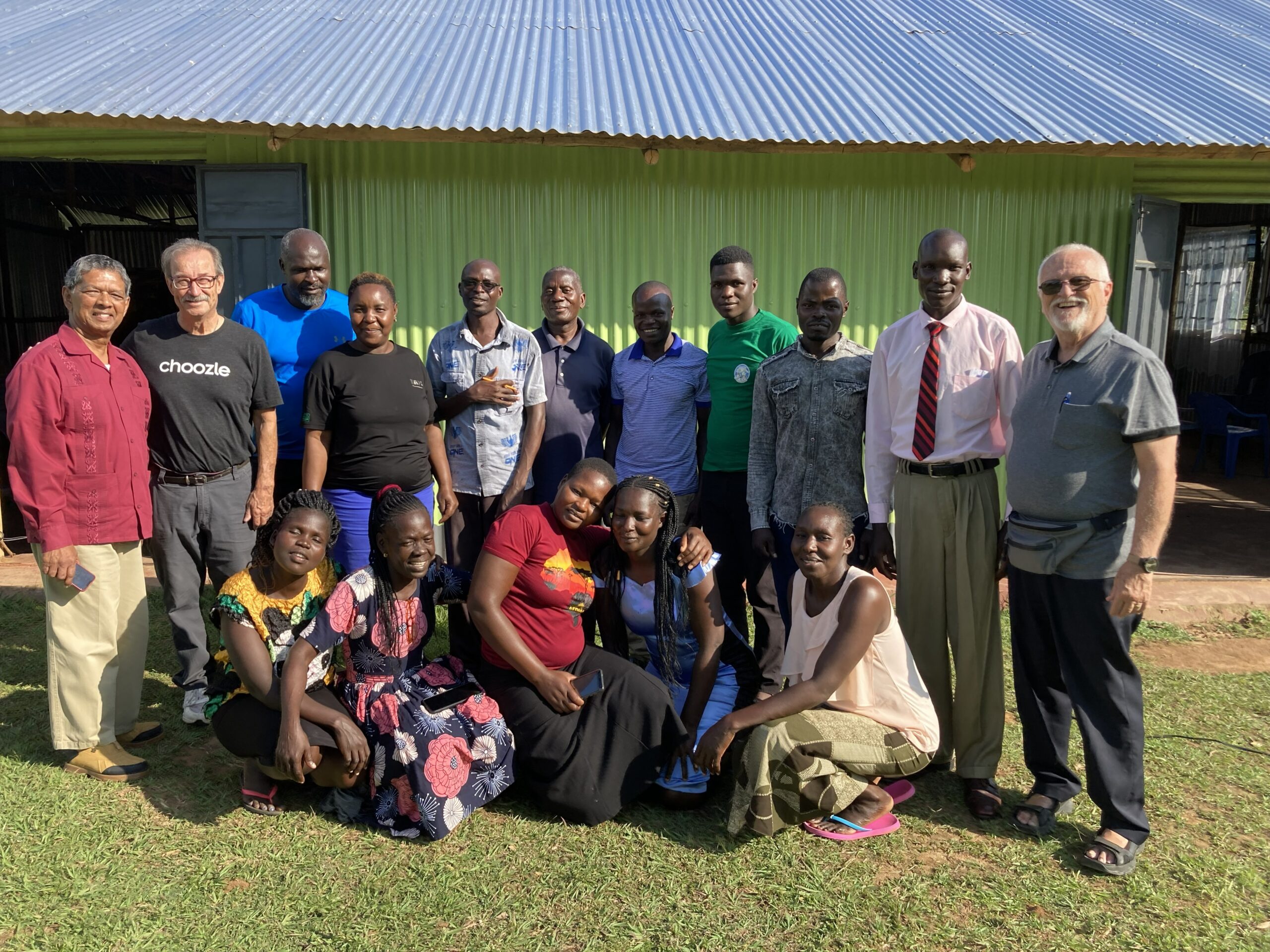
I’ve been an Open Bible pastor for many years and am currently doing part-time missions work in Africa via our Church Planters Training Academy.
As we prepare for another church planting academy in Liberia this summer, I find myself wanting to issue a challenge closer to home — to the men and women of Open Bible, USA. Specifically, I want to challenge you to seek God’s call on your life to plant a new church.
This isn’t a small ask. But it may be the most important one I can make.
Few tasks in ministry carry higher stakes — or greater promise — than planting a new church. As Tim Keller wrote in his article “Why Plant Churches?” “Virtually all of the great evangelistic challenges of the New Testament are basically calls to plant churches, not simply to share the faith.” That conviction is baked into our own denominational DNA. Our mission statement says it right out loud: make disciples, develop leaders, and multiply churches.
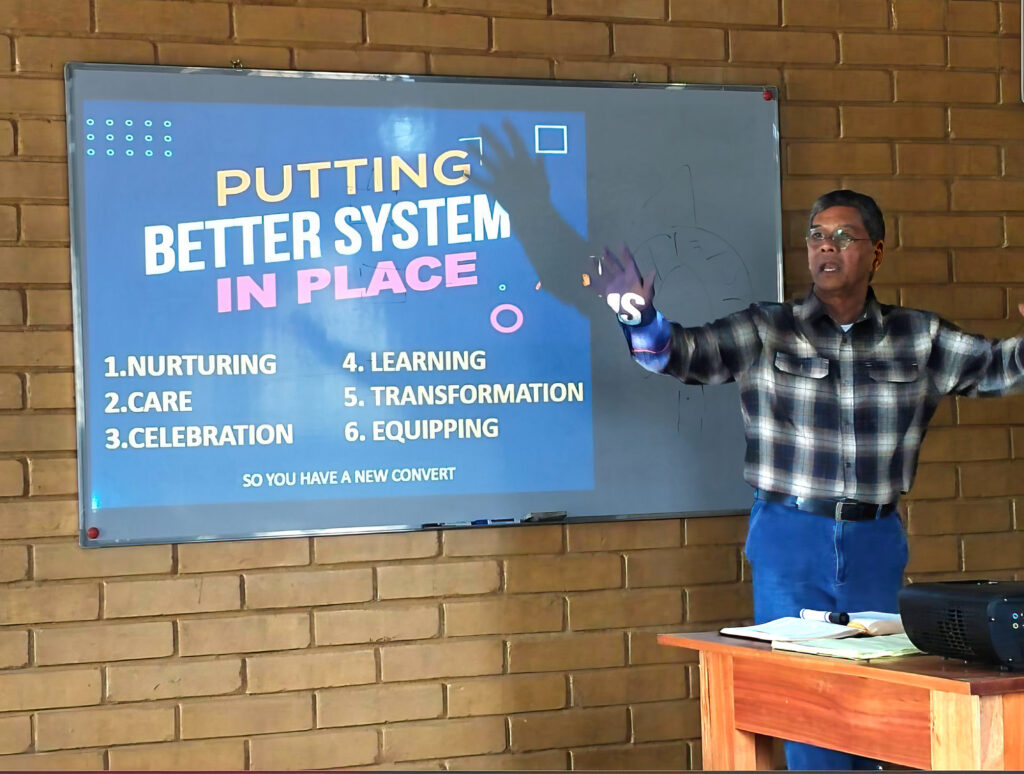
We currently have roughly a dozen active church plants across the United States: multicultural works, Hispanic congregations, urban plants, rural plants. My mother, Marcy Kopp, started what became the Church Planting Endowment Fund years ago to underwrite grants for exactly these kinds of works. That fund exists because she believed Open Bible should be planting churches. She was right. The question is whether we’re doing enough of it.
The most important factor in church planting isn’t what you think.
From years of researching church planting — research we use directly in guiding our efforts in Africa — I’ve learned something that surprises most people. The number one factor in a successful church plant isn’t the right location. It isn’t the budget. It isn’t even denominational support. Those things matter. But the single most important factor is the church planter.
John Maxwell has famously said of leadership, “Everything rises and falls on leadership.” The same is true of church planting. Research consistently confirms that in the early life of a new church the readiness of the primary leader is the single most important factor in its success or failure. No other variable comes close.
So, the question worth asking is this: Are you that person?
Dr. Charles Ridley spent years studying effective church planters and identifying the characteristics that distinguish those most suited for the work. His research led to thirteen behavioral characteristics, including visioning capacity, the ability to relate to the unchurched, flexibility and adaptability under pressure, the capacity to build deep relationships, and the ability to recognize, develop, and release others into ministry according to their gifts. These aren’t personality preferences. They are field-tested predictors of whether a plant lives or dies.
Are you called?
Calling matters more than any characteristic on Ridley’s list. But calling rarely arrives in a vacuum. Someone usually names it first.

Years ago, a young evangelist named Butch Pluimer challenged me (and many others) to consider entering the ministry. We answered the call. I don’t know where I’d be without that challenge. The Apostle Paul did the same for Timothy. He pursued him, shaped him, and held him accountable. In his final letter, he charged Timothy directly: “Preach the word. Be ready in season and out of season” (2 Timothy 4:2 NKJV). And in 2 Timothy 2:2 he gave us the multiplication principle in a single sentence: “The things you have heard me say in the presence of many witnesses entrust to reliable people who will also be qualified to teach others” (NIV). Four generations of ministry transmission in one verse.
That’s the model: seasoned leaders who are passionate about church planting, deliberately seeking out the next generation of planters and issuing the challenge — not waiting for volunteers to raise their hands.
But let me say this plainly: every planter needs a coach. A mentor. Timothy needed Paul. A young person stepping into ministry needed someone older, wiser, steadier — someone who had already walked through the fire and could show him how to stand in it. Nothing has changed. A call to plant churches is vital, but so is having a mature believer to guide, correct, encourage, and steady the work. At the Academy, we insist that every planting team has a coach.
The single most important factor is the church planter.
Coaching is a gift and a calling, and it could be the perfect fit for retired pastors and missionaries. All that wisdom, all those miles, all those scars — someone starting their first church could draw from a seasoned minister’s lifetime of experience.
We need more Butch Pluimers. We need mature men and women in Open Bible who will look a younger leader in the eye and say: I think God has called you to plant a church. Have you prayed about it?
That challenge changed my life. It can change someone else’s. Is it your challenge to give? Don’t wait for a burning bush.
About the Author
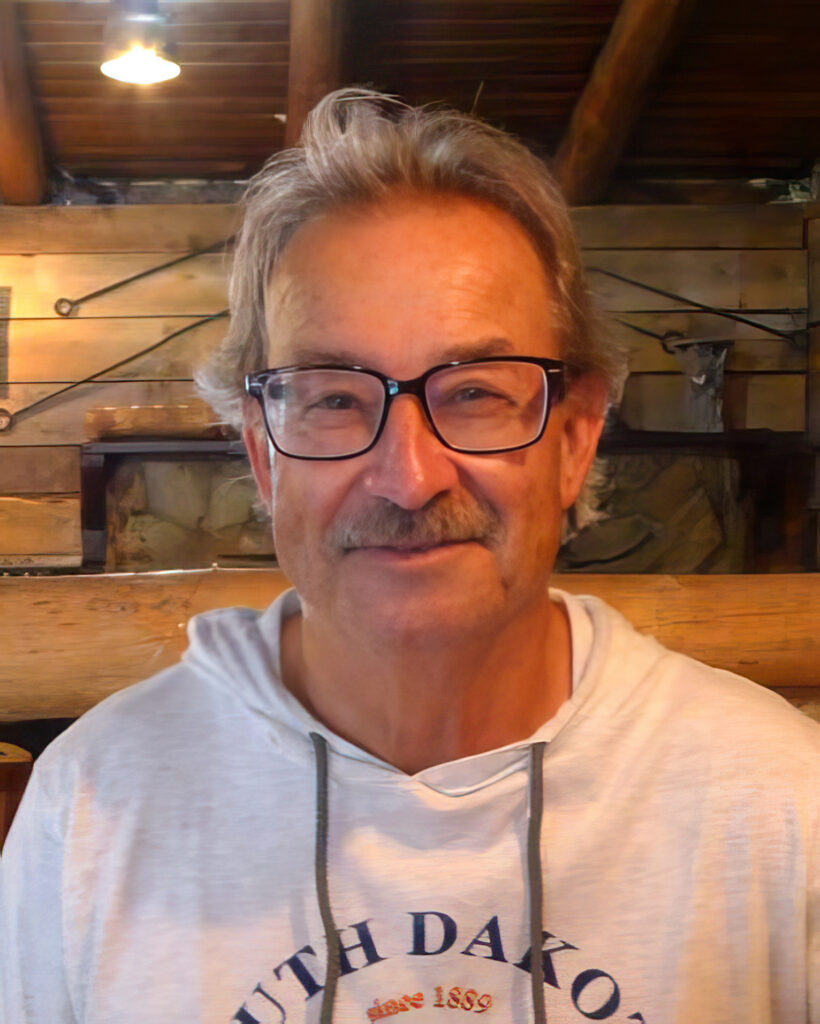
Rich Kopp was born and raised in Rapid City, South Dakota, where he grew up attending Open Bible Church. After graduating from high school, he attended Open Bible College and went on to pastor Open Bible churches in Kansas, Iowa, Montana, and Colorado. Although retired from full-time ministry, Rich and his wife, Patti, now reside in Windsor, Colorado, where they continue serving part time as at-large missionaries with the Open Bible Missions Department. In 2016, Kopp and longtime friend and fellow alumnus Nicholm Mahabir founded the Church Planters Training Academy, which has since launched academies in Ghana, Liberia, and Kenya. Drawing from their own church planting experience, they have trained more than one hundred men and women, many of whom have gone on to plant churches across Africa. Their work is built on a simple conviction: churches should plant churches.


Our community is probably very different from yours. Our church is in Newberg, Oregon, about forty minutes from downtown Portland. It is a blend of agricultural wine country and Portland-style creativity and quirks. Honestly, we love it.
We held our first church service on September 21, 2025, but long before that first gathering, we were already trying to listen well. We met people, asked questions, paid attention to the needs around us, and looked for ways to partner with other churches and organizations in the community.
Two things from that early season have especially shaped our newborn church.

First, we gathered local leaders and community members and asked some simple questions: Why don’t people come to church? What needs in our community are not being met? Their answers were eye-opening. We learned there were no evening church services in town, and many people in Oregon spend weekends outdoors, hiking, or attending their kids’ games. We also heard recurring comments about a lack of community, connection, and joy.
Second, we met with Christian nonprofits in the area and asked what needs they were seeing that were still going unmet. Through those conversations, we discovered there was a need for a small furniture ministry to help local families move from transitional housing into more stable housing.
Over the last year as we’ve continued to get to know our community, we have tried some things. A few attempts have failed embarrassingly badly, and a few have felt like moments when God was opening a door a little wider. As a baby church that still feels like it is learning to crawl, I am sure there will be further adjustments as we continue discovering how we fit into God’s work here.

One thing that has worked well is starting Sunday evening services and serving a meal beforehand to help people connect intentionally. Some of our best moments of community have happened around those tables as we have literally shared food and life together. Of course, not every meal has been a success. One memorable failure was when I served my “famous” nachos with curdled, congealed queso sauce. People were gracious, but when the kids won’t even eat it, you know it is bad.
The furniture ministry has also become a meaningful part of our church’s new life. We rented a small, and I mean tiny, storage unit and filled it with enough furniture for one household. Once a month, Love INC. Newberg (an organization that mobilizes local churches to provide holistic support to individuals in need) sends us a referral for a family, and we get to deliver furniture, connect personally, and pray over them in their new home. It has been a beautiful way to bless families while also giving our church people a practical opportunity to serve and grow as disciples.
Recently, our leadership team worked through Carey Nieuwhof’s article, “Seven Disruptive Church Trends That Will Rule 2026.” As a church with only six months under our belt, the article gave us helpful things to discuss and pray through. Some of the trends felt encouraging; others felt sobering.
Sharing a meal before service has opened space for conversation, testimony, and response to what God is saying.
One point that especially stood out to us was “Preaching is shifting from presentation to encounter. Content is everywhere. People can listen to almost any sermon from almost anywhere in the world for free. What has become scarce is community, connection, and the experience of being present with God and with one another.”
That idea resonated deeply with what we are learning in Newberg. We have tried to make room for presence and encounter in the life of our church. Sharing a meal before service has opened space for conversation, testimony, and response to what God is saying. At times, we have even opened the microphone for people, including kids, to share what the Lord is doing in them. We have also held a consistent monthly worship and prayer night where we gather simply to seek God together and rest in His peace.
What works in our context may not work in yours. In fact, it probably will not. But that is part of the beauty of ministry.
Ministry is not about putting on a show or hosting an event. It is about encounter. It is about presence. We are trying to practice the gift of being present with God and with one another. And in an age of distraction, that is no small thing. We are all tempted to split our attention a hundred different ways — watching a show while scrolling on our phones at the same time. (Why do we do that? Pick one, people.)
What works in our context may not work in yours. In fact, it probably will not. But that is part of the beauty of ministry. Each of us gets to seek the Holy Spirit as we engage the unique people and needs in our own communities. So, try some different things; maybe some of them will stick. But the essential thing remains the same: the presence of the Holy Spirit.
And what always works, in every context, is the love of Jesus.
About the Author
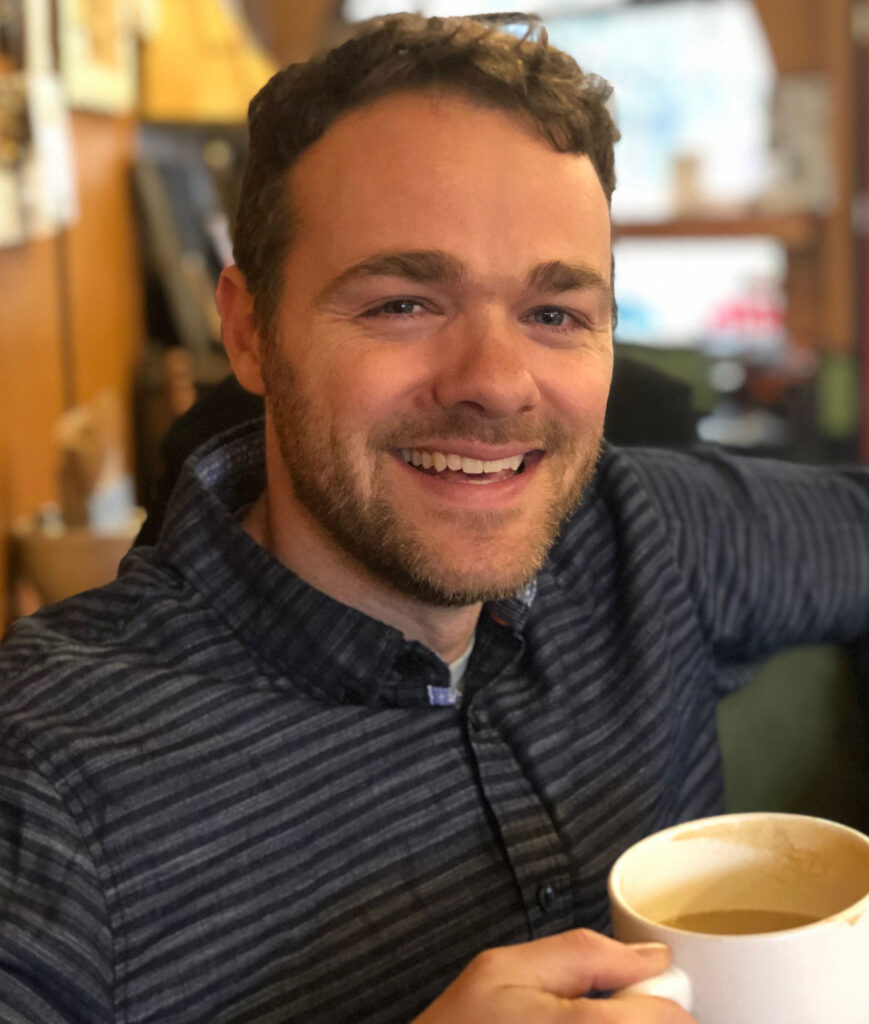
Jordan Bemis earned his Bachelor’s in Pastoral Studies from Eugene Bible College (now New Hope Christian College) in 2006. During that time, God called Jordan to the mission field, and he earned his master’s degree in Cross-Cultural Communications from Fuller Seminary. In 2012, the family moved to Spokane, WA, where Jordan worked with World Relief for twelve years resettling refugees and equipping the church to serve immigrants. Throughout his time in ministry, Jordan has worked in youth, worship, and small group ministries. Now, God has called Jordan and Hannah on this new adventure of pastoring in Newberg, OR. Jordan and Hannah have three amazing kids: Asher and twins Elynora and Abel.


I knew in college that God was calling me to give my life to ministry in the Church as well as to teaching students. With determination and the excitement that only a 20-year-old, new Christian girl can have, I said yes and got truckin.’
A few years later, I met my husband at a church plant in Northeast Texas. We continued volunteering there for two years, got married in 2012, and within three months were hired as youth pastors in Beaumont. While we pastored, I also taught at a local middle school. My students began inviting classmates to youth group, and soon we were busing kids to church.

Despite the success, something in us was stirring. Texas was flat, Southeast Texas was humid, and we didn’t sense a long-term call to the Bible Belt. We’d always wanted to visit the Pacific Northwest, so one summer we took a two-week trip, visiting cities from Seattle to San Francisco. One thing stood out immediately: the lack of churches.
As we continued driving, something radical happened. For the first time in my life, I felt like I was home—even though I didn’t know a soul in the entire state. We felt a pull to be somewhere that desperately needed Jesus. We wanted sun and mountains, and for me, it had to be Oregon. When we returned home, the dreams began.
After research, prayer, more trips, and a vivid nighttime dream from God, we knew Bend, Oregon, was our destination. There are no “cultural” Christians here. Most of the population wants nothing to do with Jesus. We felt called to live as faithful followers of Jesus in this place and eventually to help plant a church.
I was determined not to be another example of an angry, condemning Christian, but instead a listener and a questioner.
Within three and a half years of moving to Bend, we took a youth ministry position with an Open Bible church in Redmond, about twenty-five minutes away. It was a meaningful season, but God continued to remind us why He had brought us west. Six months into that role, COVID shut everything down. During that time, our lead pastor, Chuck Gustafson, invited us to attend a church-planting conference and asked whether we had ever considered planting a church. Many conversations later, we found ourselves flying to an “assessment center” to determine whether we were fit to be church planters. Joke’s on us—they said yes.
That confirmation aligned with what we already sensed. We knew the specific area of southeast Bend where we felt God calling us, and we began taking “dream drives.” The moment we entered one particular new-build community, I knew: this was our neighborhood.

On September 10, 2023, Pine Hills Church held its first gathering at Silver Rail Elementary. That same year, I began teaching at a middle school on the affluent side of Bend. The school was progressive and open to nearly everything except Christianity. Though nervous, I chose to be honest about who I was. I put our church sticker on my water bottles and added to our “Tell Your Story” bulletin board that I was a co-pastor of a new church. My openness led to questions that I had to tiptoe around or answer privately.
I quickly felt more observed by both students and staff. Students shared fears that I would judge them or that I would stop caring for them if they were honest. They had all heard stories about “Christians.” I became even more intentional about being a nonjudgmental, nonanxious presence. I was determined not to be another example of an angry, condemning Christian, but instead a listener and a questioner. For some of my students, I was the first Christian they had ever truly known. By simply being honest about my faith, walls built by misinformation and fear began to fall.
God had called me not only to ministry in the Church, but also in the classroom.
Over that first year, I built trust with fellow staff members, my students, and their parents. Near the end of the year, I received an email from Ashley, the mother of my student Carter. Ashley had been deeply involved in New Age spirituality. She intentionally introduced her son to many belief systems, everything except Christianity. But Carter had begun asking questions and had mentioned “Mrs. Contreras’s church.” I hadn’t realized how closely he’d been listening, but he had. That June, Ashley asked if they could visit our church.
The very next Sunday, they walked in, observed quietly, and listened. After the service, Carter approached me, eyes gleaming. He loved it! Then weeks passed with no return. A month later, they were back.

Ashley told me she had felt compelled to begin reading the Bible. Within months, she was on a quest to discover everything within it; she was hungry, and she was finding answers. Carter gave his life to Jesus, and so did Ashley. On Sunday, July 27, 2025, we got to baptize them both in the Deschutes River. That moment was a powerful reminder that God had called me not only to ministry in the Church, but also in the classroom. His Spirit empowers us to live boldly and wisely wherever He places us.
All of us are called to ministry. Jesus’ command in Matthew 28 to go into all the world wasn’t just for pastors or church planters; it was for everyone. Teachers, lawyers, parents, janitors, coaches—anyone with breath in their lungs is called to make much of Jesus. The calling is simple: listen well, build trust, and love faithfully. When we do, we become the hands and feet of Jesus, right where we are.
About the Author

Nicole Contreras is a full-time wife, mom, pastor, and teacher living in Bend, Oregon. Her hobbies include reading, writing, shopping, snuggling with her daughters and her dogs, and being with family! Originally from Texas, Nicole and her husband, Aaron, moved to Oregon in August 2016, then planted Pine Hills Church with their two daughters, Aubree and Ellee, in September 2023. Nicole and Aaron are typical Bendites who love coffee, hikes, camping, mountains, snow, and being outside.