


Featured Articles
Reopening the Old Wells: Bringing Ancient Liturgy to the Modern Age

Isaac dug out again the wells that were dug during the lifetime of his father Abraham. The Philistines had closed them up after Abraham’s death. Isaac gave them the same names his father had given them. Isaac’s servants dug wells in the valley and found a well there with fresh water. (Genesis 26:18-19 CEB).
I came to faith as a teenager and had very few church experiences up to that point. My earliest formation as a Christ follower took place within Open Bible church settings, where I found deep community and meaningful spiritual experiences that I continue to value. At the same time, as in many modern evangelical churches, there was limited exposure to the ancient liturgies and historic practices of the wider Church.

These traditional cornerstones that were foundational to ecclesial life for millennia had been almost eliminated in the churches I attended. It seemed to me that these practices were at best met with ignorance and at worst with grave suspicion. The predictable result was that any real understanding and appreciation for ancient liturgical practices was absent from the first two decades of my church life. I rarely thought about things like Ash Wednesday services, the Book of Common Prayer, and Advent, and if I did, it was with a healthy side dish of uninformed judgment. I viewed Lent the same way I viewed lentils: it was a cold and exotic experience that was both frightening to prepare and painful to consume.
I viewed Lent the same way I viewed lentils: it was a cold and exotic experience that was both frightening to prepare and painful to consume.
This was my context as a few of our church staff began asking whether we could introduce some of these ancient practices into our church worship experience. As you might imagine given my church background, it took me a while to warm up to the idea. I began a process of asking questions, listening, and learning, even reaching out to an Anglican priest friend to hear his take on the value of these long-held traditions. Through all this, Christ in His goodness and patience has allowed us now to incorporate many of these practices into our regular church experience. As a result, I am happy to report that we are experiencing wonderful depth and meaning in our gatherings as we’ve adopted and applied some of these long-proven elements of discipleship.

Our time of worship now always includes the public reading of a Psalm (a practice we have adopted from the Book of Common Prayer) to bring us back to the ancient hymn book of Israel. We have a fresh understanding of what it is to give up something physical in order to gain something spiritual as we fast in the forty days of Lent. Christmas time and the lighting of Advent candles help us celebrate Christ’s first arrival while reminding us to await His second arrival. And Ash Wednesday, with its outward sign of repentance and mortality, leads us to humble ourselves before God, understanding how desperately we need His saving grace. Finally, the celebration of life on Easter Sunday has far greater meaning now because it is preceded by the sobriety of the death we remember on Good Friday.
This is not to say that incorporating these elements has always been smooth. We’ve learned to introduce them slowly and with great attention to the “why” behind the “what.” Along the way, we’ve had our share of growth opportunities and mishaps. One example happened early on in our journey, when we tried to introduce some ancient call and response types of prayers. The practice led several people to worry that we had become a completely different kind of church. We haven’t yet reintroduced those prayers in our services.
We have found that moving slowly and consistently, explaining the meaning of the practices, and laughing at ourselves through our failed attempts have been the key ingredients to discovering the power of these ancient gifts.
Another example took place during last year’s Ash Wednesday service. During this type of service, ash is used to mark the sign of a cross on each believer’s forehead. This marking symbolizes our own mortality and repentance, as we take up our cross and turn from our sins. Well, our beloved worship leader wanted to add scent to the ashes to create a fuller sensory experience. To do so, he incorporated essential oils, including cinnamon, into the ashes. Little did any of us know that undiluted cinnamon oil burns on the skin. Talk about your full sensory experience. All of us in the service sat wondering what it reveals about our spiritual condition if the ash cross on our forehead feels like it’s on fire. There was a great sigh of relief when our executive pastor let people know what had happened, and a mad dash to the bathrooms ensued as people quickly washed away the painful marker. The next Sunday I formally apologized for turning their Ash Wednesday into a Rash Wednesday.
In these moments and more, we have found that moving slowly and consistently, explaining the meaning of the practices, and laughing at ourselves through our failed attempts have been the key ingredients to discovering the power of these ancient gifts. Just as Isaac reopened the ancient wells of his father to discover pure water, we too can rediscover the meaning of these ancient practices in our churches and experience their fresh water again.
About the Author

Aaron Sutherland is the founding pastor of Cove Church in Eugene, Oregon, and the Director of Multiplication for Pacific Region Open Bible. Along with his wife, Paula, he finds great joy in watching God reveal the new stories being written into the lives of people from every corner of the world.



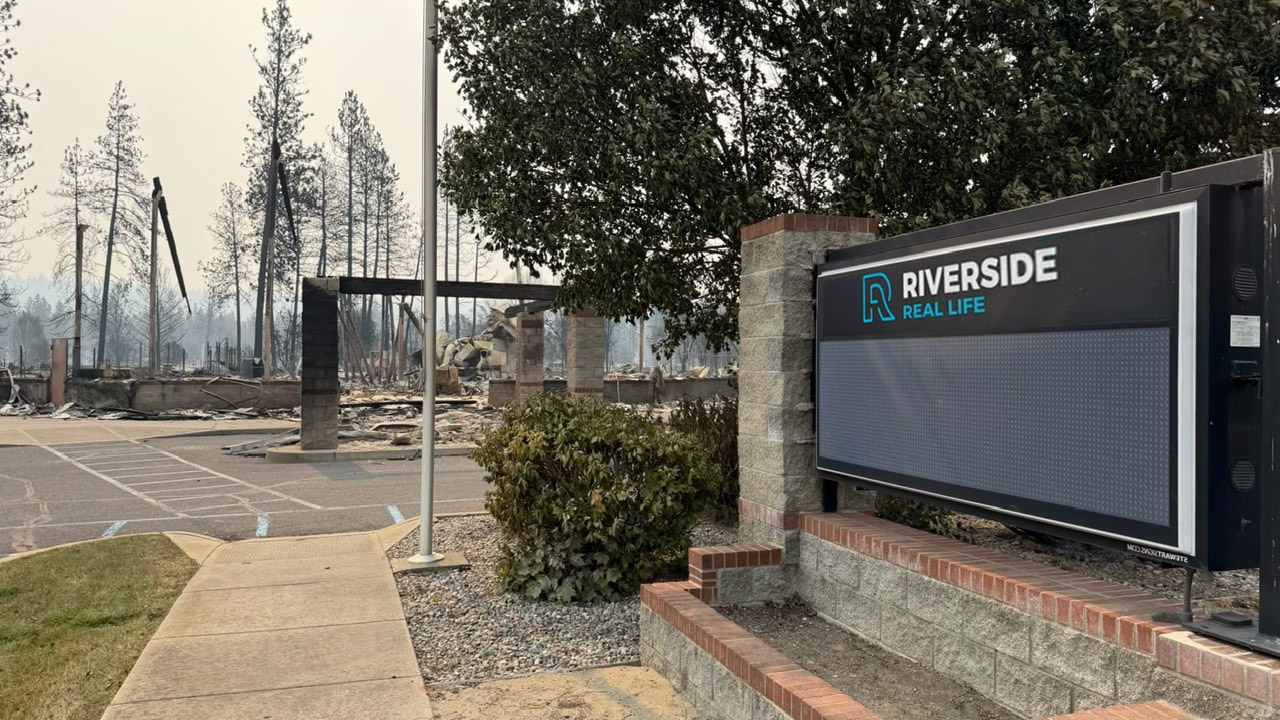
On August 1, 2026, three fast-moving wildfires swept across the Spokane area, fueled by a frightening combination of high winds and dangerously dry conditions. The Old Trails, Autumn Lane, and Fairview fires, collectively managed as the Spokane Complex, damaged or destroyed hundreds of homes and other structures and forced thousands to evacuate.
Seven Open Bible and Open Bible-affiliated churches serve communities throughout the Spokane area, and all were affected in some way by the fires. Three, however, found themselves in the immediate path of the most destructive blaze, the Old Trails Fire. Turning Point Church and Foundation Church were placed under a Level 3 evacuation, displacing members of their church families, while Riverside Real Life Church lost its building entirely. Pastors from Turning Point and Riverside share what they witnessed as fire swept through their communities and how, amid tremendous loss, they saw God provide through the generosity, prayers, and practical care of the Church.
From Melissa Stelly,
Executive Pastor of
Turning Point Open Bible Church:
The pillar of angry smoke on the horizon immediately filled me with dread as I drove to the grocery store. High winds drove the flames across parched land so fast that one firefighter marveled that he couldn’t have outrun it, even if he tried. Hundreds of people desperately fled their neighborhoods, clogging the few roads out as flames appeared in their rearview mirrors. There were heartbreaking stories of people calling family members to say goodbye because they didn’t think they would escape in time
And yet, not a life was taken.
And yet, not a life was taken.
Our church was placed under a level 3 evacuation, and many of our people were displaced from their homes, either losing them completely to the flames or due to toxins that bathed their houses from the burning around them. Immediately, our church family responded with calls and emails, offering their homes to those impacted, along with gift cards, money, clothing, and even animal care. Spokane leaders met at the local high school, inviting faith leaders, non-profits, educators, and government to join together to streamline resources, establish a relief system, and collaborate. Since then, Spokane churches have recognized a deficit in crisis response and are organizing a network of churches to spearhead emergency and crisis response in our city.
I am proud of our church body’s immediate mobilization, which gave generously and put faith into action by meeting needs, opening homes, and volunteering at shelters and outreaches. One woman in our church, who lost her home to the flames, tearfully shared how overwhelmed she was by the support she received. The church family gave her stacks of gift cards, bought her clothes, generously gave to the church to meet her financial needs, and called her constantly to pray with her.
As a pastor, I witnessed this verse in action: “To equip his people for works of service, so that the body of Christ may be built up” (Ephesians 4:12 NIV).
From Kelly Armstrong,
Lead Pastor of
Riverside Real Life Church:
Our church, Riverside Real Life Church, and the entire surrounding neighborhood were destroyed by the Old Trails Fire that hit the Spokane community. Because of our location at the center of the damage, hundreds of people who call Riverside their church were displaced from their homes, at least temporarily. Praise God, most were able to return after one to two weeks; the number of homes lost in our congregation was in single digits. Many homes in the neighborhood my family lives in were destroyed, but thankfully, our home was spared, and we returned home after nine days.
The response of our community and beyond has been amazing. I’ve been contacted by hundreds of pastors and churches from all across the country and most significantly, from all across the Open Bible family. I am convinced that the prayer on our behalf has made a difference as God has opened one door after another. On September 6th, we had our first Sunday service since the fires at a middle school near where the church building was located. We came together, standing room only, to reconnect, worship God, and envision the future.
There are significant complications, but they are not barriers for Him.
Through the generosity of churches all over the country, we’ve been able to give significant financial assistance to families and individuals who’ve lost their homes, restart our small group system, launch a mobile Sunday service that we can be proud of, and continue our mission to “Reach the World for Jesus.”
I’m full of gratitude to every person and church who’ve supported through care, finances, and prayer. When church leaders ask how they can pray, I tell them, “Please pray for God’s favor in the rebuilding process. There are significant complications, but they are not barriers for Him.”
Thank you, Open Bible friends and family. I couldn’t be more grateful for your care and support; it has meant the world to me.
In the midst of tragedy, God’s goodness and glory were evident. As Pastor Melissa Stelly said when sharing her story, “The Lord preserved, the Lord provided, and the Lord used His Church to serve.” But nothing expresses God’s grace over Spokane better than Isaiah 61:3:
to bestow on them a crown of beauty
Isaiah 61:3 (NIV)
instead of ashes,
the oil of joy
instead of mourning,
and a garment of praise
instead of a spirit of despair.
About the Author

Hannah Bemis currently serves as the editor and director of Message of the Open Bible. She always wanted to do too many things when she grew up, and God has been kind enough to let her do most of them in different seasons. Those seasons have included raising little ones at home, teaching, writing, and staff pastoring, with Hannah’s most recent adventure being planting and pastoring College Street Church in Newberg, Oregon, with her husband, Jordan. After Jesus and all her favorite people, she spends the remainder of her passion on pizza and dark chocolate in equal measure.

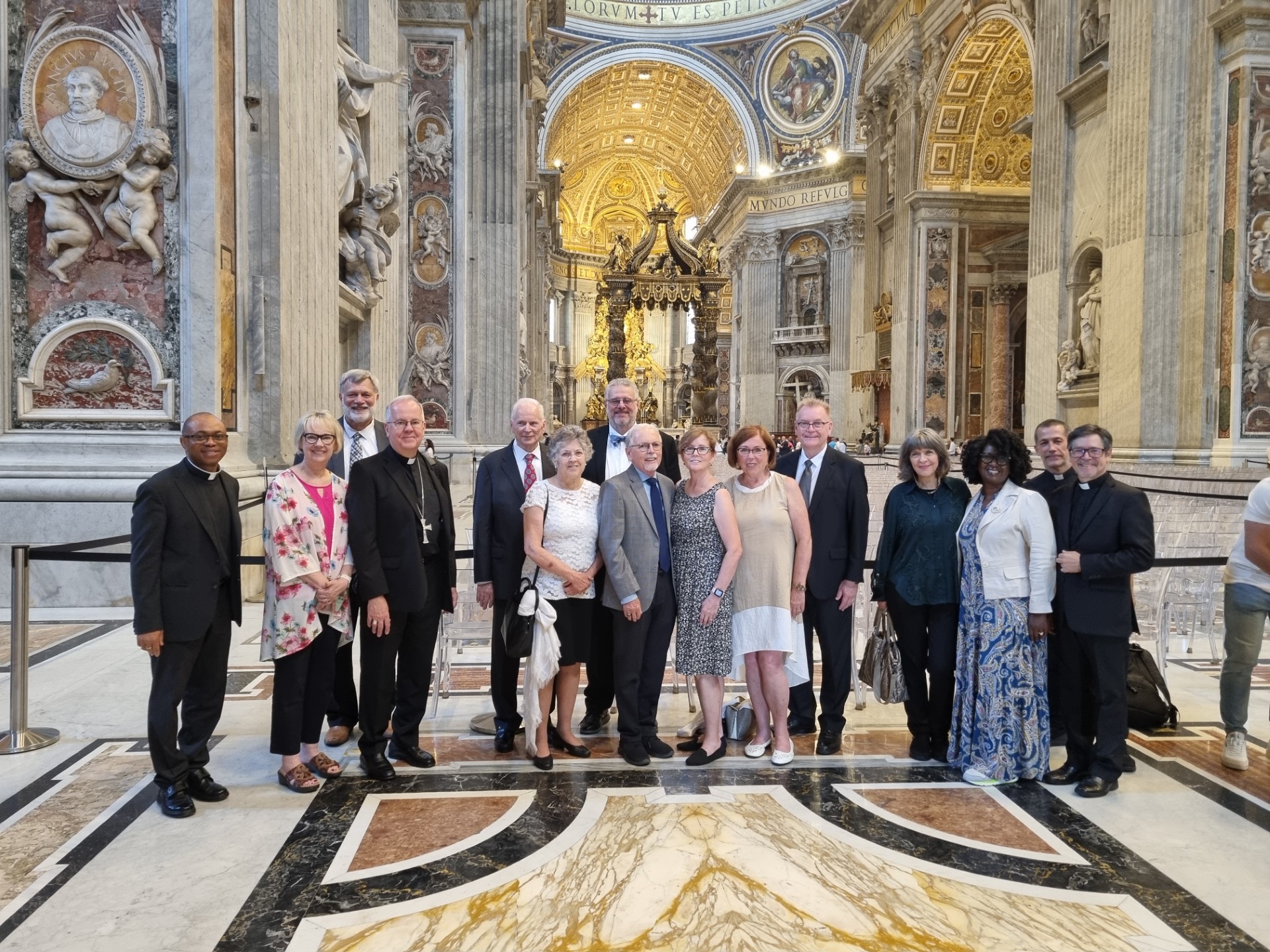
I am proud to have been a credentialed minister with Open Bible Churches for over four decades. What a privilege to have served in a variety of contexts across our wonderful family of several hundred congregations in the US, along with several thousand globally. Over those decades, God has gradually expanded my understanding of what it means to belong to His Church.
I’ve enjoyed the enriching experience of embracing so many of the distinctives of what makes Open Bible, well, Open Bible: our unwavering commitment to Scripture as the inspired, authoritative Word of God; our resolve to plant and sustain healthy, vibrant local churches; our passion for the fullness and gifts of the Holy Spirit operating in our daily lives; and so much more.
And yet, with the beauty of these ecclesial distinctives so evident in our movement, I believe I have come to realize that what we share together as our core values and practices are not completely unique to us. As a matter of fact, when we take a step back and consider just who is a part of the Body of Christ, we can discover that we have much in common with our brothers and sisters across the US and around the world. It took one unexpected friendship to deepen my understanding of what it means to belong not only to Open Bible Churches, but to the Church.
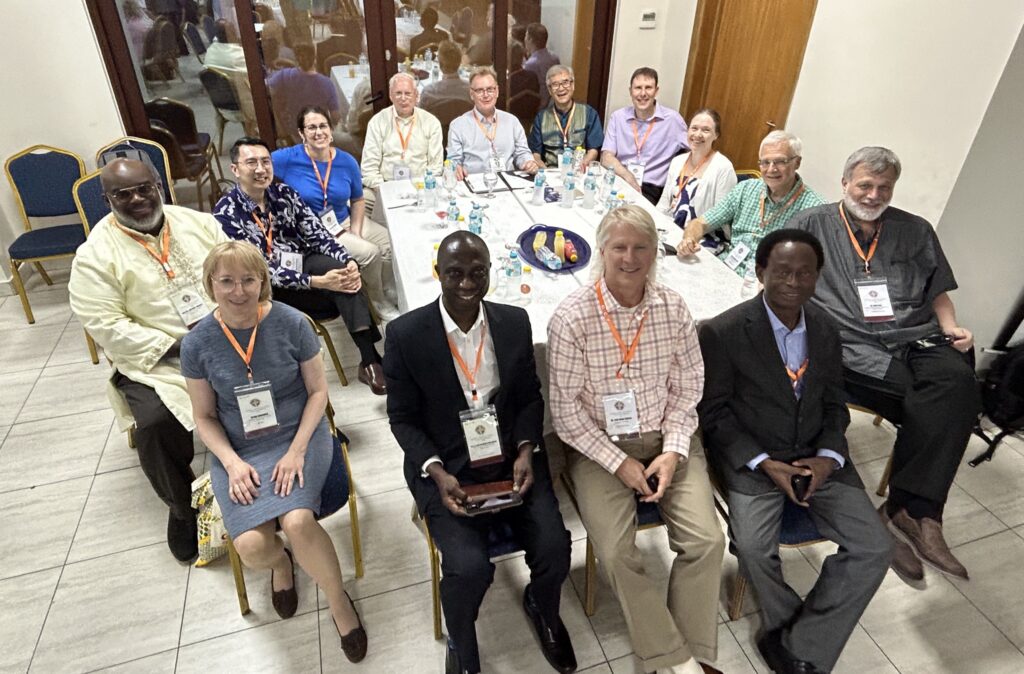
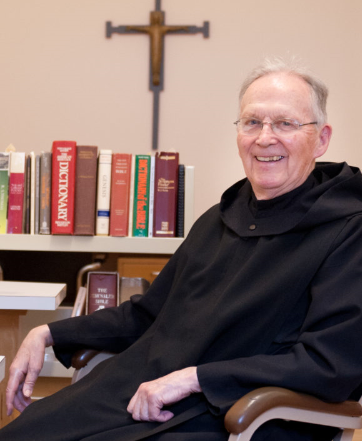
A humbling experience for me has been to receive grace and love from others who are different than me even before I was prepared to offer the same to them. One example for me comes from my years as a participant in the International Catholic-Pentecostal Dialogue. This ongoing annual conversation was begun in the 1970s by David du Plessis, the Pentecostal known as “Mr. Pentecost,” and Father Kilian McDonnell, a Catholic theologian, and continues to this day. When I attended a session of this Dialogue for the first time in 1993, I was so focused on my disagreement with Catholic doctrines and practices that I was not in a place to show much hospitality. But over the next several decades I got to know the Catholic co-chair, Father Kilian, quite well. I was amazed at how well he knew Pentecostals like me, how much he wanted to learn more, and how much he cared for us. He was respectful, honest, and compassionate. We didn’t agree on everything, obviously. But he became a mentor to me, showing me how to treat others who were different than I was. And we became friends. He passed away last year at the age of 100, and I was honored to attend his memorial service. That experience changed how I think about the global Church.
The following numbers paint a remarkable picture of the global family that shares our evangelical, Pentecostal, and charismatic faith. According to the 2026 Status of Global Christianity report, more than 1.1 billion Christians around the world identify as Evangelical, Pentecostal, or Charismatic. Of those, approximately 676 million are Pentecostal or Charismatic believers.
That global family is wonderfully diverse, including classical Pentecostal denominations like Open Bible Churches, independent charismatic networks, Catholic Charismatics, and charismatic believers within many Protestant traditions (Anglican, Methodist, etc.).
So why do these numbers matter? They remind us that we are part of something much larger than ourselves. We are not alone, and we are certainly not “small.” Along with our evangelical, Pentecostal, and charismatic brothers and sisters around the world, we are a fierce contingent in the Lord’s army. It’s both humbling and encouraging to remember that we belong to the CHURCH in all its vastness.
But that doesn’t mean we have to give up our wonderful heritage, culture, and beauty that make us Open Bible Churches. We have something to contribute to the rest of the Church. I’m reminded of the prophetic word delivered a few decades ago at one of our conventions: “Open Bible Churches is a vital organ in the Body of Christ!” That statement has never been more true.
“Open Bible Churches is not ‘the Church.’
Open Bible Churches is part of the Church
— a wonderful part,
but a part.”
And yet, we also do not want to be guilty of isolation or sectarianism. Open Bible Churches is not “the Church.” Open Bible Churches is part of the Church. A wonderful part, but a part. So, it is healthy for us to remember our brothers and sisters in other denominations and networks, to pray for them, and even to cooperate with them in community and regional initiatives so that together we may faithfully steward our callings and responsibilities to advance the Kingdom of God on the earth.
One of the most important ways we can grow in unity as believers is to start by acknowledging and valuing diversity in the Body of Christ. God didn’t make us all the same. Unity is not uniformity. The old adage still rings true: “in essentials, unity; in non-essentials, diversity; and in all things, charity.” May we agree to disagree with one another with clarity, respect, and most of all love. We can embrace grace and truth at the same time, and indeed we are called to it.
No doubt you know some followers of Jesus in your community (and probably in your own family) who do not belong to Open Bible Churches. The invitation for us all is to love them, to be grateful for all that we share with them, and to offer some space (and some grace) for our differences. This is not easy. In fact, it is hard work. Remember the words of the apostle Paul: “As a prisoner for the Lord, then, I urge you to live a life worthy of the calling you have received. Be completely humble and gentle; be patient, bearing with one another in love. Make every effort to keep the unity of the Spirit through the bond of peace” (Eph. 4:1-3 NIV). If maintaining unity was easy, Paul wouldn’t have needed to admonish us to “make every effort” to do so.
Jesus reminds us that unity isn’t just for our benefit: it’s one of the clearest testimonies to a watching world.
But if we are willing to pay the price of seeing God’s big Church, and loving it the way He does, we’ll be more Christlike, and we’ll participate in being an answer to one of the last prayers Jesus prayed before He went to the cross on our behalf: “…that they may be one as we are one— I in them and you in me—so that they may be brought to complete unity. Then the world will know that you sent me and have loved them even as you have loved me” (John 17:22-23 NIV). Jesus reminds us that unity isn’t just for our benefit: it’s one of the clearest testimonies to a watching world.
Together, let’s allow the Lord to give us eyes to see the breadth and beauty of His Church, recognizing and loving our brothers and sisters in Christ in such an obvious way that we actually become answers to the prayer of Jesus in John 17. Amen?
Here are a few resources that explore some of these issues related to Christian Unity:
That They May Be One – Podcast
That They May Be One – Film
PCCNA Christian Unity Commission
Forum for Unity
International Charismatic Consultation
Global Christian Forum
About the Author
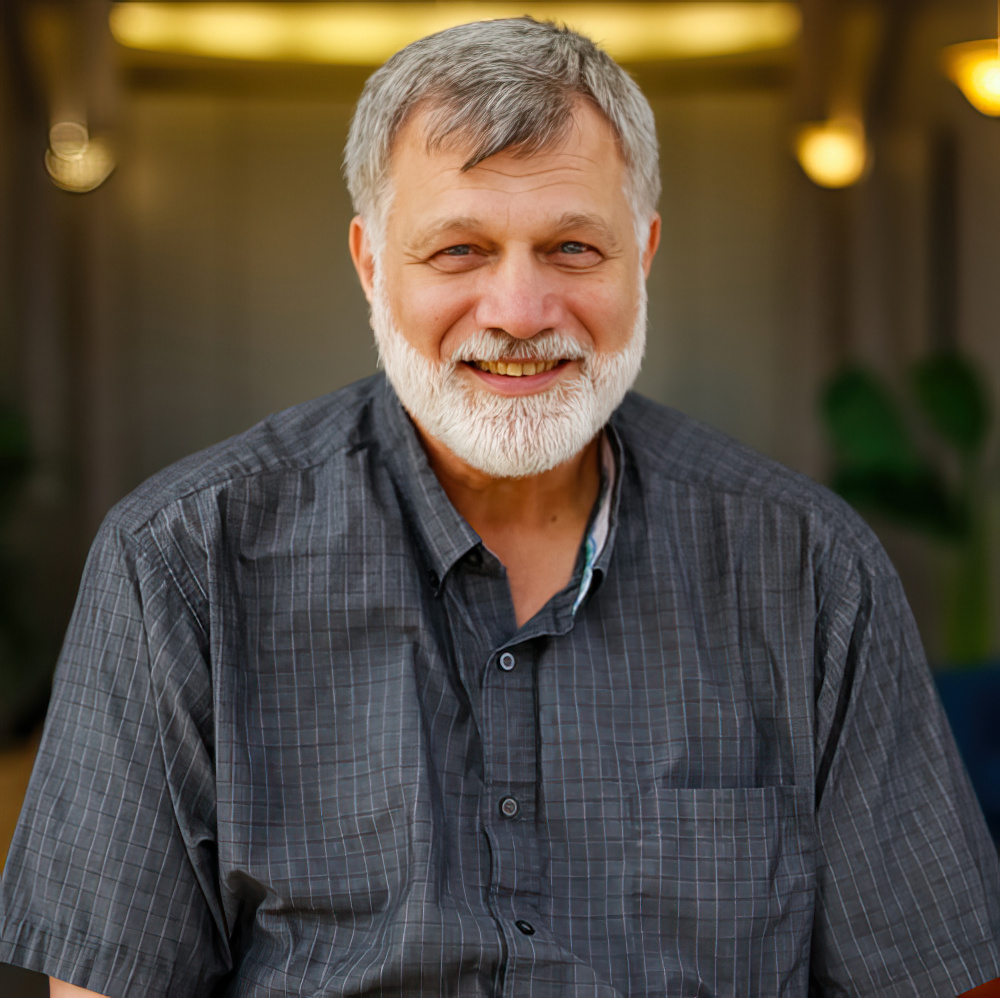
David Cole has been a credentialed minister with Open Bible Churches since 1984. He is currently Professor of Historical Theology at The King’s University in Southlake, Texas. He is also involved in a variety of initiatives related to his calling to encourage the pursuit of unity among believers in Jesus, and to that end currently serves as chair of the Christian Unity Commission with the Pentecostal/
Charismatic Churches of North America. He and his wife, Julie, are parents of four, grandparents of ten, and are currently located in Newberg, Oregon, where they attend College Street Church.


I woke up unable to speak. A breathing tube filled my throat. Machines surrounded my hospital bed. I was confused, intubated, and lying in an ICU room with no memory of how I got there. But strangely, I was not afraid. In the middle of the chaos, God gave me an unexplainable peace.
I motioned desperately for paper and pencil so I could ask two questions: What happened? And where is George?
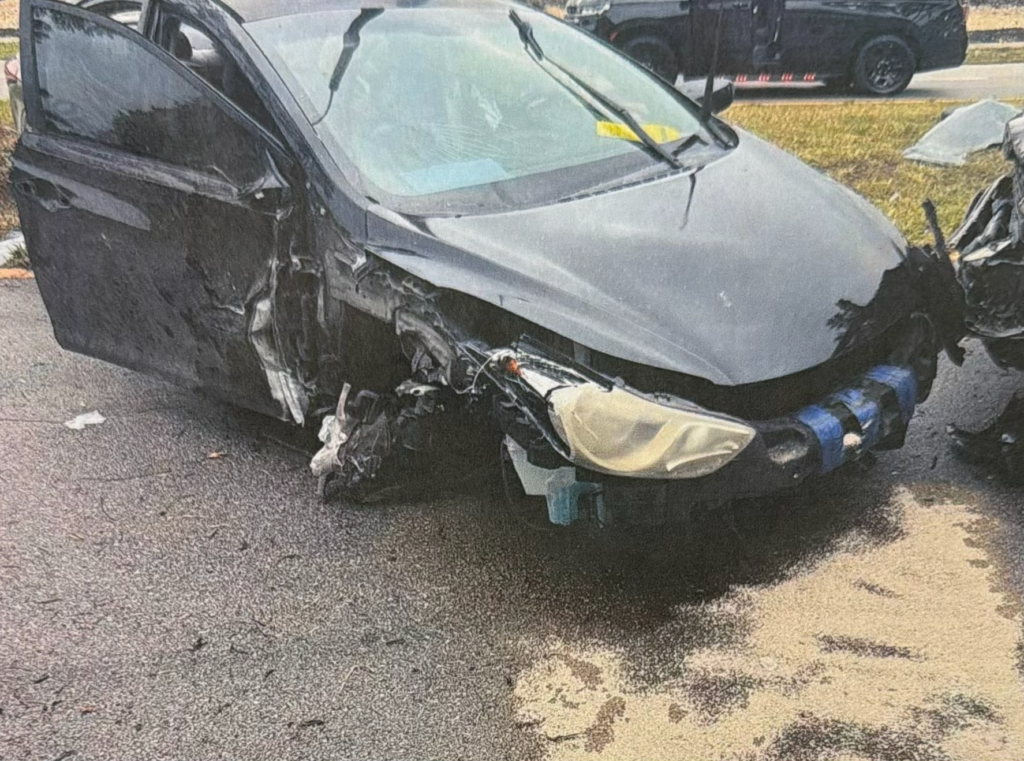
My son’s father explained that I had been in a serious car accident. The car was completely destroyed. I had been found trapped beneath the steering wheel with severe facial injuries.
That morning — January 22, 2026 — had started like any other Thursday. I got ready for work, buckled my 18-month-old son George into his car seat, and pulled out of the driveway expecting an ordinary day.
It became anything but ordinary.
My neighbor, who had left home at the same time I did, later explained what happened. We were both driving around fifteen miles per hour when the car I was driving suddenly lost control. I still do not know why, and I have no memory of the moment itself.
By the grace of God, George was almost completely untouched.
The car hit a cement light pole, crossed into oncoming traffic, and was struck head-on by another vehicle. Both vehicles spun, and the car I was driving slammed into another cement light pole.
By the grace of God, George was almost completely untouched.
The back windshield shattered directly above him, yet the glass never harmed him because of the position his car seat landed in. The entire back left side of the car was crushed inward, but George had been seated on the back right side. Even now, I can only thank God for His protection.
I was taken by ambulance to the hospital and admitted into the Trauma ICU. Doctors told my family that I had suffered severe head trauma resulting in a brain bleed. I was also bleeding internally in my abdominal area, and they began preparing my family for the possible loss of my pregnancy.
… the doctors did not know the God my family and I serve — and how merciful He is.
But the doctors did not know the God my family and I serve — and how merciful He is.
My family immediately began to pray. Members of my church, Open Bible Church of Homestead, began arriving at the hospital, and soon an entire army of people was interceding for me.
During those first two days, I drifted in and out of consciousness and remember very little. But one moment remains clear in my mind: I heard the song “I Surrender” by Hillsong Worship playing in my hospital room. The lyrics, “Like a rushing wind, Jesus breathe within, Lord have Your way, Lord have Your way in me,” stayed with me and brought a deep sense of comfort in the middle of everything happening around me. In that moment, those words became my prayer as I quietly prayed, “I leave this in Your hands.”

After three days in the ICU, I was successfully extubated and began making remarkable progress. Ultrasounds showed a happy, active baby, and the bleeding had stopped.
On the fourth day, I was transferred out of the ICU into intermediate care before eventually moving to the medical-surgical floor. Doctors then began preparing me for maxillofacial surgery to reconstruct my face after multiple fractures.
On January 30, I underwent an eight-hour surgery. By God’s grace, the procedure was successful, and another ultrasound afterward showed my unborn baby remained active and healthy. On February 3, I was finally discharged and able to return home.
Since then, my recovery has gone smoothly. I am now twenty-eight weeks pregnant and waiting expectantly for the arrival of my baby. Through every frightening moment, God gave me strength and peace, and I never doubted His mercy.
Today, I am a living testimony of His grace.
About the Author

Thammy Castro is a behavior technician living in Miami and a soon-to-be mother of two. In her free time, she enjoys traveling with her family. She is a member of Open Bible Church of Homestead, where her parents, Jose and Maria Castro, serve as pastors.