
Featured Articles
I Didn’t Die!


By David Ridgway
It was a Friday, with just over a week until Christmas, when I realized I wasn’t feeling well. My wife, Rose, and I were planning to host a Christmas party for her side of the family that evening. Not wanting to expose anyone to COVID, she suggested I get tested at a nearby place that offered free testing. I received negative results about forty minutes later, so I assumed I just had a cold or the flu. I stayed up in our bedroom that night so as not to expose anyone to whatever it was. (It turned out it was COVID, and six people got it. Thankfully none were seriously ill, and they all recovered).
Saturday I lay in bed all day coughing. Sunday I stayed home from church, and I never miss church. I own my own pest control business, and on Monday I had an important job to do that I felt couldn’t wait. I tried leaving the house, but I couldn’t walk ten or fifteen feet without gasping for air. Totally exhausted, I had to go back home. Rose immediately took me to the hospital, MercyOne West in West Des Moines, a suburb of Des Moines, Iowa. There I tested positive for COVID. I was told that I was dehydrated and my blood pressure had tanked. They gave me an IV and got my blood pressure back up in an acceptable range and early Tuesday morning sent me home, telling me to rest.
I kept getting worse. By Wednesday I was having difficulty breathing, so Rose took me back to the hospital and they admitted me. I was thinking, “I’m in the hospital. They will take care of me, and I will get better.”
Instead I went downhill fast. I was having trouble breathing even though they kept increasing my oxygen. I was up to 75 liters, but my blood stream was absorbing less and less. I was starting to lose consciousness, unaware of what was going on around me. Since Rose had also tested positive for COVID, she couldn’t visit me.
By Christmas I was in bad shape. My mother came to see me. At that point I was 99 percent sure I was going to die. In my mind I could see a passageway up in the corner, and I knew that was death’s door. I kept drifting closer and closer to that passageway. I knew that if I reached that passageway, I would be dead. I would pass from this life to the next.
I thought, “I can’t control this; I can’t stop this. I’m in my 50s and I still have a lot I want to do. I have a lot of responsibilities – my home, business, family, and church ministry. This is really happening.”
It was scary even though I know I’m saved and going to heaven. It reminded me of that song Mark Lowry sings, “Everybody Wants to Go to Heaven (But Nobody Wants to Die)”.
On Christmas the doctor called my wife and tried to prepare her. He said, “Dave has the worst kind of COVID. He has pneumonia and a respiratory infection with it. He has a rough road in front of him and probably won’t survive.” They decided to transfer me to the main hospital downtown in the middle of the night.
Even though the next morning was a Sunday, our church, Journey Church of the Open Bible in Urbandale, wasn’t holding service in order to give staff time off with their families for the holidays. Rose had been keeping our pastor, Darrick Young, apprised of my condition and he would alert the prayer team and other leaders. After receiving the alarming news of my condition Pastor Darrick called down to the hospital to see if he could visit me. Without hesitation they told him, “Yes, you should probably come.”
I remember hearing his voice and was aware he was praying for me, but I don’t remember much about the visit. He later told me that I was somewhat responsive and agreed with him in prayer.
When people in the church got word of my condition, several of them dropped what they were doing and gathered at the church to pray. Pastor Darrick called Rose at home, put her on speaker phone, and prayed with her. When she mentioned that my daughter Natalie, a nurse who happens to work at Mercy, was with me at the time, Darrick called Natalie’s phone. She put me on speaker, and I could hear people praying for me. I don’t remember it but was later told that I kept saying, “Hallelujah.” At that meeting they also organized a 24-hour prayer chain. I’m still amazed that people stopped what they were doing during a holiday and gathered to pray for me.
God blessed me with Dr. Wilcox, who I’ve been told is the best doctor for treating COVID. But the news he gave Rose Monday morning was not good. He said, “Dave is in a downward spiral. If we don’t get him on a ventilator in fifteen minutes, he has zero chance of survival. His organs will shut down.”
Rose said, “We have five kids. Can I have them call him before you do that?”
He answered, “Sure, have them call right away. I’ll have the nurse put it on speaker phone.”
I vaguely remember hearing their voices. I now realize they were telling me goodbye.
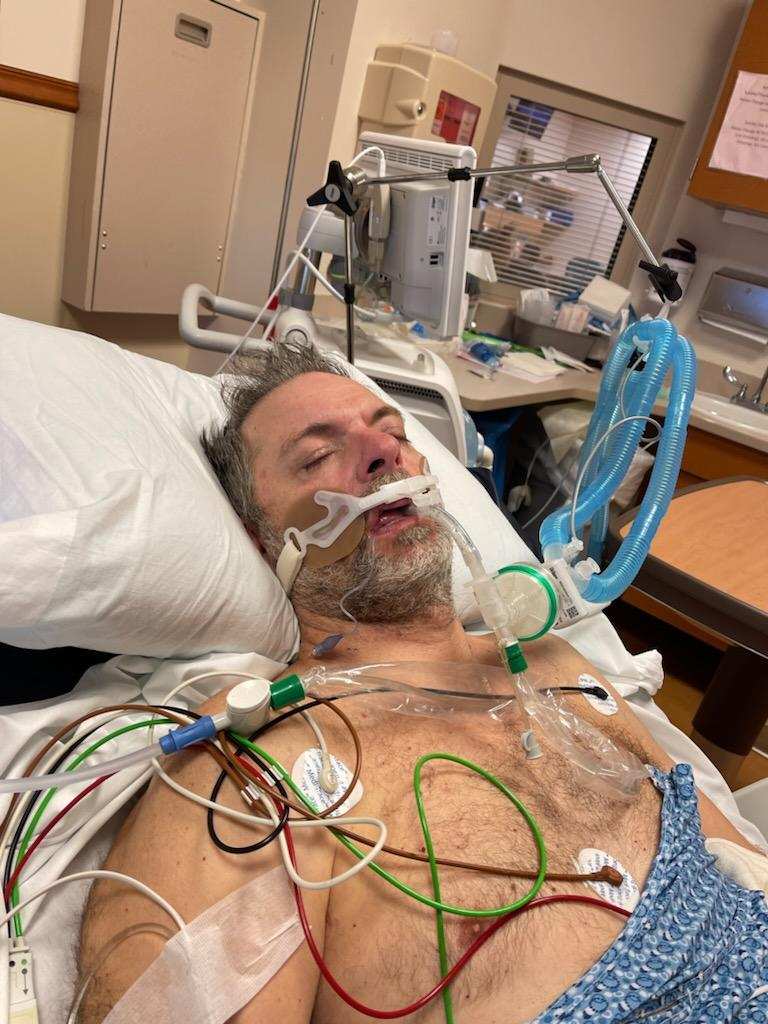
After that, they sedated me, paralyzed me, and put me on the ventilator. As horrible as my experience had been to that point, this is when the real nightmares began. I wouldn’t wish the experience on anyone. You’re in a drug-induced coma, but your mind is still active. I was given the most powerful mind-altering hallucinogens. It was horrible.
As soon as I heard the doctor say, “Let’s start it up,” geometric figures appeared all around me, moving and shifting shapes. It made me nauseous. Then creatures started to appear out of nowhere: rats and animals and horrible things, so many things I can’t describe. Thankfully my mind has erased a lot of it. It reminded me of the time in the Bible when Jesus was fasting for forty days and then Satan took Him up and showed Him all the kingdoms of the world.
It felt as if the Lord took me up and showed me the nations of the world and how evil, full of sin, and lost man is. I saw any and every kind of sin there is: lying, stealing, rape, murder, incest, and genocide. I saw all the evil and it was throughout every country in every nation of the world, even down to the animal kingdom. (You know how animals murder and prey on each other.) The evil had invaded even the earth itself. I saw mountains sinking down into the ocean because they were corrupt. I remembered that when Adam and Eve sinned, God cursed even the ground.
I saw a common thread, and it was greed. People will do so much evil for money. They will kill for money, propagate pornography, gamble, steal, and lie. I thought of the verse that says, “For the love of money is the root of all kinds of evil” (1 Timothy 6:10, NLT).
When they put you on the ventilator, they place you in a prone position on your stomach for sixteen hours and then flip you onto your back for the other eight. It’s kind of a big deal when they flip you. It takes six to eight people. I had IVs, a blood pressure cuff, oxygen sensor, catheter, and all kinds of tubes and wires, and they had to make sure nothing got pulled or pinched or kinked. They don’t even want a wrinkle in the sheet because they don’t want to create pressure points that would cause bed sores.
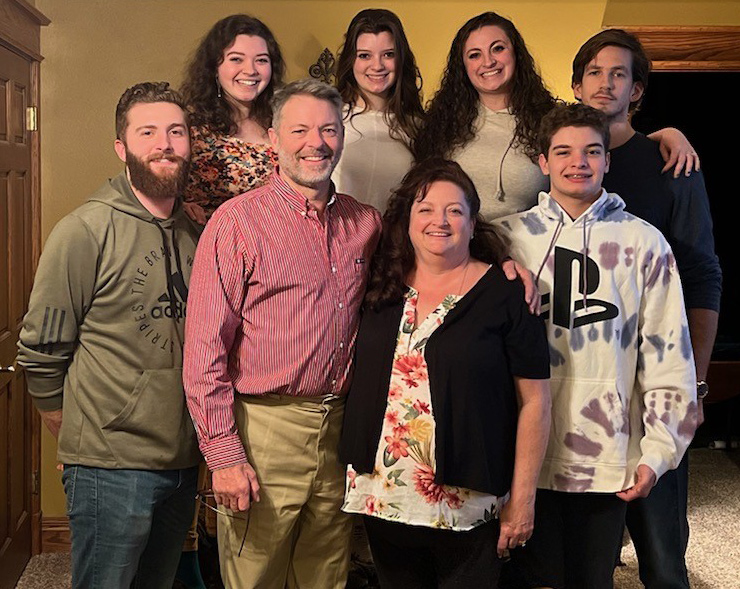
My daughter Natalie would pop in from time to time before or after her shift to see how I was doing although I wasn’t aware of it. One morning she happened to come in while they were flipping me. She has seen the flipping process a hundred times before; she’s even helped with it. But when she saw them doing it to me, a limp, practically lifeless corpse, she couldn’t watch. She had to leave the room.
Pastor Darrick organized a gathering at my house Thursday evening for people to come to pray. Rose was at the house with our two younger kids who still live at home. Dozens of people from at least four churches joined together in corporate prayer at the house. I just saw the video of it this week. When I think of all the people praying for me, I’m overwhelmed.
That was Thursday night. Amazingly, the next morning, Friday, the doctor called Rose and said, “I think we’re going to take him off the ventilator because he’s making overall improvement.” (Originally they had told her I would be on the ventilator for seven to fourteen days; this was day five.) After they pulled me off the ventilator, I regained consciousness. It was still kind of scary because I wasn’t out of the woods yet, but I was getting close to the edge!
On New Year’s Day, ten days after I was admitted to the hospital, Rose was able to come visit me. When they told me she was coming, I could not remember what she looked like. Then when she came in, she was wearing a gown, hair covering, and face mask so all I could see was her eyes. I still couldn’t think what she looked like! But when she spoke, it all came back.
During those dark days, when nurses would come in to take my vitals, I would reach for them because I was so lonely. I didn’t want to die alone. The nurses would hold my hand for a couple minutes and then have to leave, and I wouldn’t see them for hours. Time just seemed to come to a stop. Even after I got off the ventilator, drugs were still affecting my mind. If I closed my eyes the horrible hallucinations would come back, so I tried to keep myself awake for two days. If I even blinked, the hallucinations were right there. Eventually I started having hallucinations that, although strange, were not as bad.
Finally on day three after coming off the ventilator, the hallucinations were fading. I was feeling better, so they moved me to my own COVID room. A nurse asked me if I wanted an ice chip, and having not eaten or drunk for two weeks, it sounded so great. I had lost thirty pounds, mostly muscle. I was so weak. When I was under, I would dream of cold drinks and lemonade. And then when the nurse asked if I wanted a whole cup of water, I was overjoyed. It tasted like living water!
After giving me the water, the nurse leaned over and said, “David, I just have to tell you, you are the only person I’ve seen that was unvaccinated, that sick, and on the ventilator that long and lived.” (A lot of people don’t come off the ventilator; it’s considered a last-ditch effort.)
The doctor concurred with the nurse, saying, “You are a very, very rare case.”
He was shocked I survived. I think a lot of the doctors were surprised. I was surprised. They moved me to a regular room, and that’s when I realized, “I’m not going to die.”
Even though I was as weak as a kitten, I now had hope. I was able to eat some pudding, which I love! The next day they started bringing me three meals a day. These became the highlight of my day. I’ve already put on twenty of the thirty pounds I lost.
When I first got to my own room, I was so weak I couldn’t even sit up. I couldn’t even push the button to move my hospital bed, turn on the TV, or call the nurse. When they tried to help me sit up, all my oxygen alarms went off. By the next day they helped me to stand, and I walked across the room with a walker, even though I soon returned to bed, exhausted. The next day I walked down the hall. The doctor was telling me I would probably get out of the hospital by the weekend.
Reflecting on Dave’s experience, Darrick Young, his pastor, said, “The turnaround in Dave’s body from near death to life was nothing short of miraculous. Dave, Rose, and their entire family have been quick to give glory to God for Dave’s healing, and they have expressed incredible gratitude to those who stood with them in prayer. God healed Dave, but he touched our whole church.”
Pastor Darrick Young
On Thursday morning, he said, “Would you like to get out of here today?”
I assured him that I would love that! I did not want to spend another night in the hospital. The beds are not comfortable. I still had all the wires and tubes, and they would come around the clock and take blood six to eight times a day.
By 8:00 that night I was home, having spent eighteen days in the hospital. I was on oxygen at first, but after a week slowly weaned myself off. I rested and got stronger the second week. By the third week when Sunday came, I said, “I’m going to church.”
That was my first outing. And the next day I went back to work and ended up working several hours. I keep getting stronger and stronger. I thank God I’m alive. My brother-in-law calls me nearly every day and the first thing he says is, “Praise God, Dave; you’re alive.”
I couldn’t get over the fact that all those people were praying for me. There were probably thousands, even beyond Iowa. There really is power in prayer. God heard their prayers and answered them. I’ve had prayers that weren’t answered the way I thought they would be, but this strengthened my faith, knowing God hears our prayers. He might not answer the way we wish, but His ways are better than ours.
God must have something for me to do; He’s not done with me yet. At first I thought that I needed to do something great for God. But when I started back teaching Royal Rangers (an activity-based, small-group ministry for boys) again, I saw a dad of two of the boys who goes to a different church. He had not heard about my ordeal, so I told him about it, wondering aloud what God had for me to do. He was shocked and amazed by my story and later sent me an email.
Part of it said:
I have experienced God helping me connect with my family better at Rangers that carries over to a better connection during the week. You have been doing Rangers for so long it may seem routine or even a little repetitive. But let me assure you that God is working through you having an impact on us . . . . You will never know how thankful I am for those two hours on Sunday when I get to come hang out with you guys and my kids. . . . You may not see it, but the impact is profound.
The vision I had while on the ventilator showed me how lost this world is, how much work we Christians have to do. I know as we get closer to the return of the Lord that sin will abound, but we can do something about it if we remain faithful to what He has called us to do.
About the Author
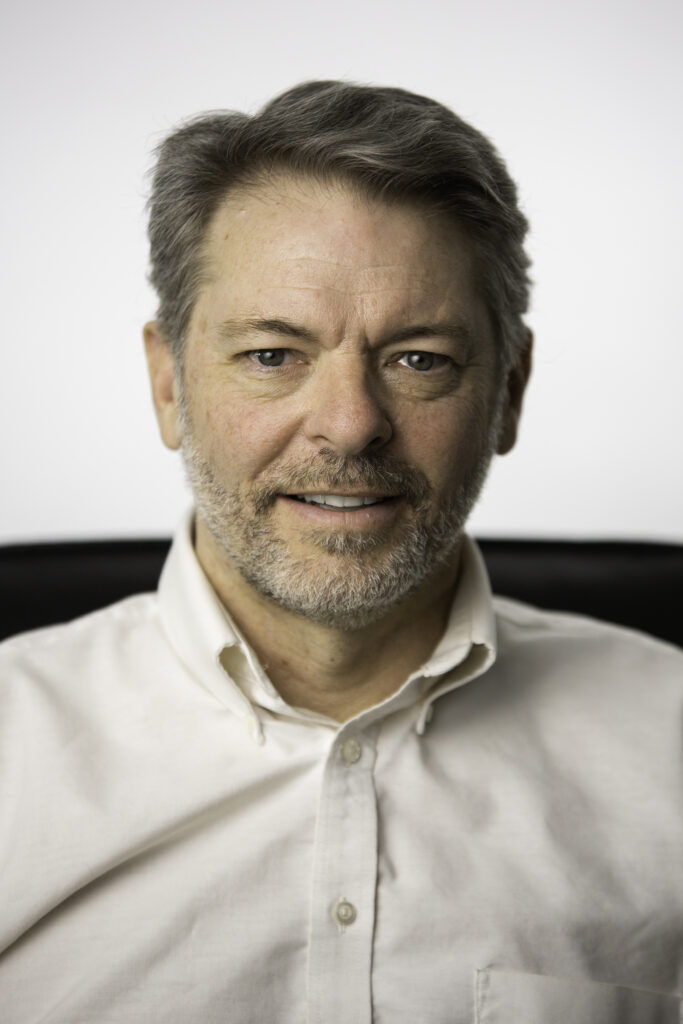
David Ridgway is the owner of Midwest Pest Management. He and his wife, Rose, began attending Journey Church of the Open Bible in Urbandale, Iowa, soon after it began ten years ago. Dave serves as a Journey partner, elder, and volunteer in various areas. He has been a Royal Rangers leader for 23 years and serves on the district staff. He has served as the Outpost Coordinator for Outpost 101 since it was formed at Journey Church nine years ago.



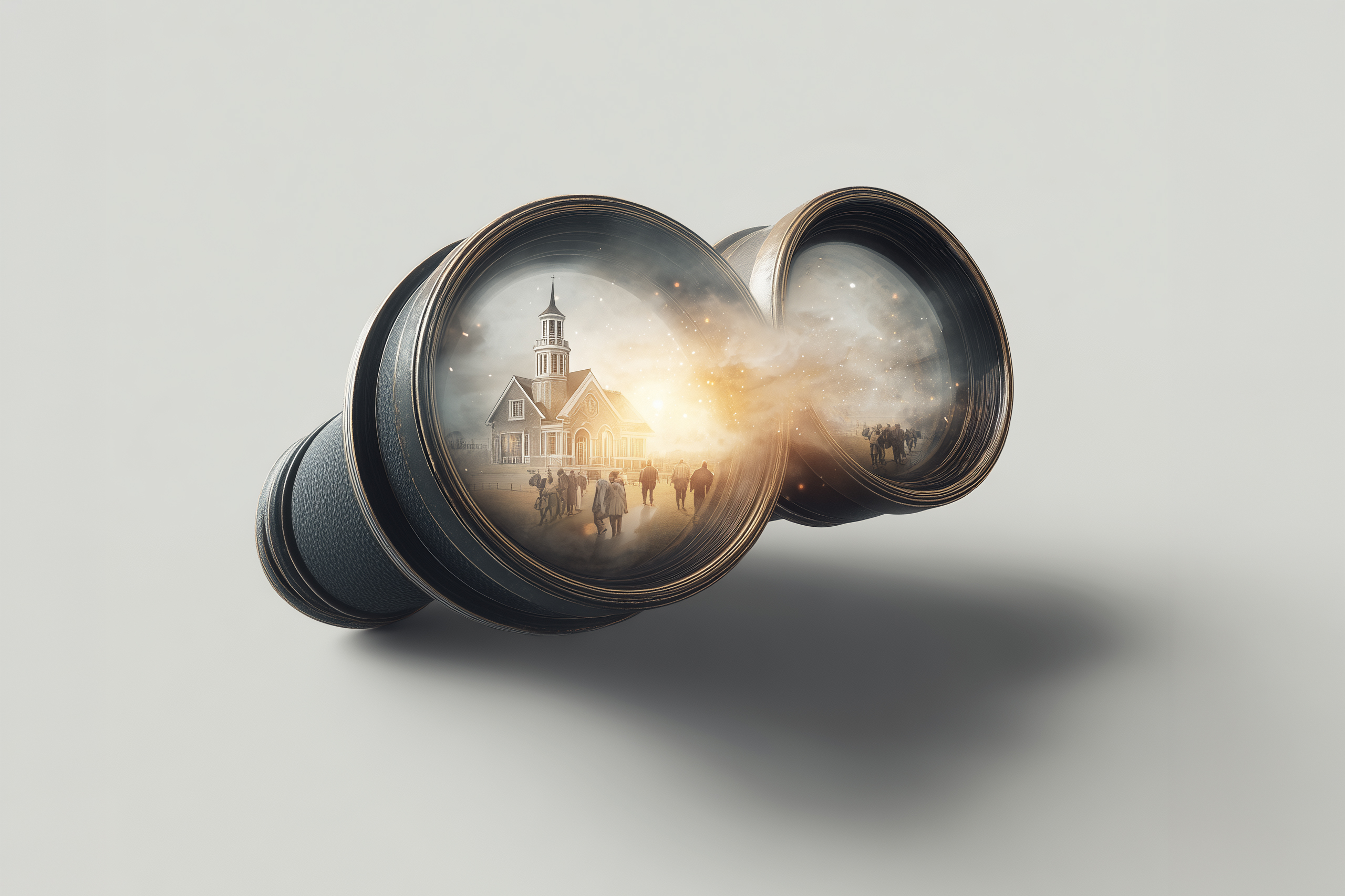
There has been much discussion about the future of the Church. While I’m not a futurist or researcher, I’m grateful for voices that help us think wisely about pursuing the mission of the Church in an ever-changing culture. Researchers like Ed Stetzer and Carey Nieuwhof highlight some encouraging trends, such as revivals on college campuses, rising Bible sales, and Gen Z’s hunger for authentic faith.
I carry deep conviction and a faith-filled anticipation about what I see and am praying for. When I think about the Church and the days ahead, I don’t see a Church in retreat, but I do see a Church being refined – prepared for what God is getting ready to do. A victorious and glorious Church (Eph. 5:27).
When I think about the Church and the days ahead, I don’t see a Church in retreat, but I do see a Church being refined.
Jesus said, “I will build my church, and the gates of hell shall not prevail against it” (Matt. 16:18 ESV). That promise has no expiration date. Jesus is still building His Church today.
As the church advances, it will not stand on programs, buildings, or production. . . it will be built on the authority of Christ and the power of the Holy Spirit.
Across the body of Christ, there is a growing recognition that the future of the Church will not be built by addition alone, but by multiplication. Disciples will make disciples, leaders will develop and release leaders, and churches will plant churches. There are many voices helping to bring clarity to this, and we are seeing that same conviction take shape within Open Bible through our Mission to Multiply and the Power of We.
So, when I think about the Church and what is ahead of us, what do I see?
I SEE A MULTIPLYING CHURCH
We often measure success by attendance, budgets, and programs. While salvations and baptisms remain central, we must expand the scorecard. As Larry Walkemeyer describes in The River Church, we must move from “lake churches” that gather to “river churches” that send – becoming disciple makers who multiply.
The book of Acts shows us a model of a church that did not just meet but multiplied. The future will not belong to churches that simply gather a crowd, but it will belong to churches that make and send disciple makers. Jesus did not commission us to build an audience. He commanded us to go and make disciples (Matt. 28:19). Multiplication begins there – in intentional, relational, Spirit-led disciple making.
Multiplication is not just a strategy or a motto we adopt. It is the culture of Spirit-empowered, disciple-making churches. The Church I see measures health not only by attendance, but by how many are discipled, equipped, and sent to reproduce what’s been invested in them. This is our Mission to Multiply.
I SEE A SPIRIT-EMPOWERED CHURCH
We live in a time of rapid change. Technology, AI, and social media shape how we communicate and connect. These tools can be helpful, but they don’t transform lives. The Holy Spirit does.
These tools can be helpful, but they don’t transform lives. The Holy Spirit does.
Pentecost was Heaven’s defining moment for the birth of the Church and the fulfillment of what Jesus said in Acts 1:8. The early followers of Jesus did not have the influence, resources, or tools we have today. What they had was the power of God. That has not changed!
In the days ahead, more than ever, the Church will move forward not through innovation alone but through consecration. The church I see is unapologetically dependent on the Spirit of God.
I SEE A COURAGEOUS CHURCH
In the book of Acts, every step forward required courage – Peter and John before the Sanhedrin, Stephen in the face of death, Peter going to Cornelius’s home, the sending out of Paul and Barnabas. These were not small steps; they were courageous steps across cultural and spiritual boundaries. The early Church moved from gathering to going, from addition to multiplication. The expansion of the early Church was not accidental. It followed obedience and courage.
The Church I see will walk in that same Spirit.
Courage to preach the truth in love.
Courage to plant in hard places.
Courage to raise and release the next generation.
Courage to choose multiplication over comfort.
Courage to link arms with others for the sake of the greater mission.
Courage to build the Kingdom over our own castles.
We can stand on His promise and by His Spirit knowing “God has not given us a spirit of fear but of power and of love and of a sound mind” (2 Tim. 1:7 NKJV).
I SEE THE POWER OF WE
As we look forward, one of the strongest convictions I carry is this: our future will be stronger through the Power of We.
Individualism limits impact; partnership multiplies it. When we share vision, develop leaders, and align around mission, we step into something far greater than any one church could accomplish alone. I believe the future Church will not thrive through isolation but will flourish through collaboration. The church I see understands that “we” is stronger than “me.”
When we share vision, develop leaders, and align around mission, we step into something far greater than any one church could accomplish alone.
I am confident in what God has called us to:
The church that makes disciple makers will multiply.
The church that depends on the Holy Spirit will endure.
The church that walks in courage will advance. This is the church I see, and I believe we are being invited to build it together.
About the Author

Michael Nortune serves as president of Open Bible Churches. He has ministered in the local church faithfully for thirty-five years. From his start as a janitor and groundskeeper to church planter and lead pastor of Life Church in Concord, California, Michael has had the opportunity to gain experience in every capacity within the church throughout his ministry. Not only does he have hands-on experience on the local level, but Michael has also led at the district, regional, and national levels within Open Bible Churches. Michael and his wife, Julie, currently reside in Colorado and love living near five of their six children and their spouses. They also treasure the time they spend with their other daughter who lives in Alabama with their first (but not the last) grandson!


Isaac dug out again the wells that were dug during the lifetime of his father Abraham. The Philistines had closed them up after Abraham’s death. Isaac gave them the same names his father had given them. Isaac’s servants dug wells in the valley and found a well there with fresh water. (Genesis 26:18-19 CEB).
I came to faith as a teenager and had very few church experiences up to that point. My earliest formation as a Christ follower took place within Open Bible church settings, where I found deep community and meaningful spiritual experiences that I continue to value. At the same time, as in many modern evangelical churches, there was limited exposure to the ancient liturgies and historic practices of the wider Church.

These traditional cornerstones that were foundational to ecclesial life for millennia had been almost eliminated in the churches I attended. It seemed to me that these practices were at best met with ignorance and at worst with grave suspicion. The predictable result was that any real understanding and appreciation for ancient liturgical practices was absent from the first two decades of my church life. I rarely thought about things like Ash Wednesday services, the Book of Common Prayer, and Advent, and if I did, it was with a healthy side dish of uninformed judgment. I viewed Lent the same way I viewed lentils: it was a cold and exotic experience that was both frightening to prepare and painful to consume.
I viewed Lent the same way I viewed lentils: it was a cold and exotic experience that was both frightening to prepare and painful to consume.
This was my context as a few of our church staff began asking whether we could introduce some of these ancient practices into our church worship experience. As you might imagine given my church background, it took me a while to warm up to the idea. I began a process of asking questions, listening, and learning, even reaching out to an Anglican priest friend to hear his take on the value of these long-held traditions. Through all this, Christ in His goodness and patience has allowed us now to incorporate many of these practices into our regular church experience. As a result, I am happy to report that we are experiencing wonderful depth and meaning in our gatherings as we’ve adopted and applied some of these long-proven elements of discipleship.

Our time of worship now always includes the public reading of a Psalm (a practice we have adopted from the Book of Common Prayer) to bring us back to the ancient hymn book of Israel. We have a fresh understanding of what it is to give up something physical in order to gain something spiritual as we fast in the forty days of Lent. Christmas time and the lighting of Advent candles help us celebrate Christ’s first arrival while reminding us to await His second arrival. And Ash Wednesday, with its outward sign of repentance and mortality, leads us to humble ourselves before God, understanding how desperately we need His saving grace. Finally, the celebration of life on Easter Sunday has far greater meaning now because it is preceded by the sobriety of the death we remember on Good Friday.
This is not to say that incorporating these elements has always been smooth. We’ve learned to introduce them slowly and with great attention to the “why” behind the “what.” Along the way, we’ve had our share of growth opportunities and mishaps. One example happened early on in our journey, when we tried to introduce some ancient call and response types of prayers. The practice led several people to worry that we had become a completely different kind of church. We haven’t yet reintroduced those prayers in our services.
We have found that moving slowly and consistently, explaining the meaning of the practices, and laughing at ourselves through our failed attempts have been the key ingredients to discovering the power of these ancient gifts.
Another example took place during last year’s Ash Wednesday service. During this type of service, ash is used to mark the sign of a cross on each believer’s forehead. This marking symbolizes our own mortality and repentance, as we take up our cross and turn from our sins. Well, our beloved worship leader wanted to add scent to the ashes to create a fuller sensory experience. To do so, he incorporated essential oils, including cinnamon, into the ashes. Little did any of us know that undiluted cinnamon oil burns on the skin. Talk about your full sensory experience. All of us in the service sat wondering what it reveals about our spiritual condition if the ash cross on our forehead feels like it’s on fire. There was a great sigh of relief when our executive pastor let people know what had happened, and a mad dash to the bathrooms ensued as people quickly washed away the painful marker. The next Sunday I formally apologized for turning their Ash Wednesday into a Rash Wednesday.
In these moments and more, we have found that moving slowly and consistently, explaining the meaning of the practices, and laughing at ourselves through our failed attempts have been the key ingredients to discovering the power of these ancient gifts. Just as Isaac reopened the ancient wells of his father to discover pure water, we too can rediscover the meaning of these ancient practices in our churches and experience their fresh water again.
About the Author

Aaron Sutherland is the founding pastor of Cove Church in Eugene, Oregon, and the Director of Multiplication for Pacific Region Open Bible. Along with his wife, Paula, he finds great joy in watching God reveal the new stories being written into the lives of people from every corner of the world.
Y volvió a abrir Isaac los pozos de agua que habían abierto en los días de Abraham su padre, y que los filisteos habían cegado después de la muerte de Abraham; y los llamó por los nombres que su padre los había llamado. Pero cuando los siervos de Isaac cavaron en el valle, y hallaron allí un pozo de aguas vivas. (Génesis 26:18-19, RVR-1960).
Me convertí al cristianismo en la adolescencia y, hasta ese momento, había tenido muy pocas experiencias en la iglesia. Mi formación inicial como seguidor de Cristo tuvo lugar en la iglesia de la Biblia Abierta, donde encontré una comunidad profunda y experiencias espirituales significativas que sigo valorando. Al mismo tiempo, como en muchas iglesias evangélicas modernas, el contacto con las antiguas liturgias y prácticas de la Iglesia en general era limitado.
Estos pilares tradicionales, que durante milenios habían sido fundamentales para la vida de la Iglesia, habían sido prácticamente eliminados de las iglesias a las que asistía. Me parecía que, en el mejor de los casos, estas prácticas se ignoraban y, en el peor, se miraban con gran recelo. El resultado previsible fue que, durante las dos primeras décadas de mi vida eclesiástica, no llegué a conocer ni a apreciar realmente estas antiguas prácticas litúrgicas. Rara vez pensaba en cosas como los servicios del Miércoles de Ceniza, el Libro de Oración Común y el Adviento, y, si lo hacía, era con una buena dosis de prejuicios. Veía la Cuaresma de la misma manera que veía las lentejas: una experiencia fría y exótica que daba miedo preparar y era dolorosa de consumir.
Veía la Cuaresma de la misma manera que veía las lentejas: una experiencia fría y exótica que daba miedo preparar y era dolorosa de consumir.
Este era mi contexto cuando algunos miembros del personal de nuestra iglesia comenzaron a preguntar si podríamos incorporar algunas de estas prácticas antiguas en nuestra experiencia de adoración en la iglesia. Como se pueden imaginar, dada mi formación eclesiástica, me llevó un tiempo aceptar la idea. Empecé a hacer preguntas, a escuchar y a aprender. Incluso me puse en contacto con un amigo sacerdote anglicano para conocer su opinión sobre el valor de estas tradiciones tan arraigadas. A través de todo esto, Cristo, en su bondad y paciencia, nos ha permitido ahora incorporar muchas de estas prácticas en nuestra experiencia eclesiástica habitual. Me complace informar de que nuestras reuniones tienen ahora una profundidad y un significado maravillosos en nuestras reuniones, ya que hemos adoptado y aplicado algunos de estos elementos del discipulado que han demostrado su eficacia con el paso del tiempo.
Ahora, nuestro tiempo de adoración siempre incluye la lectura pública de un salmo (una práctica que hemos adoptado del Libro de Oración Común) que nos transporta al antiguo himnario de Israel. Tenemos una nueva comprensión de lo que significa renunciar a algo material o para ganar algo espiritual mientras ayunamos durante los cuarenta días de Cuaresma. La época navideña y la ceremonia de encender las velas de Adviento nos ayudan a celebrar la primera Venida de Cristo, y a recordar que debemos esperar su segunda venida. Y el Miércoles de Ceniza, con su signo externo de arrepentimiento y mortalidad, nos invita a humillarnos ante Dios, y a reconocer cuán desesperadamente necesitamos su gracia salvadora. Por último, la celebración de la vida el Domingo de Pascua tiene ahora un significado mucho mayor, ya que va precedida de la sobriedad de la muerte que recordamos el Viernes Santo.
Esto no quiere decir que la incorporación de estos elementos siempre haya sido fácil. Hemos aprendido a introducirlos poco a poco, prestando mucha atención al «porqué» detrás del «qué». A lo largo del camino, hemos tenido nuestras oportunidades de crecimiento y nuestros contratiempos. Un ejemplo ocurrió al principio de nuestro camino, cuando intentamos introducir algunas oraciones antiguas de llamada y respuesta. La práctica llevó a varias personas a preocuparse de que nos hubiéramos convertido en un tipo de iglesia completamente diferente. Todavía no hemos reintroducido esas oraciones en nuestros servicios.
Hemos descubierto que movernos lenta y consistentemente, explicar el significado de las prácticas y reírnos de nosotros mismos a través de nuestros intentos fallidos han sido los ingredientes clave para descubrir el poder de estos antiguos dones.
Otro ejemplo ocurrió durante el servicio del Miércoles de Ceniza del año pasado. En este tipo de servicio, se utiliza ceniza para trazar una cruz en la frente de cada creyente. Esta marca simboliza nuestra propia mortalidad y arrepentimiento, y representa el momento en que tomamos nuestra cruz y nos apartamos de nuestros pecados. Bueno, nuestro querido líder de adoración quiso añadir aroma a las cenizas para crear una experiencia sensorial más completa. Para ello, añadió aceites esenciales, entre ellos canela, a las cenizas. Ninguno de nosotros sabía que el aceite de canela sin diluir quema la piel. Hablando de una experiencia sensorial completa… Todos los que estábamos en el servicio nos sentamos preguntándonos qué revelaba acerca de nuestra condición espiritual el hecho de que la cruz de ceniza de nuestra frente pareciera estar ardiendo. Hubo un gran suspiro de alivio cuando nuestro pastor ejecutivo informó a la gente de lo que había sucedido, y se produjo una carrera loca hacia los baños para lavarse rápidamente la dolorosa marca. Al domingo siguiente me disculpé formalmente por haber convertido su Miércoles de Ceniza en un Miércoles de Erupción.
En este y en otros momentos, hemos descubierto que avanzar lentamente y con constancia, explicar el significado de las prácticas y reírnos de nosotros mismos ante nuestros intentos fallidos han sido los ingredientes clave para descubrir el poder de estos antiguos legados. Al igual que Isaac reabrió los antiguos pozos de su padre para encontrar agua pura, nosotros también podemos redescubrir el significado de estas antiguas prácticas en nuestras iglesias y volver a experimentar su agua fresca
.
Sobre el autor
Aaron Sutherland es el pastor fundador de la iglesia Cove Church en Eugene, Oregón, y director de Multiplicación de la región del Pacífico de la Biblia Abierta. Junto con su esposa, Paula, disfruta ver cómo Dios escribe nuevas historias en la vida de personas de todo el mundo.

