
President's Perspective
Death is Part of Life and Life is Part of Death

By Randall A. Bach
I have grieved over more deaths of friends, family, and associates in the past two years than in any other period of my life. Many of those deaths seemed untimely in my eyes, which added to the grief. It felt like families were prematurely robbed of their loved ones. Hebrews 9:27 informs us that we all have an appointment with death. Whether that means there is already a date and time marked in an eternal calendar, I do not know. What it does mean is that except for a few notables in the Old Testament who were taken directly to heaven without dying and believers who are alive when Christ returns, death is inescapable. Sometimes the timing of death seems complete when the person lived a full and good life as a disciple of Jesus. We know their next destination. No regrets. Peace. Sometimes even if the death feels premature to us, it is greeted with resignation and relief if that person had endured suffering. We willingly let go of them because we do not want to see them in continued agony. Sometimes death seems hollow because it is the culmination of a life wasted on corrupted and sinful living, and we groan over what likely awaits that person in eternity.
So this reality has been on my mind and heart at every memorial service and funeral: Death is part of life. There is no Plan B. No alternative. No escape path. No denial. It is destined for everyone, whether rich or poor or any other distinctive category of person. Death is coming; we just do not know when. As I have reflected on the rich blessings from the lives that are now concluded, as I mourn the deprivation of no longer seeing those warm smiles, of no longer hearing those voices and laughs, of no longer singing together in worship, of no longer feeling those loving embraces, I am also moved by this reality: Life is also part of death. Grieving is for a season because there is hope beyond! Death is not the end, only the conclusion of this earthly dimension of living.
1 Thessalonians 4:13-14 (NLT) promises, “And now, dear brothers and sisters, we want you to know what will happen to the believers who have died so you will not grieve like people who have no hope. For since we believe that Jesus died and was raised to life again, we also believe that when Jesus returns, God will bring back with him the believers who have died.” There is only one qualifier in that promise: the believers who have died. Contrary to our culture’s desire to comfort by asserting that every dying person goes to heaven, God’s Word makes no such claim. Rather, the criteria are clear: God will bring back with him the believers who have died.
There is no Plan B. No alternative. No escape path. No denial. It is destined for everyone, whether rich or poor or any other distinctive category of person. Death is coming; we just do not know when.
I am not fond of arguments. They resolve little, if anything, so I do not look for opportunities to dive into or add to an argument. However, several years ago I was in a men’s clothing area of a department store when I heard a young man and an older man engaged in a vigorous debate. I could tell they were talking about the afterlife, and I was so intrigued that I think I inspected every shirt and pair of socks in that department while I eavesdropped. The older man was professorial, knowledgeably intimidating, and clearly an atheist, declaring there is no afterlife! The younger man was a Christian, doing his best to represent a biblical view of life, death, and eternity. He valiantly held ground but was outgunned. I felt for him and decided to insert myself in the role of an innocent bystander and commentator rather than as another debate participant.
“Excuse me, but I could not help but be intrigued by your conversation. How fascinating!” I ventured.
The older gentleman seemed pleased, likely assuming his performance had been appreciated by a bystander. The younger man looked apprehensive, perhaps wondering if someone else older than he would make him feel even more outmanned.
“It occurred to me,” I said as I looked at the older man, “that if you are correct, then this young man will have lost an argument. However, if this young man is correct, you will lose everything.”
As I made eye contact for a moment with the older man, he seemed taken aback. He had anticipated appreciation for his superior debate skills but instead stood speechless, pondering what I had said. The young man’s face registered relief, as if an angel had intervened on his behalf. I did not linger. I had made my point and departed. I could hear the young man, having been encouraged, stating, “Like that man said….”
With the exception of people who are living when Jesus returns, death is inevitable. Life after death is also inevitable. However, what and where will that life after death be? The Bible gives us a few pictures of what heaven is like. My favorite description is from Jesus while He was hanging on the cross. He described heaven to the man next to him, also on a cross, in one word, “paradise.” While I grieve the loss I feel over people who have departed via death, my heart is uplifted and filled with joy as I contemplate that they are in paradise. Indeed, we do “not grieve like people who have no hope.”
Death is part of life; however, life is also part of death! Which leads to an extremely important question: Where will you spend your life in eternity? You and I don’t get to write the terms; God has already done that: “For since we believe that Jesus died and was raised to life again, we also believe that when Jesus returns, God will bring back with him the believers who have died.” Only those who believe in Jesus as Savior and Lord will enjoy eternal life with Him.
Life is short. Death comes with life. Life in eternity is forever.
About the Author
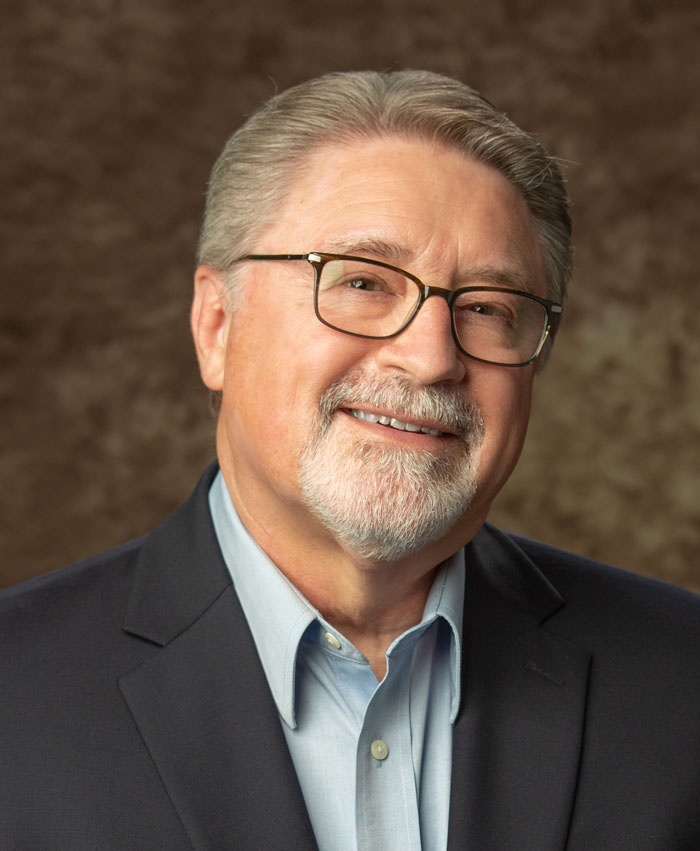
Randall A. Bach delights in opportunities to serve the Lord, including his current assignment as president of Open Bible Churches. He earned a master’s degree in organizational leadership from Regent University. Randall and Barbara, his wife, have been in ministry almost as long as they have been married. They are grateful to have celebrated their 50th Wedding Anniversary in 2021. Randall loves the church, pastors, and church leaders and is convinced that God loves to work through them to make disciples, develop leaders, and plant churches. A voice for Evangelicals, his work has been featured in several publications, including Ethics: The Old Testament, The New Testament, and Contemporary Application. He serves as a member of the Board of Directors and the Executive Committee of the National Association of Evangelicals.
Randall has produced and edited several publications and other resources, including the Message of the Open Bible, We Believe: Core Truths for Christian Living, and a doctrinal course for youth called We Believe for Kids! He also led the creation of Acquire, Open Bible’s online leadership development site.







There has been much discussion about the future of the Church. While I’m not a futurist or researcher, I’m grateful for voices that help us think wisely about pursuing the mission of the Church in an ever-changing culture. Researchers like Ed Stetzer and Carey Nieuwhof highlight some encouraging trends, such as revivals on college campuses, rising Bible sales, and Gen Z’s hunger for authentic faith.
I carry deep conviction and a faith-filled anticipation about what I see and am praying for. When I think about the Church and the days ahead, I don’t see a Church in retreat, but I do see a Church being refined – prepared for what God is getting ready to do. A victorious and glorious Church (Eph. 5:27).
When I think about the Church and the days ahead, I don’t see a Church in retreat, but I do see a Church being refined.
Jesus said, “I will build my church, and the gates of hell shall not prevail against it” (Matt. 16:18 ESV). That promise has no expiration date. Jesus is still building His Church today.
As the church advances, it will not stand on programs, buildings, or production. . . it will be built on the authority of Christ and the power of the Holy Spirit.
Across the body of Christ, there is a growing recognition that the future of the Church will not be built by addition alone, but by multiplication. Disciples will make disciples, leaders will develop and release leaders, and churches will plant churches. There are many voices helping to bring clarity to this, and we are seeing that same conviction take shape within Open Bible through our Mission to Multiply and the Power of We.
So, when I think about the Church and what is ahead of us, what do I see?
I SEE A MULTIPLYING CHURCH
We often measure success by attendance, budgets, and programs. While salvations and baptisms remain central, we must expand the scorecard. As Larry Walkemeyer describes in The River Church, we must move from “lake churches” that gather to “river churches” that send – becoming disciple makers who multiply.
The book of Acts shows us a model of a church that did not just meet but multiplied. The future will not belong to churches that simply gather a crowd, but it will belong to churches that make and send disciple makers. Jesus did not commission us to build an audience. He commanded us to go and make disciples (Matt. 28:19). Multiplication begins there – in intentional, relational, Spirit-led disciple making.
Multiplication is not just a strategy or a motto we adopt. It is the culture of Spirit-empowered, disciple-making churches. The Church I see measures health not only by attendance, but by how many are discipled, equipped, and sent to reproduce what’s been invested in them. This is our Mission to Multiply.
I SEE A SPIRIT-EMPOWERED CHURCH
We live in a time of rapid change. Technology, AI, and social media shape how we communicate and connect. These tools can be helpful, but they don’t transform lives. The Holy Spirit does.
These tools can be helpful, but they don’t transform lives. The Holy Spirit does.
Pentecost was Heaven’s defining moment for the birth of the Church and the fulfillment of what Jesus said in Acts 1:8. The early followers of Jesus did not have the influence, resources, or tools we have today. What they had was the power of God. That has not changed!
In the days ahead, more than ever, the Church will move forward not through innovation alone but through consecration. The church I see is unapologetically dependent on the Spirit of God.
I SEE A COURAGEOUS CHURCH
In the book of Acts, every step forward required courage – Peter and John before the Sanhedrin, Stephen in the face of death, Peter going to Cornelius’s home, the sending out of Paul and Barnabas. These were not small steps; they were courageous steps across cultural and spiritual boundaries. The early Church moved from gathering to going, from addition to multiplication. The expansion of the early Church was not accidental. It followed obedience and courage.
The Church I see will walk in that same Spirit.
Courage to preach the truth in love.
Courage to plant in hard places.
Courage to raise and release the next generation.
Courage to choose multiplication over comfort.
Courage to link arms with others for the sake of the greater mission.
Courage to build the Kingdom over our own castles.
We can stand on His promise and by His Spirit knowing “God has not given us a spirit of fear but of power and of love and of a sound mind” (2 Tim. 1:7 NKJV).
I SEE THE POWER OF WE
As we look forward, one of the strongest convictions I carry is this: our future will be stronger through the Power of We.
Individualism limits impact; partnership multiplies it. When we share vision, develop leaders, and align around mission, we step into something far greater than any one church could accomplish alone. I believe the future Church will not thrive through isolation but will flourish through collaboration. The church I see understands that “we” is stronger than “me.”
When we share vision, develop leaders, and align around mission, we step into something far greater than any one church could accomplish alone.
I am confident in what God has called us to:
The church that makes disciple makers will multiply.
The church that depends on the Holy Spirit will endure.
The church that walks in courage will advance. This is the church I see, and I believe we are being invited to build it together.
About the Author
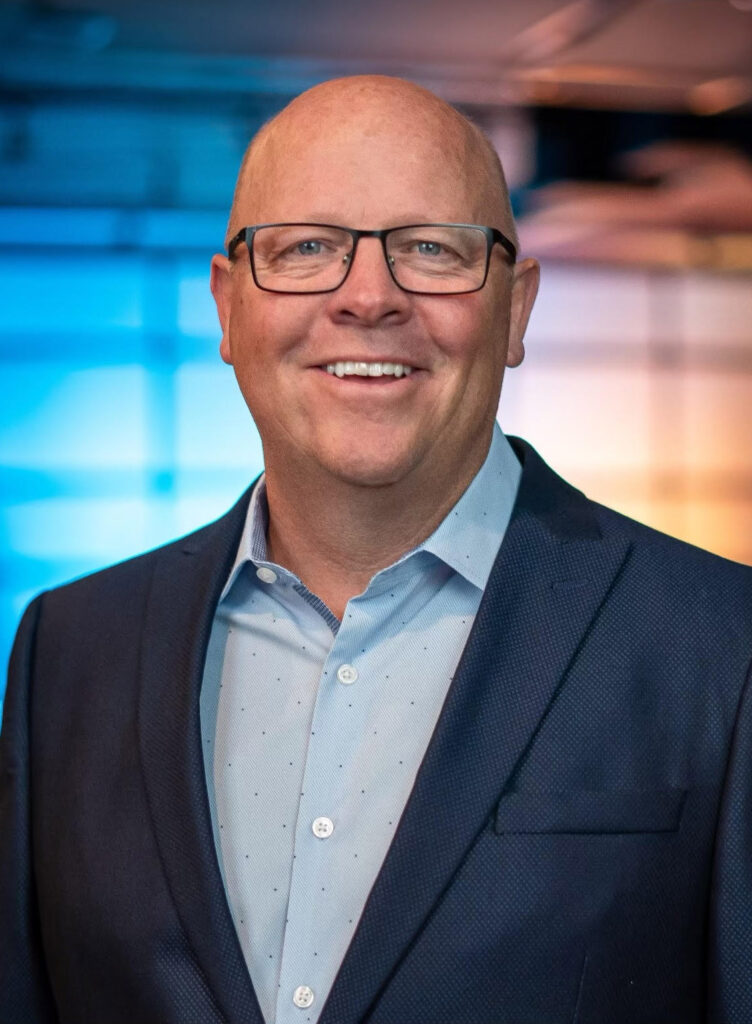
Michael Nortune serves as president of Open Bible Churches. He has ministered in the local church faithfully for thirty-five years. From his start as a janitor and groundskeeper to church planter and lead pastor of Life Church in Concord, California, Michael has had the opportunity to gain experience in every capacity within the church throughout his ministry. Not only does he have hands-on experience on the local level, but Michael has also led at the district, regional, and national levels within Open Bible Churches. Michael and his wife, Julie, currently reside in Colorado and love living near five of their six children and their spouses. They also treasure the time they spend with their other daughter who lives in Alabama with their first (but not the last) grandson!

Every January since my first year serving as president of Open Bible, I’ve invited our Open Bible family to set aside a week for focused prayer and fasting. We call it “Awakening”; it is a week to seek God together and align our hearts with His purposes for the year ahead.
Each year I’ve been encouraged by how many pastors, churches, and leaders have participated. I believe what began as a week of prayer and fasting is becoming something more—a movement of awakening across Open Bible.
… what began as a week of prayer and fasting is becoming something more—a movement of awakening across Open Bible.
As we approach Awakening 2026, I sense God calling us not simply to talk about prayer or to understand the priority, place, pattern, or even practice of prayer. All of these are biblical and essential, as we will see briefly. But what I also want us to embrace again is the promise of prayer.
As we commit ourselves to prayer and pray according to His will, we know He hears us. But I am also struck by this thought: if Jesus asks us to pray and shows us how to pray and what to pray, then surely He intends to answer those prayers. He would not instruct us to pray in a certain way only to respond, “I don’t think so,” or “That’s not something I would do.” When we pray according to His will, there is a promise attached. Let’s examine this thought in more detail.
The Priority of Prayer
In Matthew 6, Jesus says, “When you pray…” not if you pray, not “on your good days pray,” or “in desperation pray.” “When you pray” implies the expectation of regular and consistent time with Him. Prayer is essential for every one of us.
Jesus modeled this. We see that He frequently withdrew to places to pray and would rise early to spend time in prayer. Before performing miracles, making decisions, or facing challenges, He prayed. Prayer was His priority and His starting point. The disciples recognized this priority and eventually asked Him, “Lord, teach us to pray.” They could have asked Him how to do anything, yet the one thing they understood they needed was this life of prayer and communion with the Father.
If prayer was Jesus’ priority, it must be ours as well.
The Place of Prayer
Matthew 6:6 tells us to go into our room and pray to the Father. Prayer is personal and relational.
Luke 11 adds another layer: “Jesus was praying in a certain place.” This was familiar, intentional, habitual. Jesus returned to a place because prayer was His rhythm.
We all need a “certain place,” a space where we meet with God. The location isn’t what matters; His presence does. In that place of prayer, clarity grows, peace settles, and the Holy Spirit aligns our hearts with God’s will.
The Pattern of Prayer
For generations, believers have studied the Lord’s Prayer as a pattern to follow—and rightfully so. It includes worship, surrender, dependence, repentance, forgiveness, and spiritual covering. It is powerful and worth using as a model. But it’s more than a pattern. It’s an invitation to relationship. Prayer is not simply reciting words; it’s drawing near to the Father. The pattern leads us to the Person.
The Practice of Prayer
Prayer is a discipline we cultivate. Acts 1:14 says the early church “joined together constantly in prayer.” Prayer wasn’t an event; it was a lifestyle.
Prayer wasn’t an event; it was a lifestyle.
This connects to our MULTIPLY values. The “I” stands for Intimacy with God and fellowship with the Holy Spirit. Prayer is what produces that intimacy. The more we practice prayer, the more we recognize God’s voice and trust His leading.
The Promise of Prayer
Here is the point I want to drive home: Jesus didn’t just teach us how to pray; He promised God would hear our prayers, and His heart is to answer. If He told us to pray, “Your kingdom come, Your will be done on earth as it is in heaven,” then we can trust He desires to fulfill that prayer. He wants us to experience His Kingdom in our lives each and every day—a promise for us to possess.
Here are a few Scriptures that reinforce this idea:
- “Ask and it will be given to you…” (Matthew 7:7).
“I will do whatever you ask in my name…” (John 14:13).
“Call to me and I will answer you…” (Jeremiah 33).
“The prayer of a righteous person is powerful and effective.” (James 5:16).
“If we ask anything according to His will, He hears us…” (1 John 5:14).
Prayer is more than a pattern or routine; it also has a promise. When we pray according to His will, heaven responds.
As we prepare to step into 2026, I believe God is calling Open Bible to pray first. Before we make our plans, before we act or react, and before we lead, we pray.
Not prayer as routine, but prayer as relationship. Not prayer as obligation, but prayer as awakening. So, I invite every pastor, leader, and church to pursue intimacy with God and the fellowship of the Spirit this year. Hold onto the promise that He hears and answers.
Join us for Awakening 2026, January 18–24, as we pray and fast together with churches around the world, seeking God for a move of His Spirit in the year ahead.
About the Author

Michael Nortune serves as president of Open Bible Churches. He has ministered in the local church faithfully for thirty-five years. From his start as a janitor and groundskeeper to church planter and lead pastor of Life Church in Concord, California, Michael has had the opportunity to gain experience in every capacity within the church throughout his ministry. Not only does he have hands-on experience on the local level, but Michael has also led at the district, regional, and national levels within Open Bible Churches. Michael and his wife, Julie, currently reside in Colorado and love living near five of their six children and their spouses. They also treasure the time they spend with their other daughter who lives in Alabama with their first (but not the last) grandson!

Adapted from President Michael Nortune’s message at National Convention 2025
In 1990, during a game against the Cavaliers, Michael Jordan scored a career-high sixty-nine points. Rookie teammate Stacey King came in late and hit a single free throw. After the game, as reporters were clamoring around Michael Jordan for questions and quotes, King quipped, “I will always remember this as the night that Michael Jordan and I combined to score seventy points.”
It’s a humorous line — but also a profound picture of what it means to be part of something greater than yourself. In the Kingdom of God, it’s not about who scores the most; it’s about showing up, stepping in, and doing your part. Even one point matters when the mission is shared.
This is the heart behind The Power of We, the theme of our 2025 Open Bible National Convention. And I believe what we experienced together this year in Orlando was more than a gathering. It was truly a divine appointment!

President Michael Nortune unveils the new Open Bible logo.
Some arrived full of vision and faith while others came a bit weary from the weight of ministry. But what united us was not our circumstances or season; it was our shared faith, our shared mission, and our shared future.
From the first moment we worshiped together, it was clear: God was doing something deep among us. He reminded us that we were never meant to lead alone. The Church isn’t built by individuals — it’s built by people united in purpose, empowered by the Spirit, and connected in community.
It’s the Acts 2 model.
“All the believers were together…
Acts 2:1–4, 42–44
Each of them was filled…
All the believers devoted themselves…
All met together… they shared everything they had…”
Over and over, we see a Church that didn’t just meet — it moved together. The Holy Spirit didn’t fill a bunch of individuals scattered across the city. He filled a room full of believers who were unified in their pursuit of God and His mission.
We are in a defining moment, a time when God is inviting us to lift our eyes to the harvest and step boldly into what we call the Mission to Multiply. We believe in a future where there are life-giving, disciple-making, Spirit-empowered Open Bible churches in every state and in one hundred nations around the world who possess a missional mindset, a multiplying priority, and a mobilizing commitment.
Every church, every pastor, every nation represented globally in Open Bible is a result of that decision. And now it’s our turn.
In Luke 5 Jesus told Peter to cast his nets after a night of fruitless fishing. This time, the nets were so full they began to break. Scripture tells us “They signaled to their partners in the other boat to come and help them…” (Luke 5:7). Later it says, “James and John… were partners with Simon” (5:10).
Both Acts 2 and Luke 5:10 use the root word koinonia, meaning spiritual partnership. We see evidence of the disciples’ shared mission, shared identity, and shared sacrifice. That’s what Jesus built His Church on, and that’s what this movement, Open Bible, is built on.
In 1935, two revivalist groups, the Bible Standard Conference and the Open Bible Evangelistic Association, prayed and believed that together they could do more. As they joined their two growing movements together, they chose unity over independence, believing the mission was too important to accomplish alone.
We are the fruit of that decision. Every church, every pastor, every nation represented globally in Open Bible is a result of that decision. And now it’s our turn.
That’s why this year’s convention marked something historic. Our Executive Leadership Team (ELT) — The Regional Executive Directors, Global Missions Executive Directors and National President and Secretary/Treasurer — made a powerful decision: to lay down their individual logos and ministry-specific vision statements and embrace one unified identity.
We’re not just working near one another — we’re working with one another. We’re not separate voices, but one voice. We’re not serving competing visions, but one mission.
We’re not just working near one another — we’re working with one another. We’re not separate voices, but one voice. We’re not serving competing visions, but one mission: to globally make disciples, develop leaders, and multiply churches.
We even unveiled a new shared logo, not just as a design, but as a declaration: we are in this together. And it’s not just talk. It’s already happening.
Churches are being planted in creative ways. Ministries are being adopted and aligned. Schools of Ministry are raising up new leaders. INSTE is discipling new pastors. Open Bible Churches are being planted in new nations around the world.
As we look ahead, we need to continue to strengthen our existing churches, plant more churches nationally and globally, and develop younger leaders. We need to cultivate the next generation not just to inherit the work but to lead it forward.
The good news? We have everything we need.
As Paul reminds us in 1 Corinthians 1, “…Now you have every spiritual gift you need…. God has called you into fellowship with His Son, Jesus Christ our Lord. And He is faithful” (vs 7,9).
That’s the Power of We.
That’s the heart of Open Bible.
And that’s the hope for the road ahead.
So, let’s keep signaling across the water, joining our boats (churches) on mission together, and casting our nets together for a great harvest.
Here are some highlights from the Power of We Convention. See more Here:


About the Author

Michael Nortune serves as president of Open Bible Churches. He has ministered in the local church faithfully for 35 years. From his start as a janitor and groundskeeper to church planter and lead pastor of Life Church in Concord, California, Michael has had the opportunity to gain experience in every capacity within the church throughout his ministry. Not only does he have hands-on experience on the local level, but Michael has also led at the district, regional, and national levels within Open Bible Churches. Michael and his wife, Julie, currently reside in Colorado and love living near five of their six children and their spouses. They also treasure the time they spend with their other daughter who lives in Alabama with their first (but not the last) grandson!