
Featured Articles
What They Couldn’t See on the Scan: A True Story of an Impossible Healing


By Valerie Warren, as told to Hannah Bemis
They told me I was going to die.
Not in a vague, someday-everyone-does kind of way. A doctor looked me in the eyes and said, “You did not hear me. You’re going to die.” I was supposed to have eleven months to live. That was in 2022. Today, I am still here and more certain than ever that miracles are real.
It all started in July of that year. I was working on our property when it hit me that I’d been feeling extra tired, more tired than I’d ever been. I told my husband, “Something is off; when we go back to town, I really think I need to go to the doctor.”
At my doctor’s appointment they did some bloodwork, telling me they’d give me a call if they saw anything alarming. It was all very casual until they called me while I was still driving home, telling me I needed to come to the emergency room immediately.

Valerie and husband Tony (center), and kids Heath, Lorissa, Hope, and Victoria (left to right)
In simple terms, my liver was “jammed up” and nothing could move. I was hospitalized while they put a stent in my biliary duct to open things up. It was during that procedure that the doctor saw a spot on my pancreas. On July 22, I was told I had pancreatic cancer. The “spot” turned out to be a tumor at the head of my pancreas, big enough that it was pinching off that whole area and blocking anything from flowing through.
“You did not hear me.
You’re going to die.”
As bad as that sounds, I was told it was only stage one and that with chemotherapy and Whipple surgery, I would very likely survive. While in the hospital, I had developed pancreatitis, so before releasing me to go home, they did some additional scans to confirm the infection was gone. It was on one of those scans that they noticed a spot on my liver. By the next week that spot had grown, and there were additional spots. On September 7, my original diagnosis of stage one pancreatic cancer was abruptly changed to a stage four diagnosis.
I was with my husband and my best friend when the doctor gave us the grim news. “You have stage four pancreatic cancer, and there is no cure. All we can do is give you palliative chemotherapy. As of right now we’re giving you one month to three years, but the average survival is eleven months.”

My husband and best friend were, of course, crying, but I was sitting there dry-eyed, just processing. The doctor must have interpreted this as shock because she repeated herself in even starker terms: “You did not hear me. You’re going to die.”
Something shifted in me at that moment. All I can say is that I just knew I could trust God. Focusing on the doctor, I said, “I did hear you, but you cannot give me my end date. The only person who can tell me when I’m going die is my Lord.”
I continued my palliative treatments for the remainder of 2022 and into 2023. During that year the support of my faith community was incredible. Groups of ladies from the local Open Bible church, Church of the Cascades, dropped off gift baskets, came to visit to just sit with me or watch a movie, or stopped by to pray.
Their efforts really touched me. The remarkable thing is that my family didn’t even attend Church of the Cascades; we had attended in a previous season but had left for a time. Despite this, the people there were a constant support. It wasn’t long before my husband and I made the decision to return, knowing that this was truly our church home.
“Why aren’t you asking for a miracle?”
It was actually a Church of the Cascades ladies’ retreat that became the pivot point for my cancer story. On a Wednesday night in October 2023, I was praying in preparation for the retreat. I was praying all the things I usually did, “Lord, I trust you, and whatever you want to do with me, just use me.” Only this time, the Lord interrupted me:“Why aren’t you asking for a miracle?”
I didn’t have an answer. I had been saying over and over that I trusted Him, and I was quick to ask for a miracle for others, but I hadn’t articulated that request for myself. That night in bed I laid my hands on my belly, simply saying, “Lord, I’m asking right now for that miracle. Will you remove my cancer? Can I just live?”
The next day I was scheduled to have a CT scan before heading to the ladies’ retreat, but the appointment didn’t go as planned. The technicians were unable to access my veins, so they said we’d have to reschedule. As I climbed into the truck with my husband, I said, “Babe, this isn’t about a canceled CT. I really feel like the Lord is going to heal me this weekend at the retreat and that’s why this is canceled. He’s going to show me proof of His healing during my rescheduled scan after I get back.”

The retreat was amazing. The last night was saturated in prayer; everyone was praying for everyone. I was being held and prayed for by my friend Sheryl, and for the first time since my initial diagnosis, I cried and cried, finally saying out loud, “I don’t want to die!”
On the final morning of the retreat, a few friends and I decided to take one last picture on the beach. As we were standing by the water, a group of three ladies from another church who were attending the retreat came walking up. I had never met these women, but they wanted to tell me that during the prayer time the previous evening, they had seen light surrounding me.
“You were literally glowing,” they said. My friends responded by telling these women my story, after which all of them prayed for me again. I was in awe at how those women had described the sight of me glowing. Looking back, I often wonder, “Is that the moment, God? Is that the moment when you were healing me?”
My rescheduled scan happened the Wednesday after my return. The results were emailed to me through MyChart (an online medical chart) first. As I read the results, it seemed to me like there was no cancer found. I ran downstairs to where my daughter was and said, “Victoria, read this. What do you think it means?”
She read it and said, “It sounds like there’s nothing there!”

“Right,” I said, “Don’t get too excited because I’m not a doctor and I could be missing something.” I called my husband and told him, “I think it’s gone!” He was driving and had to pull over because he was bawling. We were both crying, but I kept saying, “Let’s not get too excited. We’ve got to meet with the doctor tomorrow.”
Our appointment with the doctor the next day was strangely routine at first. “Yeah, your numbers look great. We’ll just keep doing what we’re doing,” he said.
I replied, “Wait. Hold on a sec. Can you go look at my latest scan because if I’m not mistaken, it looks like they’re not seeing anything anymore.” He pulled out my chart and after looking at it said, “Oh my gosh. You’re right…they’re saying there’s nothing there.”
You might wonder how the doctor didn’t notice this without my pointing it out, but don’t we often miss what we’re not looking for? Frankly, he was convinced I was going to die. When I talk to the doctors now, they tell me that they didn’t expect me to make it past six months. They would glance at my scans and see what they expected to see — “Yep, she’s still got it.” They didn’t see the scan saying the cancer had gone away because stage four pancreatic cancer doesn’t go away. Except this time, it did.
…stage four pancreatic cancer doesn’t go away. Except this time, it did.
After verifying that my scan hadn’t gotten mixed up with someone else’s, my medical team sent me to get a second opinion at MD Anderson Cancer Center in Texas. After the specialists there scanned me with their top-of-the-line equipment, they saw once again that, impossibly, I was clear. The cancer was all gone. That was in January of 2024.
Since that time, I’ve had scans every three months, and I am still cancer free. I wish I could record the conversations I have with the doctors each time. They can’t fathom it. “This is all new to me,” they’ll say, “I’m not sure where to go from here.”
No one expected me to live, and yet here I am. I’ve been able to share my testimony with hundreds of people through social media, through my business, and at a recent women’s event. The most precious thing to come out of all of this is that I got to lead both a friend and my mother-in-law to the Lord.
For those of you who are faced with an impossible situation or diagnosis, I just want to say, trust in the One who made you. Don’t focus on the thing; focus on the Lord. In Jesus we have hope, and God really can do the impossible. He will use your story, no matter what. Trust in the One who made you.
About the Author

Valerie Warren is a lifelong resident of Central Oregon and currently resides in beautiful Bend, where she is an active member of Church of the Cascades. She and her husband, Tony, have been married for nearly thirty-one years and together they have three daughters, a son-in-law, and a beloved grandson.
Valerie works part-time alongside her husband and runs her own business, which she sees as a platform to build meaningful relationships with women and share her faith in Jesus. Her greatest joy comes from spending quality time with her family and friends.




I woke up unable to speak. A breathing tube filled my throat. Machines surrounded my hospital bed. I was confused, intubated, and lying in an ICU room with no memory of how I got there. But strangely, I was not afraid. In the middle of the chaos, God gave me an unexplainable peace.
I motioned desperately for paper and pencil so I could ask two questions: What happened? And where is George?
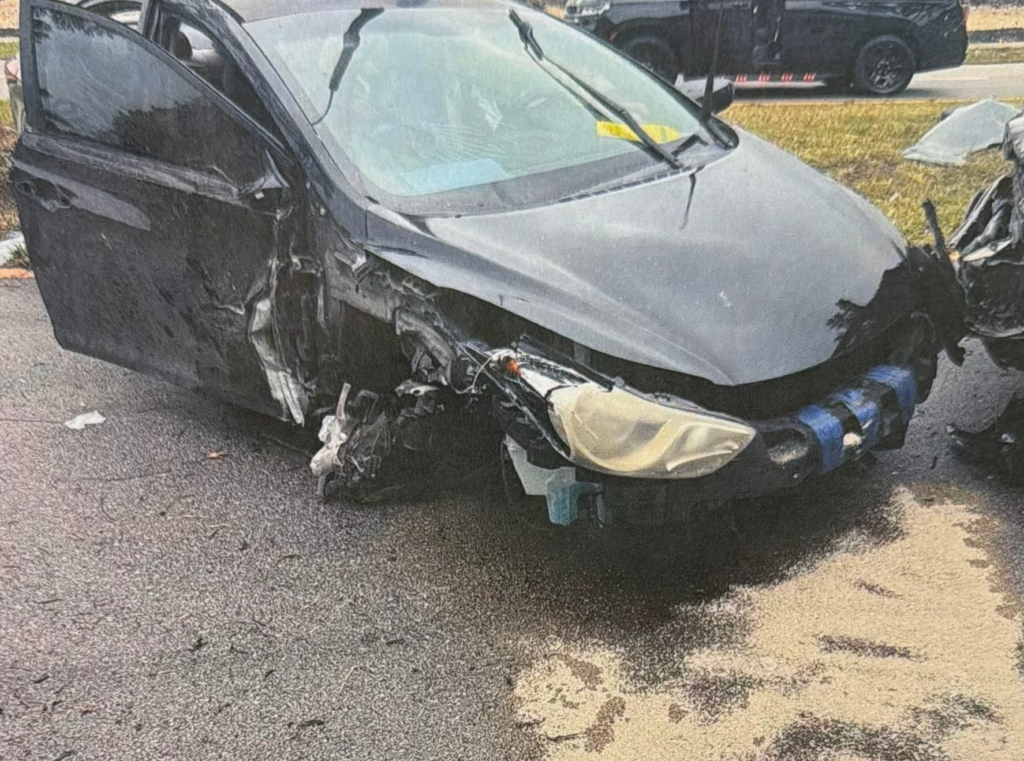
My son’s father explained that I had been in a serious car accident. The car was completely destroyed. I had been found trapped beneath the steering wheel with severe facial injuries.
That morning — January 22, 2026 — had started like any other Thursday. I got ready for work, buckled my 18-month-old son George into his car seat, and pulled out of the driveway expecting an ordinary day.
It became anything but ordinary.
My neighbor, who had left home at the same time I did, later explained what happened. We were both driving around fifteen miles per hour when the car I was driving suddenly lost control. I still do not know why, and I have no memory of the moment itself.
By the grace of God, George was almost completely untouched.
The car hit a cement light pole, crossed into oncoming traffic, and was struck head-on by another vehicle. Both vehicles spun, and the car I was driving slammed into another cement light pole.
By the grace of God, George was almost completely untouched.
The back windshield shattered directly above him, yet the glass never harmed him because of the position his car seat landed in. The entire back left side of the car was crushed inward, but George had been seated on the back right side. Even now, I can only thank God for His protection.
I was taken by ambulance to the hospital and admitted into the Trauma ICU. Doctors told my family that I had suffered severe head trauma resulting in a brain bleed. I was also bleeding internally in my abdominal area, and they began preparing my family for the possible loss of my pregnancy.
… the doctors did not know the God my family and I serve — and how merciful He is.
But the doctors did not know the God my family and I serve — and how merciful He is.
My family immediately began to pray. Members of my church, Open Bible Church of Homestead, began arriving at the hospital, and soon an entire army of people was interceding for me.
During those first two days, I drifted in and out of consciousness and remember very little. But one moment remains clear in my mind: I heard the song “I Surrender” by Hillsong Worship playing in my hospital room. The lyrics, “Like a rushing wind, Jesus breathe within, Lord have Your way, Lord have Your way in me,” stayed with me and brought a deep sense of comfort in the middle of everything happening around me. In that moment, those words became my prayer as I quietly prayed, “I leave this in Your hands.”

After three days in the ICU, I was successfully extubated and began making remarkable progress. Ultrasounds showed a happy, active baby, and the bleeding had stopped.
On the fourth day, I was transferred out of the ICU into intermediate care before eventually moving to the medical-surgical floor. Doctors then began preparing me for maxillofacial surgery to reconstruct my face after multiple fractures.
On January 30, I underwent an eight-hour surgery. By God’s grace, the procedure was successful, and another ultrasound afterward showed my unborn baby remained active and healthy. On February 3, I was finally discharged and able to return home.
Since then, my recovery has gone smoothly. I am now twenty-eight weeks pregnant and waiting expectantly for the arrival of my baby. Through every frightening moment, God gave me strength and peace, and I never doubted His mercy.
Today, I am a living testimony of His grace.
About the Author

Thammy Castro is a behavior technician living in Miami and a soon-to-be mother of two. In her free time, she enjoys traveling with her family. She is a member of Open Bible Church of Homestead, where her parents, Jose and Maria Castro, serve as pastors.

There has been much discussion about the future of the Church. While I’m not a futurist or researcher, I’m grateful for voices that help us think wisely about pursuing the mission of the Church in an ever-changing culture. Researchers like Ed Stetzer and Carey Nieuwhof highlight some encouraging trends, such as revivals on college campuses, rising Bible sales, and Gen Z’s hunger for authentic faith.
I carry deep conviction and a faith-filled anticipation about what I see and am praying for. When I think about the Church and the days ahead, I don’t see a Church in retreat, but I do see a Church being refined – prepared for what God is getting ready to do. A victorious and glorious Church (Eph. 5:27).
When I think about the Church and the days ahead, I don’t see a Church in retreat, but I do see a Church being refined.
Jesus said, “I will build my church, and the gates of hell shall not prevail against it” (Matt. 16:18 ESV). That promise has no expiration date. Jesus is still building His Church today.
As the church advances, it will not stand on programs, buildings, or production. . . it will be built on the authority of Christ and the power of the Holy Spirit.
Across the body of Christ, there is a growing recognition that the future of the Church will not be built by addition alone, but by multiplication. Disciples will make disciples, leaders will develop and release leaders, and churches will plant churches. There are many voices helping to bring clarity to this, and we are seeing that same conviction take shape within Open Bible through our Mission to Multiply and the Power of We.
So, when I think about the Church and what is ahead of us, what do I see?
I SEE A MULTIPLYING CHURCH
We often measure success by attendance, budgets, and programs. While salvations and baptisms remain central, we must expand the scorecard. As Larry Walkemeyer describes in The River Church, we must move from “lake churches” that gather to “river churches” that send – becoming disciple makers who multiply.
The book of Acts shows us a model of a church that did not just meet but multiplied. The future will not belong to churches that simply gather a crowd, but it will belong to churches that make and send disciple makers. Jesus did not commission us to build an audience. He commanded us to go and make disciples (Matt. 28:19). Multiplication begins there – in intentional, relational, Spirit-led disciple making.
Multiplication is not just a strategy or a motto we adopt. It is the culture of Spirit-empowered, disciple-making churches. The Church I see measures health not only by attendance, but by how many are discipled, equipped, and sent to reproduce what’s been invested in them. This is our Mission to Multiply.
I SEE A SPIRIT-EMPOWERED CHURCH
We live in a time of rapid change. Technology, AI, and social media shape how we communicate and connect. These tools can be helpful, but they don’t transform lives. The Holy Spirit does.
These tools can be helpful, but they don’t transform lives. The Holy Spirit does.
Pentecost was Heaven’s defining moment for the birth of the Church and the fulfillment of what Jesus said in Acts 1:8. The early followers of Jesus did not have the influence, resources, or tools we have today. What they had was the power of God. That has not changed!
In the days ahead, more than ever, the Church will move forward not through innovation alone but through consecration. The church I see is unapologetically dependent on the Spirit of God.
I SEE A COURAGEOUS CHURCH
In the book of Acts, every step forward required courage – Peter and John before the Sanhedrin, Stephen in the face of death, Peter going to Cornelius’s home, the sending out of Paul and Barnabas. These were not small steps; they were courageous steps across cultural and spiritual boundaries. The early Church moved from gathering to going, from addition to multiplication. The expansion of the early Church was not accidental. It followed obedience and courage.
The Church I see will walk in that same Spirit.
Courage to preach the truth in love.
Courage to plant in hard places.
Courage to raise and release the next generation.
Courage to choose multiplication over comfort.
Courage to link arms with others for the sake of the greater mission.
Courage to build the Kingdom over our own castles.
We can stand on His promise and by His Spirit knowing “God has not given us a spirit of fear but of power and of love and of a sound mind” (2 Tim. 1:7 NKJV).
I SEE THE POWER OF WE
As we look forward, one of the strongest convictions I carry is this: our future will be stronger through the Power of We.
Individualism limits impact; partnership multiplies it. When we share vision, develop leaders, and align around mission, we step into something far greater than any one church could accomplish alone. I believe the future Church will not thrive through isolation but will flourish through collaboration. The church I see understands that “we” is stronger than “me.”
When we share vision, develop leaders, and align around mission, we step into something far greater than any one church could accomplish alone.
I am confident in what God has called us to:
The church that makes disciple makers will multiply.
The church that depends on the Holy Spirit will endure.
The church that walks in courage will advance. This is the church I see, and I believe we are being invited to build it together.
About the Author
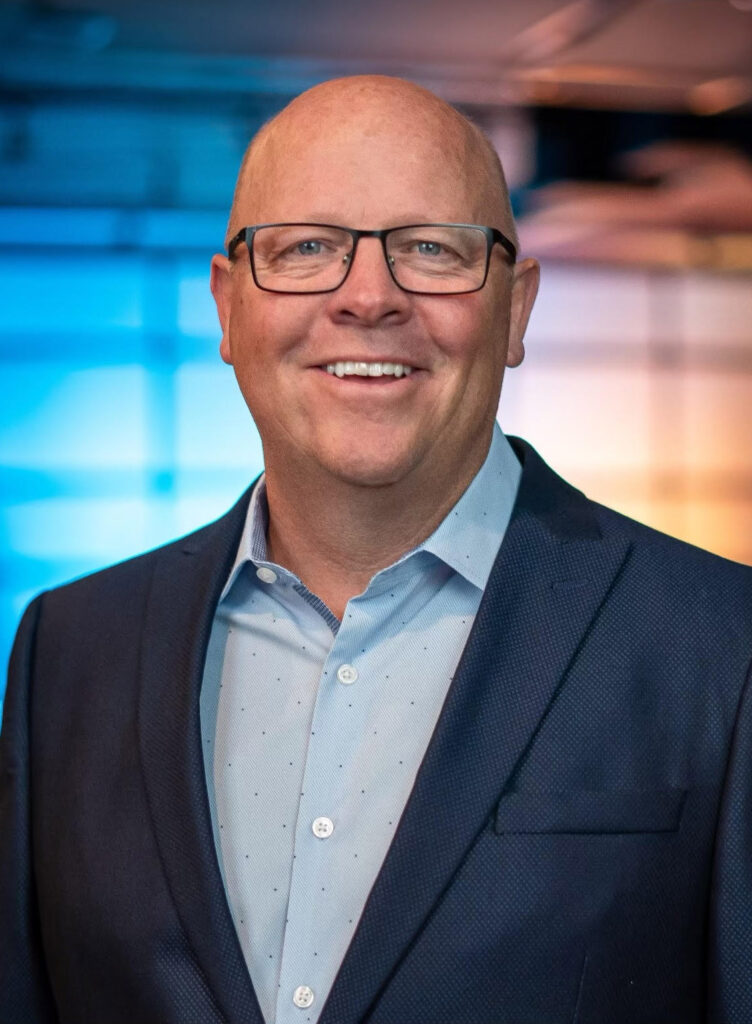
Michael Nortune serves as president of Open Bible Churches. He has ministered in the local church faithfully for thirty-five years. From his start as a janitor and groundskeeper to church planter and lead pastor of Life Church in Concord, California, Michael has had the opportunity to gain experience in every capacity within the church throughout his ministry. Not only does he have hands-on experience on the local level, but Michael has also led at the district, regional, and national levels within Open Bible Churches. Michael and his wife, Julie, currently reside in Colorado and love living near five of their six children and their spouses. They also treasure the time they spend with their other daughter who lives in Alabama with their first (but not the last) grandson!


Isaac dug out again the wells that were dug during the lifetime of his father Abraham. The Philistines had closed them up after Abraham’s death. Isaac gave them the same names his father had given them. Isaac’s servants dug wells in the valley and found a well there with fresh water. (Genesis 26:18-19 CEB).
I came to faith as a teenager and had very few church experiences up to that point. My earliest formation as a Christ follower took place within Open Bible church settings, where I found deep community and meaningful spiritual experiences that I continue to value. At the same time, as in many modern evangelical churches, there was limited exposure to the ancient liturgies and historic practices of the wider Church.

These traditional cornerstones that were foundational to ecclesial life for millennia had been almost eliminated in the churches I attended. It seemed to me that these practices were at best met with ignorance and at worst with grave suspicion. The predictable result was that any real understanding and appreciation for ancient liturgical practices was absent from the first two decades of my church life. I rarely thought about things like Ash Wednesday services, the Book of Common Prayer, and Advent, and if I did, it was with a healthy side dish of uninformed judgment. I viewed Lent the same way I viewed lentils: it was a cold and exotic experience that was both frightening to prepare and painful to consume.
I viewed Lent the same way I viewed lentils: it was a cold and exotic experience that was both frightening to prepare and painful to consume.
This was my context as a few of our church staff began asking whether we could introduce some of these ancient practices into our church worship experience. As you might imagine given my church background, it took me a while to warm up to the idea. I began a process of asking questions, listening, and learning, even reaching out to an Anglican priest friend to hear his take on the value of these long-held traditions. Through all this, Christ in His goodness and patience has allowed us now to incorporate many of these practices into our regular church experience. As a result, I am happy to report that we are experiencing wonderful depth and meaning in our gatherings as we’ve adopted and applied some of these long-proven elements of discipleship.

Our time of worship now always includes the public reading of a Psalm (a practice we have adopted from the Book of Common Prayer) to bring us back to the ancient hymn book of Israel. We have a fresh understanding of what it is to give up something physical in order to gain something spiritual as we fast in the forty days of Lent. Christmas time and the lighting of Advent candles help us celebrate Christ’s first arrival while reminding us to await His second arrival. And Ash Wednesday, with its outward sign of repentance and mortality, leads us to humble ourselves before God, understanding how desperately we need His saving grace. Finally, the celebration of life on Easter Sunday has far greater meaning now because it is preceded by the sobriety of the death we remember on Good Friday.
This is not to say that incorporating these elements has always been smooth. We’ve learned to introduce them slowly and with great attention to the “why” behind the “what.” Along the way, we’ve had our share of growth opportunities and mishaps. One example happened early on in our journey, when we tried to introduce some ancient call and response types of prayers. The practice led several people to worry that we had become a completely different kind of church. We haven’t yet reintroduced those prayers in our services.
We have found that moving slowly and consistently, explaining the meaning of the practices, and laughing at ourselves through our failed attempts have been the key ingredients to discovering the power of these ancient gifts.
Another example took place during last year’s Ash Wednesday service. During this type of service, ash is used to mark the sign of a cross on each believer’s forehead. This marking symbolizes our own mortality and repentance, as we take up our cross and turn from our sins. Well, our beloved worship leader wanted to add scent to the ashes to create a fuller sensory experience. To do so, he incorporated essential oils, including cinnamon, into the ashes. Little did any of us know that undiluted cinnamon oil burns on the skin. Talk about your full sensory experience. All of us in the service sat wondering what it reveals about our spiritual condition if the ash cross on our forehead feels like it’s on fire. There was a great sigh of relief when our executive pastor let people know what had happened, and a mad dash to the bathrooms ensued as people quickly washed away the painful marker. The next Sunday I formally apologized for turning their Ash Wednesday into a Rash Wednesday.
In these moments and more, we have found that moving slowly and consistently, explaining the meaning of the practices, and laughing at ourselves through our failed attempts have been the key ingredients to discovering the power of these ancient gifts. Just as Isaac reopened the ancient wells of his father to discover pure water, we too can rediscover the meaning of these ancient practices in our churches and experience their fresh water again.
About the Author

Aaron Sutherland is the founding pastor of Cove Church in Eugene, Oregon, and the Director of Multiplication for Pacific Region Open Bible. Along with his wife, Paula, he finds great joy in watching God reveal the new stories being written into the lives of people from every corner of the world.