
President's Perspective
Less Than Human?


By Randall A. Bach
Approximately six million people were annihilated during the Holocaust, a deliberate and planned execution of Jews and other enemies of the Nazis. Today, there is a Holocaust museum in Israel, Yad Vashem, that houses a heart-rending exhibit that honors the men, women, and children who were victims of the Holocaust. I have been there; the experience is sobering. The Holocaust Memorial Museum in Washington, D.C. is also worthy of a visit. Viewing the pictures, videos, stories, and artifacts of families whose lives were exterminated with the effectiveness of a slaughterhouse is a painfully emotional experience. I have walked into a room at the Dachau concentration camp, outside Munich, Germany, that victims were told was a shower room. However, instead of receiving a shower upon entry, victims were gassed to death. I peered into the ovens at Dachau where factory-like cremations of victims took place around the clock, belching black smoke and human ashes into the sky.
My mind struggled to come to terms with how human beings could be so heartless and calculating as those mass murderers. How could anyone, and especially an entire set of a nation’s leaders, possibly become so demented and depraved, apparently devoid of moral conflict? The perpetrators convinced themselves that their victims were something less than human beings. Nazis considered Jews to be expendable like vermin. If people could convince themselves that some human beings were not actually human, then extermination was but a matter of determining mass efficiency to carry out the act. Once that distortion was established then no evil act was considered too heinous. The term for murder on that scale against a people group is genocide.
In one hundred nations over one century one billion babies have been aborted.i
I was stunned when I read that statement. How could this possibly be? One billion? The six million people exterminated in the Holocaust are but 0.6 percent of 1 billion. Mind boggling! Sadly, the genocide of abortion is that much greater in scale than the Holocaust. There may be people who object to the comparison. Frankly, I recoil at doing so until I consider how aborted babies’ lives are calculatedly terminated by hideously painful and tortuous procedures. The Holocaust was engineered by people in Nazi garb and inspired by a maniacal leader whereas abortions are administered by people in medical garb with the permission of often desperate mothers-to-be. The mission of the Holocaust was the mass extermination of an entire ethnicity whereas abortions are individually applied. However, in New York City, more black babies are aborted than are born alive (WSJ, July 18, 2018), indicating a disproportionate ethnic impact. The Holocaust defied international norms and is widely condemned as genocide whereas abortion is widely viewed as a necessity for the health, betterment, and well-being of a mother-to-be. In that view, the health, betterment, and well-being of the unborn infant is not worthy of consideration.
Abortions hold this in common with the Holocaust: Abortion advocates and providers convince themselves that their victims are something less than human. To an abortionist, fetal tissue becomes a baby, a human being, only when “we” say so and because it is wanted. If the fetal tissue is not wanted, is inconvenient, or deemed unacceptable for some other reason it can be dismembered while alive in the womb. Or as is increasingly finding acceptance, the infant can be terminated at birth, a practice which has historically been considered infanticide. How could we descend to such depravity, to legitimize the termination of innocent life, and on a scale that qualifies as genocide?
I believe it is important that we approach the matter of abortion on at least three levels: First, to vigorously oppose policies and laws that legitimize abortion as a practice and to help the public realize what a grisly and dehumanizing approach it is to “family planning.” Second, we need to extend compassionate love to women who have undergone abortion. According to Focus on the Family: Professional counselors tell us that many women who have had an abortion are not able to
- process the painful thoughts and emotions—especially guilt, anger and grief – that arise from an abortion experience.
- identify, much less grieve, their loss.
- come to peace with God, themselves and others involved in the pregnancy and abortion decision.2
Third, we need to make sure women who are considering abortion know there are alternatives. Jessica Francavilla underwent three abortions before experiencing new life in Christ. Jessica vulnerably shared as my guest on a Better Roads podcast about the guilt and pain from her choices and about the wonderfully redemptive forgiveness of God. “I know now, but I did not know then. I know about the long-term effects of abortion,” she states.
Jessica lovingly and gently speaks to every woman who has had or is contemplating having an abortion. She had opportunity to speak on the steps of the United States Supreme Court about the realities and effects of abortion on women and families. She identifies with women who feel forced to have an abortion because it seems like there is no other option. When she was deciding what to do with her pregnancies, Jessica was aware only of Planned Parenthood as an agency to “help” her. She did not know about the availability of crisis pregnancy centers.
“You are not alone in your fears and guilt,” Jessica shares with women who are considering abortion. “It is a lifelong decision. Circumstances are temporary, but this type of decision does not leave you.” And to women who have had an abortion she says, “There is grace and forgiveness for you.”
In Proverbs we are instructed to “speak up for those who cannot speak for themselves; ensure justice for those being crushed” (31:8-9, NLT). One person reported that during the Holocaust, people attending church services would sing hymns at the top of their lungs in an attempt to stifle the sound of cries coming from passing trains that were carrying Jews to their death. If we turn away from the abortion issue, are we any better than those worshipers? Whether or not we can hear a baby cry in her mother’s womb, that child’s pain and her death are just as real, and just as sad.
i Abortion Worldwide Report (2018)
2Reisser, Teri and Paul. “Dealing with the Trauma of a Past Abortion.” Focus on the Family, December 16, 2016, focusonthefamily.com/pro-life/dealing-with-the-trauma-of-a-past-abortion/






A few years ago, while I was pastoring in California, our church had a dream for our mission trip to Mexico: to build two homes for two families in need. We believed it was a God-given dream, but we had only enough resources to build one home (and even that was a stretch). Despite our prayerful planning, the resources for the second home seemed out of reach.
Then something unexpected happened. A pastor from another state heard about what we were trying to accomplish. He wasn’t part of our church. He wasn’t part of our denomination. In fact, he had no obligation or benefit to help us at all. Yet he believed in the vision God had given us. His church provided the remaining funds, and because of their generosity, two families instead of one received homes.
I have never forgotten that response because it reminded me that God’s Kingdom has always been bigger than any one church, ministry, or even denomination.
In a world that often celebrates building our own name and platform, the words of Jesus are challenging:
“But seek first the kingdom of God and His righteousness…” (Matt. 6:33 NKJV).
“But seek first the kingdom of God and His righteousness…”
(Matt. 6:33 NKJV)
Notice what Jesus didn’t say. He didn’t tell us to seek first our own ministries, churches, or reputations. He called us to seek first His Kingdom. And when we do, something beautiful happens.
We begin celebrating what God is doing beyond our own walls. We stop asking, “How does this benefit us?” and instead ask, “How can we join what God is doing?” Our perspective shifts from ownership to stewardship and from building our own kingdoms to advancing His.
I believe that this perspective shift is one of the key reasons the early church experienced such extraordinary multiplication and unity.
Acts 2 gives us one of the clearest pictures in all of Scripture of what happens when God’s people put His Kingdom first. The chapter is, in many ways, the story of “all.” Or as I like to say, “The Power of We.”
The result we see is twofold: they enjoyed the goodwill of all the people, and each day God added to those being saved.
Their unity resulted in the Kingdom of God multiplying beyond what any individual could accomplish or hope for. Their unity wasn’t manufactured; it was built on seeking first the Kingdom of God and His righteousness.
I love how Psalm 133 expresses this truth:
“How good and pleasant it is when God’s people live together in unity. . . For there the Lord bestows his blessing” (Psalm 133:1-3 NIV).
When is the blessing of the Lord released? When His people prioritize unity.
When churches work together in unity, their unity does not diminish the importance of each individual church. Quite the opposite. I deeply believe the local church is God’s plan for reaching the world. Every church matters. Every pastor matters. Every congregation has a unique calling to fulfill.
But what is encouraging is to know that our local churches are part of something much larger. Open Bible Churches is not the Kingdom of God. Your local church is not the Kingdom of God. But together we are privileged to be part of Christ’s Church, advancing His Kingdom alongside brothers and sisters from every tribe, tongue, and nation, who all proclaim Jesus Christ as Lord.
Imagine what could happen if every church celebrated every life changed, every church planted, every missionary sent, every leader raised, every community impacted, not because it happened through “our” ministry, but because it advanced His Kingdom. We don’t all have the same assignment, but we do share the same mission.
We don’t all have the same assignment, but we do share the same mission.
I believe that’s the kind of unity Jesus prayed for. I believe that is the kind of unity we are striving for. It is the kind of unity the early church experienced, and it’s the kind of unity our world desperately needs to see today.
Remember that pastor who helped my church build homes in Mexico? What made his contribution even more remarkable was that his own church was in the middle of a building project. They had needs of their own. They could have easily said, “Maybe another time.” Instead, they chose to invest in someone else’s Kingdom assignment while trusting God to provide for theirs. I will never forget it. He wasn’t thinking about whether it was his church’s project or what it meant for their own building campaign. He simply recognized it was God’s work and chose to be part of it.
May that be true of us
Perhaps that’s what Jesus had in mind when He said,
Seek first the Kingdom of God.
When His Kingdom becomes our highest priority, our own agendas begin to take their proper place. Unity becomes more than something we talk about; it becomes something we live. We celebrate what God is doing through others because we recognize that every life changed, every church strengthened, every missionary sent, every young leader raised, and every community impacted is a victory for the Kingdom.
When God’s people seek His Kingdom first, I believe He still does what He has always done. He pours out His blessing and advances His Kingdom through a united church.
About the Author
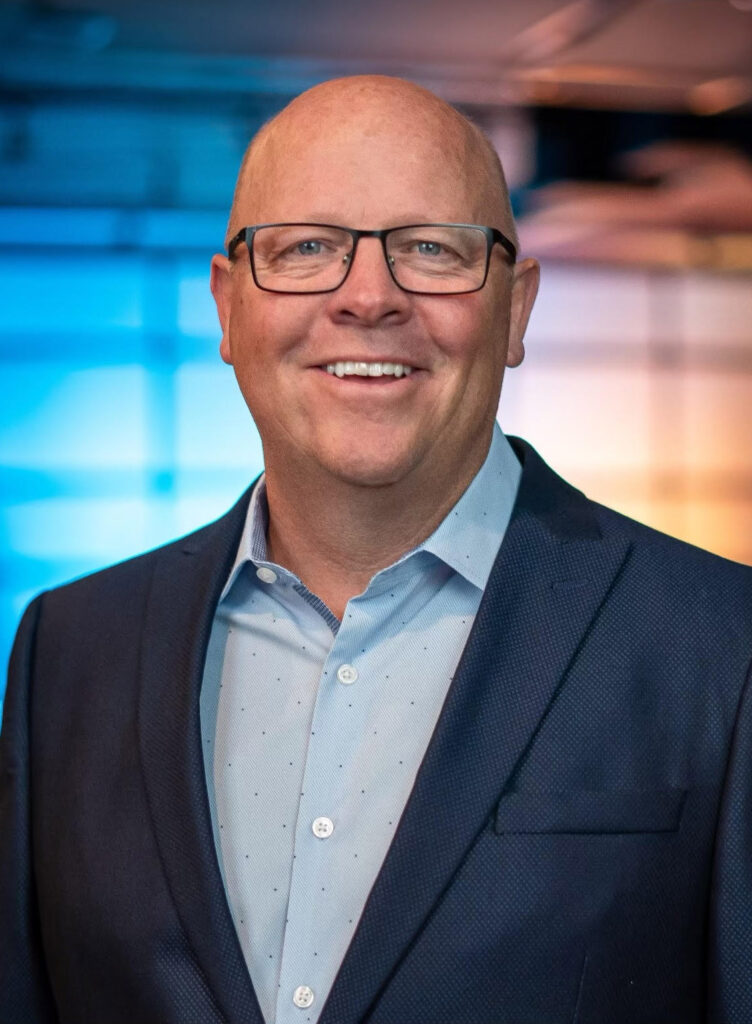
Michael Nortune serves as president of Open Bible Churches. He has ministered in the local church faithfully for over thirty-five years. From his start as a janitor and groundskeeper to church planter and lead pastor of Life Church in Concord, California, Michael has had the opportunity to gain experience in every capacity within the church throughout his ministry. Not only does he have hands-on experience on the local level, but Michael has also led at the district, regional, and national levels within Open Bible Churches. Michael and his wife, Julie, currently reside in Colorado and love living near four of their six children and their spouses. They also treasure the time they spend with their five grandsons (and counting) whenever possible!

There has been much discussion about the future of the Church. While I’m not a futurist or researcher, I’m grateful for voices that help us think wisely about pursuing the mission of the Church in an ever-changing culture. Researchers like Ed Stetzer and Carey Nieuwhof highlight some encouraging trends, such as revivals on college campuses, rising Bible sales, and Gen Z’s hunger for authentic faith.
I carry deep conviction and a faith-filled anticipation about what I see and am praying for. When I think about the Church and the days ahead, I don’t see a Church in retreat, but I do see a Church being refined – prepared for what God is getting ready to do. A victorious and glorious Church (Eph. 5:27).
When I think about the Church and the days ahead, I don’t see a Church in retreat, but I do see a Church being refined.
Jesus said, “I will build my church, and the gates of hell shall not prevail against it” (Matt. 16:18 ESV). That promise has no expiration date. Jesus is still building His Church today.
As the church advances, it will not stand on programs, buildings, or production. . . it will be built on the authority of Christ and the power of the Holy Spirit.
Across the body of Christ, there is a growing recognition that the future of the Church will not be built by addition alone, but by multiplication. Disciples will make disciples, leaders will develop and release leaders, and churches will plant churches. There are many voices helping to bring clarity to this, and we are seeing that same conviction take shape within Open Bible through our Mission to Multiply and the Power of We.
So, when I think about the Church and what is ahead of us, what do I see?
I SEE A MULTIPLYING CHURCH
We often measure success by attendance, budgets, and programs. While salvations and baptisms remain central, we must expand the scorecard. As Larry Walkemeyer describes in The River Church, we must move from “lake churches” that gather to “river churches” that send – becoming disciple makers who multiply.
The book of Acts shows us a model of a church that did not just meet but multiplied. The future will not belong to churches that simply gather a crowd, but it will belong to churches that make and send disciple makers. Jesus did not commission us to build an audience. He commanded us to go and make disciples (Matt. 28:19). Multiplication begins there – in intentional, relational, Spirit-led disciple making.
Multiplication is not just a strategy or a motto we adopt. It is the culture of Spirit-empowered, disciple-making churches. The Church I see measures health not only by attendance, but by how many are discipled, equipped, and sent to reproduce what’s been invested in them. This is our Mission to Multiply.
I SEE A SPIRIT-EMPOWERED CHURCH
We live in a time of rapid change. Technology, AI, and social media shape how we communicate and connect. These tools can be helpful, but they don’t transform lives. The Holy Spirit does.
These tools can be helpful, but they don’t transform lives. The Holy Spirit does.
Pentecost was Heaven’s defining moment for the birth of the Church and the fulfillment of what Jesus said in Acts 1:8. The early followers of Jesus did not have the influence, resources, or tools we have today. What they had was the power of God. That has not changed!
In the days ahead, more than ever, the Church will move forward not through innovation alone but through consecration. The church I see is unapologetically dependent on the Spirit of God.
I SEE A COURAGEOUS CHURCH
In the book of Acts, every step forward required courage – Peter and John before the Sanhedrin, Stephen in the face of death, Peter going to Cornelius’s home, the sending out of Paul and Barnabas. These were not small steps; they were courageous steps across cultural and spiritual boundaries. The early Church moved from gathering to going, from addition to multiplication. The expansion of the early Church was not accidental. It followed obedience and courage.
The Church I see will walk in that same Spirit.
Courage to preach the truth in love.
Courage to plant in hard places.
Courage to raise and release the next generation.
Courage to choose multiplication over comfort.
Courage to link arms with others for the sake of the greater mission.
Courage to build the Kingdom over our own castles.
We can stand on His promise and by His Spirit knowing “God has not given us a spirit of fear but of power and of love and of a sound mind” (2 Tim. 1:7 NKJV).
I SEE THE POWER OF WE
As we look forward, one of the strongest convictions I carry is this: our future will be stronger through the Power of We.
Individualism limits impact; partnership multiplies it. When we share vision, develop leaders, and align around mission, we step into something far greater than any one church could accomplish alone. I believe the future Church will not thrive through isolation but will flourish through collaboration. The church I see understands that “we” is stronger than “me.”
When we share vision, develop leaders, and align around mission, we step into something far greater than any one church could accomplish alone.
I am confident in what God has called us to:
The church that makes disciple makers will multiply.
The church that depends on the Holy Spirit will endure.
The church that walks in courage will advance. This is the church I see, and I believe we are being invited to build it together.
About the Author
Michael Nortune serves as president of Open Bible Churches. He has ministered in the local church faithfully for thirty-five years. From his start as a janitor and groundskeeper to church planter and lead pastor of Life Church in Concord, California, Michael has had the opportunity to gain experience in every capacity within the church throughout his ministry. Not only does he have hands-on experience on the local level, but Michael has also led at the district, regional, and national levels within Open Bible Churches. Michael and his wife, Julie, currently reside in Colorado and love living near five of their six children and their spouses. They also treasure the time they spend with their other daughter who lives in Alabama with their first (but not the last) grandson!

Every January since my first year serving as president of Open Bible, I’ve invited our Open Bible family to set aside a week for focused prayer and fasting. We call it “Awakening”; it is a week to seek God together and align our hearts with His purposes for the year ahead.
Each year I’ve been encouraged by how many pastors, churches, and leaders have participated. I believe what began as a week of prayer and fasting is becoming something more—a movement of awakening across Open Bible.
… what began as a week of prayer and fasting is becoming something more—a movement of awakening across Open Bible.
As we approach Awakening 2026, I sense God calling us not simply to talk about prayer or to understand the priority, place, pattern, or even practice of prayer. All of these are biblical and essential, as we will see briefly. But what I also want us to embrace again is the promise of prayer.
As we commit ourselves to prayer and pray according to His will, we know He hears us. But I am also struck by this thought: if Jesus asks us to pray and shows us how to pray and what to pray, then surely He intends to answer those prayers. He would not instruct us to pray in a certain way only to respond, “I don’t think so,” or “That’s not something I would do.” When we pray according to His will, there is a promise attached. Let’s examine this thought in more detail.
The Priority of Prayer
In Matthew 6, Jesus says, “When you pray…” not if you pray, not “on your good days pray,” or “in desperation pray.” “When you pray” implies the expectation of regular and consistent time with Him. Prayer is essential for every one of us.
Jesus modeled this. We see that He frequently withdrew to places to pray and would rise early to spend time in prayer. Before performing miracles, making decisions, or facing challenges, He prayed. Prayer was His priority and His starting point. The disciples recognized this priority and eventually asked Him, “Lord, teach us to pray.” They could have asked Him how to do anything, yet the one thing they understood they needed was this life of prayer and communion with the Father.
If prayer was Jesus’ priority, it must be ours as well.
The Place of Prayer
Matthew 6:6 tells us to go into our room and pray to the Father. Prayer is personal and relational.
Luke 11 adds another layer: “Jesus was praying in a certain place.” This was familiar, intentional, habitual. Jesus returned to a place because prayer was His rhythm.
We all need a “certain place,” a space where we meet with God. The location isn’t what matters; His presence does. In that place of prayer, clarity grows, peace settles, and the Holy Spirit aligns our hearts with God’s will.
The Pattern of Prayer
For generations, believers have studied the Lord’s Prayer as a pattern to follow—and rightfully so. It includes worship, surrender, dependence, repentance, forgiveness, and spiritual covering. It is powerful and worth using as a model. But it’s more than a pattern. It’s an invitation to relationship. Prayer is not simply reciting words; it’s drawing near to the Father. The pattern leads us to the Person.
The Practice of Prayer
Prayer is a discipline we cultivate. Acts 1:14 says the early church “joined together constantly in prayer.” Prayer wasn’t an event; it was a lifestyle.
Prayer wasn’t an event; it was a lifestyle.
This connects to our MULTIPLY values. The “I” stands for Intimacy with God and fellowship with the Holy Spirit. Prayer is what produces that intimacy. The more we practice prayer, the more we recognize God’s voice and trust His leading.
The Promise of Prayer
Here is the point I want to drive home: Jesus didn’t just teach us how to pray; He promised God would hear our prayers, and His heart is to answer. If He told us to pray, “Your kingdom come, Your will be done on earth as it is in heaven,” then we can trust He desires to fulfill that prayer. He wants us to experience His Kingdom in our lives each and every day—a promise for us to possess.
Here are a few Scriptures that reinforce this idea:
- “Ask and it will be given to you…” (Matthew 7:7).
“I will do whatever you ask in my name…” (John 14:13).
“Call to me and I will answer you…” (Jeremiah 33).
“The prayer of a righteous person is powerful and effective.” (James 5:16).
“If we ask anything according to His will, He hears us…” (1 John 5:14).
Prayer is more than a pattern or routine; it also has a promise. When we pray according to His will, heaven responds.
As we prepare to step into 2026, I believe God is calling Open Bible to pray first. Before we make our plans, before we act or react, and before we lead, we pray.
Not prayer as routine, but prayer as relationship. Not prayer as obligation, but prayer as awakening. So, I invite every pastor, leader, and church to pursue intimacy with God and the fellowship of the Spirit this year. Hold onto the promise that He hears and answers.
Join us for Awakening 2026, January 18–24, as we pray and fast together with churches around the world, seeking God for a move of His Spirit in the year ahead.
About the Author

Michael Nortune serves as president of Open Bible Churches. He has ministered in the local church faithfully for thirty-five years. From his start as a janitor and groundskeeper to church planter and lead pastor of Life Church in Concord, California, Michael has had the opportunity to gain experience in every capacity within the church throughout his ministry. Not only does he have hands-on experience on the local level, but Michael has also led at the district, regional, and national levels within Open Bible Churches. Michael and his wife, Julie, currently reside in Colorado and love living near five of their six children and their spouses. They also treasure the time they spend with their other daughter who lives in Alabama with their first (but not the last) grandson!