
Featured Articles
Cuento tan viejo como el tiempo: La verdad sobre el transgénero


Por Lisa*
Mi hermano casado de 37 años con cinco hijos menores de nueve años me envió un correo electrónico hace unos meses anunciando sus planes de convertirse en mujer. Su esposa lo está animando a la transición.
La disforia de género solía estar justo al lado de la esquizofrenia en el DSM-V (el manual de diagnóstico utilizado por los psiquiatras). Esto tiene mucho sentido dado que mi hermano está reclamando que una mujer vive dentro de su cuerpo. Con el fin de dejarla salir, no sólo debe usar vestidos, tacones, y maquillaje, también debe comenzar a tomar hormonas femeninas para transformar su cuerpo en el de una mujer.
El verdadero yo
Lo que me preocupa aún más que el declive de mi hermano en salud mental es que innumerables personas a su alrededor han decidido simplemente “amarlo y apoyarlo” en su “viaje”. Si él estaba afirmando que él creía que un extranjero o un viajero del tiempo vivía dentro de su cuerpo, podrían no ser tan de apoyo. Pero debido a que es 2019 y la negación de la realidad cuando se trata de género es culturalmente de moda, la gente va con él. Están aterrorizados de que los llamen intolerantes. Dicen cosas como: “Si él nos dice que ella es su ‘verdadero yo’, ¿quiénes somos nosotros para discutir”?
Ah, sí… el “verdadero yo”, un mantra de una generación. No importa adónde vayas, no puedes escapar de él. Libros, programas de televisión, subtítulos de Instagram y memes de Internet sugieren que todos podemos alcanzar mayores niveles de salud y paz a través de una comprensión más profunda y la expresión de nuestro “verdadero yo”.
En la época había algo llamado realismo moral, una cosmovisión que enfatizaba el pecado humano y la debilidad. Figuras bíblicas como David y Moisés fueron vistas como grandes líderes que también estaban profundamente viciados. Agustín y los primeros padres de la iglesia hablaron sobre la depravación del pecado y la necesidad de gracia. Entonces alrededor del siglo XVIII el realismo moral encontró a su rival en el romanticismo moral. Románticos como Jean-Jacques Rousseau empezaron a hablar de la bondad inherente del hombre.
Avance rápido a 1946 cuando el rabino Liebman publicó su libro Paz de la mente. El libro instó a las personas hacia una nueva moralidad basada en la idea de que nunca debes reprimir ninguna parte de ti mismo como pecador. En su lugar, debes “amarte” y no tener miedo de tus impulsos ocultos. El libro se convirtió en un best seller del New York Times durante 58 semanas. Los psicólogos humanistas corrieron con él, argumentando que el problema principal para los seres humanos ya no era el pecado, sino más bien el hecho de que no estábamos aceptando exactamente como Dios nos hizo. Esta línea de pensamiento condujo al advenimiento del movimiento de autoestima en 1969. El núcleo de ese movimiento se transformó en lo que el autor Charles Taylor llama “la cultura de la autenticidad”.
La creencia central de la cultura de la autenticidad es la siguiente:
En el centro de cada uno de nosotros hay una Figura Dorada conocida como “el verdadero yo”. Siempre se puede confiar en el verdadero yo. Sabes que lo que estás haciendo es correcto cuando sientes una paz interior (o shalom) dentro de tu verdadero yo. Sabes que lo que estás haciendo está mal si no sientes esa paz.
Debido a que el verdadero yo es inherentemente bueno, no hay pecado que se encuentre en él. El pecado ahora se encuentra sólo en las estructuras externas de la sociedad que buscan reprimir el verdadero yo.
En su libro ‘El camino a carácter’, David Brooks explica que las generaciones mayores creían que el desarrollo del carácter venía luchando contra los deseos del verdadero yo. Rasgos como el desinterés y el sacrificio se consideraban más admirables. Las generaciones más jóvenes, en cambio, creen que el rasgo más admirable es la autoexpresión radical.

Por lo tanto, los pasos hacia la “nueva salvación” que promueven las generaciones más jóvenes incluyen
- renunciar a cualquier lucha anterior que haya tenido contra su verdadero yo,
- dejar que su verdadero yo emerja plenamente sin culpa o vergüenza (ambos son construcciones de sistemas religiosos antiguos y obsoletos),
- • adoptar un nuevo vocabulario en el que palabras como “pecado” y “mal” ahora se refieren a las estructuras externas de la sociedad que te hicieron dudar de tu verdadero yo en primer lugar. (Los nuevos “males” son la religión organizada y cualquier sistema de pensamiento que busque oprimir a los débiles o marginados, como la pobreza, el racismo, la misoginia o cualquier cosa que sea anti-LGBTQ.)
Sin embargo, el filósofo británico del siglo XIX John Stuart Mill dijo que el punto de la vida era luchar todos los días para “sacrificar el verdadero yo en el altar del cuidado y la preocupación por los demás”. Esto se hace logrando una serie de pequeñas victorias internas contra nuestros propios deseos porque sabes que actuar sobre ellas podría resultar en consecuencias negativas para los demás. Incluso si actuar sobre nuestros impulsos no se siente como si estuviera haciendo ningún daño en el momento, podría estar afectando negativamente a innumerables generaciones venideras. Por lo tanto, construimos el carácter por mil actos desinteresados de moderación que nadie ve.
Pero en los Estados Unidos del siglo XXI, esta línea de pensamiento no computa. No aplaudimos a la gente por moderación; aplaudimos a la gente por tirar la moderación. De ahí que los cientos de seguidores de Instagram ahora le den a mi hermano un “corazón” para el anunciado que es una mujer.
El problema lógico con esto es que si un hombre ha de ser “apoyado y celebrado” mientras se embarca en su viaje para convertirse en mujer, ¿no se debe celebrar a todos mientras continúan por el camino hacia su verdadero yo? ¿No debería alentarse a la mujer casada cuando se vuelve a conectar con su verdadero yo en los brazos de otro hombre? Nuestra cultura diría que sí, y los libros escritos sobre esto se han convertido en best sellers.
Si eliminamos el concepto de naturaleza del pecado y reconocemos que todo el mundo es intrínsecamente bueno, realmente no hay impulso contra el que se deba luchar. Nunca. El adicto al porno también puede explorar su adicción. El alcohólico y el usuario de heroína también. ¿Y qué hay del pedófilo? ¿Qué hacemos con el hombre que dice que su verdadero yo se ha sentido atraído por los niños pequeños desde que llegó a la pubertad?
Mi hermano y mi cuñada estarían de acuerdo en que no deberíamos tolerar ningún comportamiento que “causara daño a los demás”. Argumentarían que la persona trans no está dañando a nadie cambiando de género. Así que vamos a considerar ese argumento. ¿Mi hermano, que ha sido hombre durante más de tres décadas, convertirse repentinamente en mujer no sería realmente perjudicial para nadie?
Supongo que eso depende de tu definición de dañino. ¿Es perjudicial interrumpir la salud mental, emocional y física de todos los miembros de tu familia, tanto inmediatos como extendidos, durante meses y probablemente años por venir? ¿Es perjudicial criar a cinco niños pequeños en un estado de confusión psicológica en el que la persona que pensaban que era una cosa es ahora otra, una en la que sus padres se transforman de una pareja heterosexual a una pareja homosexual justo delante de sus ojos? ¿Es perjudicial para un esposo que prometió amar y apreciar a su esposa abandonar todas las responsabilidades como el hombre que pensaba que se casó? ¿Es perjudicial para un padre de cinco años cometer una forma lenta de suicidio cuando comienza a desaparecer y una nueva criatura (completa con un nombre diferente) toma su lugar?
Mi hermano alto, guapo y musculoso comenzó a tomar hormonas femeninas fuertes que lo transformaron en una persona diferente. Su vello facial dejó de crecer. En su lugar, creció pechos. Como parte de su “transición social” comenzó a usar vestidos, pelucas, tacones y maquillaje en público. Tendrá que permanecer con hormonas femeninas hasta el día en que muera. Se niega a responder a su antiguo nombre, Josh. Dice que Josh está muerto. Incluso hubo algún tipo de “ceremonia de entierro” simbólica para despedirse de Josh de una vez por todas.
La mejor manera de describir lo que sucede cuando un ser querido decide intercambiar géneros es la siguiente: es como si alguien asesina a tu ser querido, y entonces el asesino se enoja mucho si no dejas que tomen el lugar de la víctima en tu familia.
Y si realmente creemos que apoyar a la gente en su camino hacia su “verdadero yo” es mejor, ¿cómo crees que nuestra sociedad se verá como una década a partir de ahora?
Bueno, el número de “otros parientes” (personas que se identifican como mitad humanas, mitad de otras especies) está creciendo. Un hombre llamado John que se identifica como un zorro ahora está solicitando derechos legales especiales que se adaptarán a sus necesidades como animal. Sorprendentemente (o tal vez no tan sorprendentemente), un porcentaje significativo de “otros parientes” también identifican como. Por lo tanto, el argumento se hace fácilmente de que, si usted apoya los derechos de las personas transgéneras, usted tiene que apoyar otros derechos de la familia. Después de todo, ¿quiénes somos nosotros para decir cuál es el verdadero yo de alguien? Y al igual que los individuos transgéneros, muchos otros parientes ahora están teniendo cirugía para parecerse cada vez más al animal o entidad con el que se identifican.
Si usted puede cambiar legalmente el sexo biológico en su licencia de conducir, lógica dice que se le debe permitir cambiar legalmente cualquier otro rasgo que te gusta porque USTED y usted solo conocen su verdadera identidad. Así es como terminamos con Martina Big y Michael Eurwen de Alemania. La pareja ha sido sometida a muchas rondas de inyecciones de Melanotan, una hormona sintética que hace que la piel sea más oscura. ¿por qué? Porque, aunque la realidad nos diría que ambos son caucásicos, se identifican personalmente como africanos.
Si Google Martina Big, te darás cuenta de que no parece estar bien. Aparte de los intentos de Martina de volverse negra, también ha tenido 23 implantes mamarios (ahora tiene una talla 32 S). ¿Debería la gente seguir con los delirios de Martina porque sólo ella puede conocer su verdadero yo? ¿O la gente debería tratar de conseguirle a Martina la ayuda de salud mental que obviamente necesita? Hago la misma pregunta a los del círculo de amigos de mi hermano.
Aprovechando el transgénero
En lugar de ayudarlo a obtener ayuda real, la gente continúa “apoyándolo” a medida que se adentra en su delirio. Esto incluye a muchos terapeutas bien intencionados. Pero ¿por qué un terapeuta le diría a un hombre que ha tenido una historia de travestismo que lleve esa compulsión a su extremo más lejano transformando su cuerpo en el de una mujer? Porque hay mucho dinero conduciendo medicinas trans.
Después de que la investigación médica trans concluyó en Europa a principios de la década de 2000, los médicos de esas clínicas se inundaron en los Estados Unidos sabiendo que podían hacer una matanza financiera vendiendo un nuevo “tratamiento” para el problema psiquiátrico de la disforia de género. (Si no has estudiado la historia de la medicina trans, Google Paul McHugh, el médico de Johns Hopkins que estuvo a cargo del primer programa de cirugía de reasignación de sexo en los Estados Unidos.)
Una vez que estudies la historia de la medicina trans, descubrirás que cualquier disidente de la práctica fue silenciado sistemáticamente. Esto incluye a respetados profesores y médicos de la Ivy League como McHugh, quienes dijeron que ir de la manera de un paciente era mucho más dañino que útil. Lo que comenzó como dos clínicas (una en cualquiera de las costas) que recomendó a las personas con disforia de género avanzar más en sus fantasías tomando hormonas entre sexos ahora se ha expandido a 50 clínicas en los EE.UU., todos los cuales están cobrando pagos masivos de seguros.
(Esté atento a nuestro número de marzo para leer la Parte 2 de este artículo.)
*El autor de este verdadero relato, una esposa y una madre, desea permanecer en el anonimato. Se han cambiado los nombres de esta cuenta.






I am proud to have been a credentialed minister with Open Bible Churches for over four decades. What a privilege to have served in a variety of contexts across our wonderful family of several hundred congregations in the US, along with several thousand globally. Over those decades, God has gradually expanded my understanding of what it means to belong to His Church.
I’ve enjoyed the enriching experience of embracing so many of the distinctives of what makes Open Bible, well, Open Bible: our unwavering commitment to Scripture as the inspired, authoritative Word of God; our resolve to plant and sustain healthy, vibrant local churches; our passion for the fullness and gifts of the Holy Spirit operating in our daily lives; and so much more.
And yet, with the beauty of these ecclesial distinctives so evident in our movement, I believe I have come to realize that what we share together as our core values and practices are not completely unique to us. As a matter of fact, when we take a step back and consider just who is a part of the Body of Christ, we can discover that we have much in common with our brothers and sisters across the US and around the world. It took one unexpected friendship to deepen my understanding of what it means to belong not only to Open Bible Churches, but to the Church.
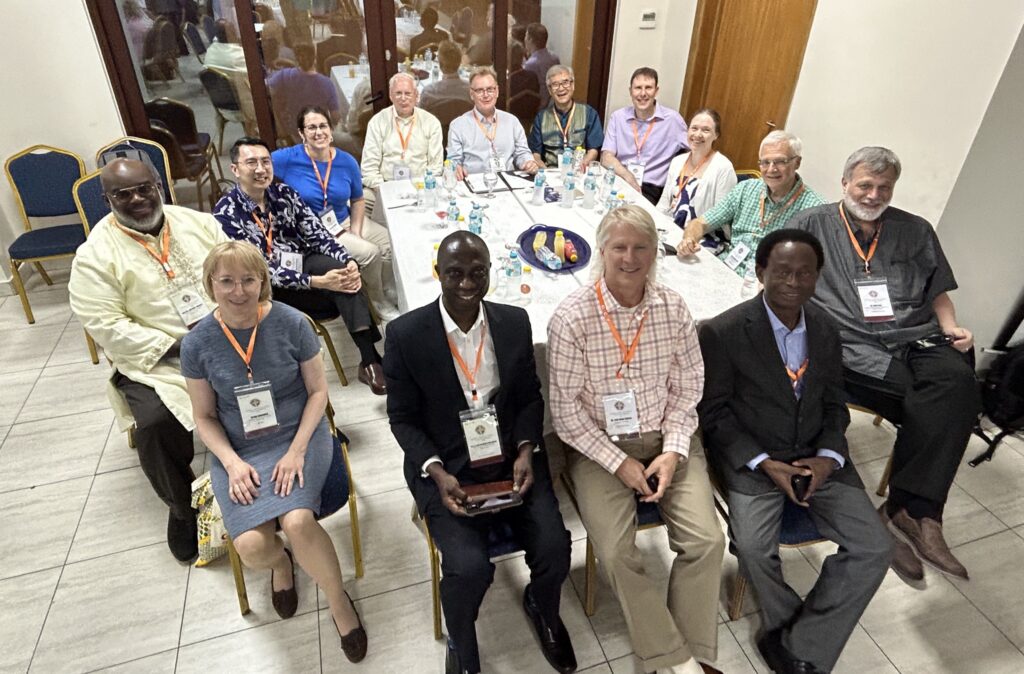
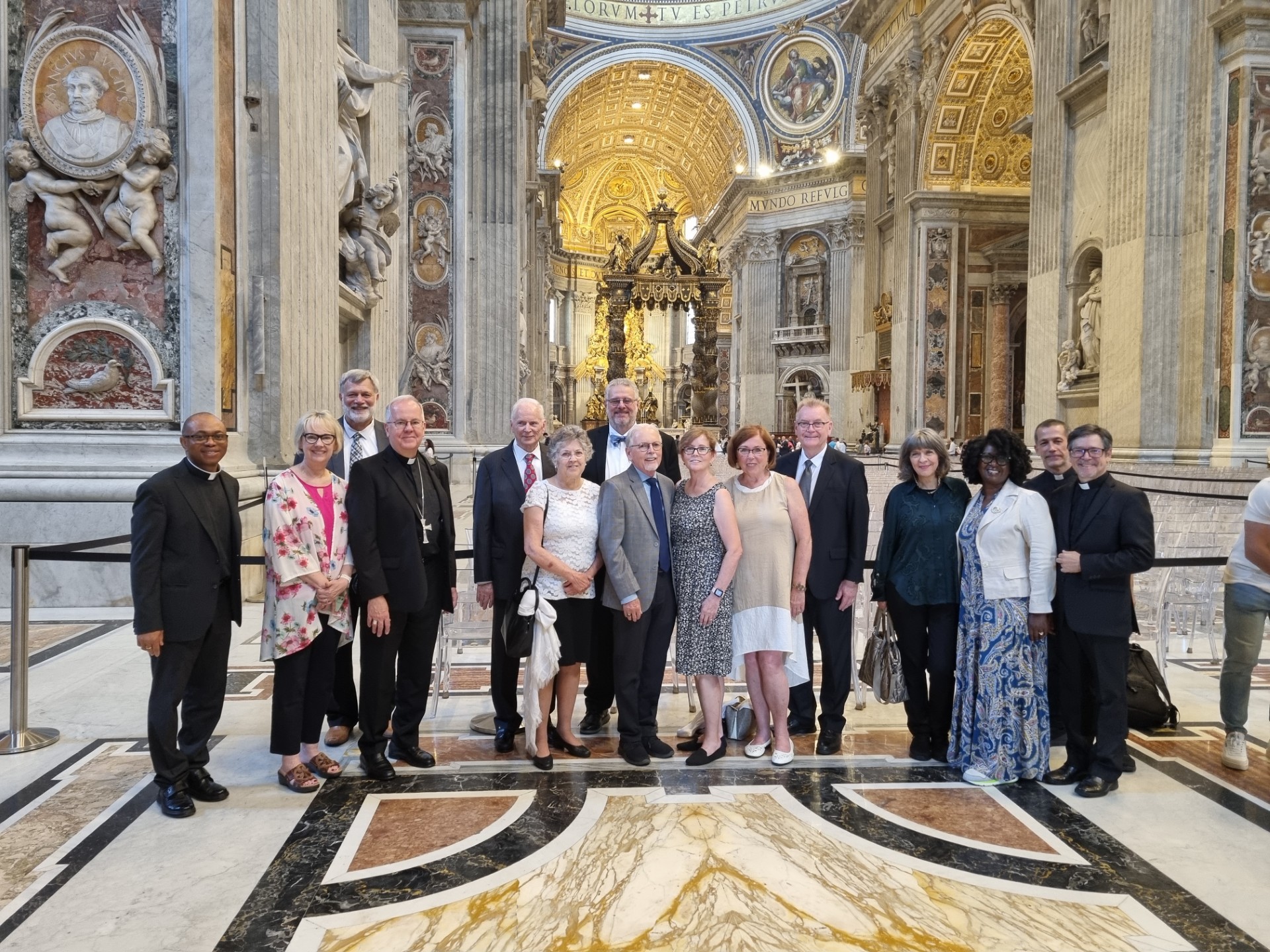
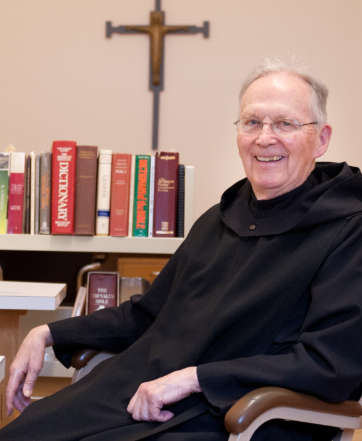
A humbling experience for me has been to receive grace and love from others who are different than me even before I was prepared to offer the same to them. One example for me comes from my years as a participant in the International Catholic-Pentecostal Dialogue. This ongoing annual conversation was begun in the 1970s by David du Plessis, the Pentecostal known as “Mr. Pentecost,” and Father Kilian McDonnell, a Catholic theologian, and continues to this day. When I attended a session of this Dialogue for the first time in 1993, I was so focused on my disagreement with Catholic doctrines and practices that I was not in a place to show much hospitality. But over the next several decades I got to know the Catholic co-chair, Father Kilian, quite well. I was amazed at how well he knew Pentecostals like me, how much he wanted to learn more, and how much he cared for us. He was respectful, honest, and compassionate. We didn’t agree on everything, obviously. But he became a mentor to me, showing me how to treat others who were different than I was. And we became friends. He passed away last year at the age of 100, and I was honored to attend his memorial service. That experience changed how I think about the global Church.
The following numbers paint a remarkable picture of the global family that shares our evangelical, Pentecostal, and charismatic faith. According to the 2026 Status of Global Christianity report, more than 1.1 billion Christians around the world identify as Evangelical, Pentecostal, or Charismatic. Of those, approximately 676 million are Pentecostal or Charismatic believers.
That global family is wonderfully diverse, including classical Pentecostal denominations like Open Bible Churches, independent charismatic networks, Catholic Charismatics, and charismatic believers within many Protestant traditions (Anglican, Methodist, etc.).
So why do these numbers matter? They remind us that we are part of something much larger than ourselves. We are not alone, and we are certainly not “small.” Along with our evangelical, Pentecostal, and charismatic brothers and sisters around the world, we are a fierce contingent in the Lord’s army. It’s both humbling and encouraging to remember that we belong to the CHURCH in all its vastness.
But that doesn’t mean we have to give up our wonderful heritage, culture, and beauty that make us Open Bible Churches. We have something to contribute to the rest of the Church. I’m reminded of the prophetic word delivered a few decades ago at one of our conventions: “Open Bible Churches is a vital organ in the Body of Christ!” That statement has never been more true.
“Open Bible Churches is not ‘the Church.’
Open Bible Churches is part of the Church
— a wonderful part,
but a part.”
And yet, we also do not want to be guilty of isolation or sectarianism. Open Bible Churches is not “the Church.” Open Bible Churches is part of the Church. A wonderful part, but a part. So, it is healthy for us to remember our brothers and sisters in other denominations and networks, to pray for them, and even to cooperate with them in community and regional initiatives so that together we may faithfully steward our callings and responsibilities to advance the Kingdom of God on the earth.
One of the most important ways we can grow in unity as believers is to start by acknowledging and valuing diversity in the Body of Christ. God didn’t make us all the same. Unity is not uniformity. The old adage still rings true: “in essentials, unity; in non-essentials, diversity; and in all things, charity.” May we agree to disagree with one another with clarity, respect, and most of all love. We can embrace grace and truth at the same time, and indeed we are called to it.
No doubt you know some followers of Jesus in your community (and probably in your own family) who do not belong to Open Bible Churches. The invitation for us all is to love them, to be grateful for all that we share with them, and to offer some space (and some grace) for our differences. This is not easy. In fact, it is hard work. Remember the words of the apostle Paul: “As a prisoner for the Lord, then, I urge you to live a life worthy of the calling you have received. Be completely humble and gentle; be patient, bearing with one another in love. Make every effort to keep the unity of the Spirit through the bond of peace” (Eph. 4:1-3 NIV). If maintaining unity was easy, Paul wouldn’t have needed to admonish us to “make every effort” to do so.
Jesus reminds us that unity isn’t just for our benefit: it’s one of the clearest testimonies to a watching world.
But if we are willing to pay the price of seeing God’s big Church, and loving it the way He does, we’ll be more Christlike, and we’ll participate in being an answer to one of the last prayers Jesus prayed before He went to the cross on our behalf: “…that they may be one as we are one— I in them and you in me—so that they may be brought to complete unity. Then the world will know that you sent me and have loved them even as you have loved me” (John 17:22-23 NIV). Jesus reminds us that unity isn’t just for our benefit: it’s one of the clearest testimonies to a watching world.
Together, let’s allow the Lord to give us eyes to see the breadth and beauty of His Church, recognizing and loving our brothers and sisters in Christ in such an obvious way that we actually become answers to the prayer of Jesus in John 17. Amen?
Here are a few resources that explore some of these issues related to Christian Unity:
That They May Be One – Podcast
That They May Be One – Film
PCCNA Christian Unity Commission
Forum for Unity
International Charismatic Consultation
Global Christian Forum
About the Author
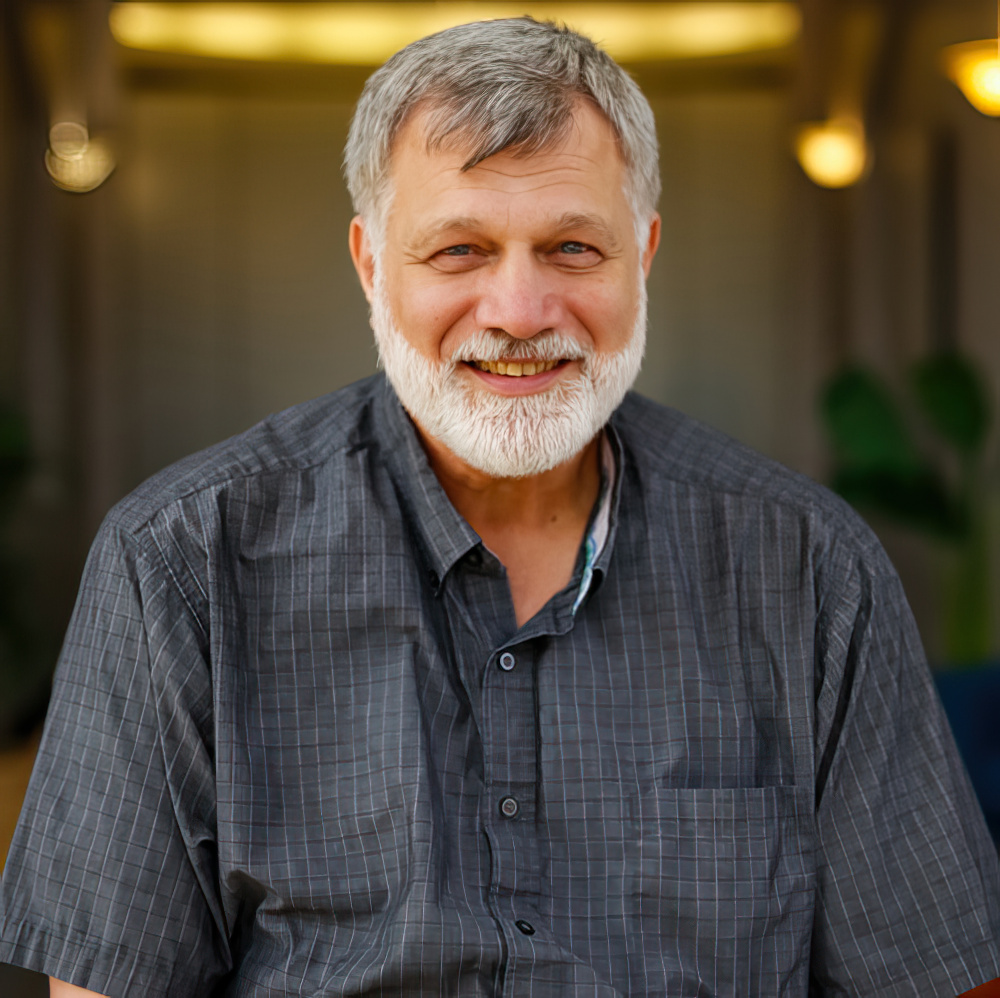
David Cole has been a credentialed minister with Open Bible Churches since 1984. He is currently Professor of Historical Theology at The King’s University in Southlake, Texas. He is also involved in a variety of initiatives related to his calling to encourage the pursuit of unity among believers in Jesus, and to that end currently serves as chair of the Christian Unity Commission with the Pentecostal/
Charismatic Churches of North America. He and his wife, Julie, are parents of four, grandparents of ten, and are currently located in Newberg, Oregon, where they attend College Street Church.


I woke up unable to speak. A breathing tube filled my throat. Machines surrounded my hospital bed. I was confused, intubated, and lying in an ICU room with no memory of how I got there. But strangely, I was not afraid. In the middle of the chaos, God gave me an unexplainable peace.
I motioned desperately for paper and pencil so I could ask two questions: What happened? And where is George?
My son’s father explained that I had been in a serious car accident. The car was completely destroyed. I had been found trapped beneath the steering wheel with severe facial injuries.
That morning — January 22, 2026 — had started like any other Thursday. I got ready for work, buckled my 18-month-old son George into his car seat, and pulled out of the driveway expecting an ordinary day.
It became anything but ordinary.
My neighbor, who had left home at the same time I did, later explained what happened. We were both driving around fifteen miles per hour when the car I was driving suddenly lost control. I still do not know why, and I have no memory of the moment itself.
By the grace of God, George was almost completely untouched.
The car hit a cement light pole, crossed into oncoming traffic, and was struck head-on by another vehicle. Both vehicles spun, and the car I was driving slammed into another cement light pole.
By the grace of God, George was almost completely untouched.
The back windshield shattered directly above him, yet the glass never harmed him because of the position his car seat landed in. The entire back left side of the car was crushed inward, but George had been seated on the back right side. Even now, I can only thank God for His protection.
I was taken by ambulance to the hospital and admitted into the Trauma ICU. Doctors told my family that I had suffered severe head trauma resulting in a brain bleed. I was also bleeding internally in my abdominal area, and they began preparing my family for the possible loss of my pregnancy.
… the doctors did not know the God my family and I serve — and how merciful He is.
But the doctors did not know the God my family and I serve — and how merciful He is.
My family immediately began to pray. Members of my church, Open Bible Church of Homestead, began arriving at the hospital, and soon an entire army of people was interceding for me.
During those first two days, I drifted in and out of consciousness and remember very little. But one moment remains clear in my mind: I heard the song “I Surrender” by Hillsong Worship playing in my hospital room. The lyrics, “Like a rushing wind, Jesus breathe within, Lord have Your way, Lord have Your way in me,” stayed with me and brought a deep sense of comfort in the middle of everything happening around me. In that moment, those words became my prayer as I quietly prayed, “I leave this in Your hands.”


After three days in the ICU, I was successfully extubated and began making remarkable progress. Ultrasounds showed a happy, active baby, and the bleeding had stopped.
On the fourth day, I was transferred out of the ICU into intermediate care before eventually moving to the medical-surgical floor. Doctors then began preparing me for maxillofacial surgery to reconstruct my face after multiple fractures.
On January 30, I underwent an eight-hour surgery. By God’s grace, the procedure was successful, and another ultrasound afterward showed my unborn baby remained active and healthy. On February 3, I was finally discharged and able to return home.
Since then, my recovery has gone smoothly. I am now twenty-eight weeks pregnant and waiting expectantly for the arrival of my baby. Through every frightening moment, God gave me strength and peace, and I never doubted His mercy.
Today, I am a living testimony of His grace.
About the Author

Thammy Castro is a behavior technician living in Miami and a soon-to-be mother of two. In her free time, she enjoys traveling with her family. She is a member of Open Bible Church of Homestead, where her parents, Jose and Maria Castro, serve as pastors.


There has been much discussion about the future of the Church. While I’m not a futurist or researcher, I’m grateful for voices that help us think wisely about pursuing the mission of the Church in an ever-changing culture. Researchers like Ed Stetzer and Carey Nieuwhof highlight some encouraging trends, such as revivals on college campuses, rising Bible sales, and Gen Z’s hunger for authentic faith.
I carry deep conviction and a faith-filled anticipation about what I see and am praying for. When I think about the Church and the days ahead, I don’t see a Church in retreat, but I do see a Church being refined – prepared for what God is getting ready to do. A victorious and glorious Church (Eph. 5:27).
When I think about the Church and the days ahead, I don’t see a Church in retreat, but I do see a Church being refined.
Jesus said, “I will build my church, and the gates of hell shall not prevail against it” (Matt. 16:18 ESV). That promise has no expiration date. Jesus is still building His Church today.
As the church advances, it will not stand on programs, buildings, or production. . . it will be built on the authority of Christ and the power of the Holy Spirit.
Across the body of Christ, there is a growing recognition that the future of the Church will not be built by addition alone, but by multiplication. Disciples will make disciples, leaders will develop and release leaders, and churches will plant churches. There are many voices helping to bring clarity to this, and we are seeing that same conviction take shape within Open Bible through our Mission to Multiply and the Power of We.
So, when I think about the Church and what is ahead of us, what do I see?
I SEE A MULTIPLYING CHURCH
We often measure success by attendance, budgets, and programs. While salvations and baptisms remain central, we must expand the scorecard. As Larry Walkemeyer describes in The River Church, we must move from “lake churches” that gather to “river churches” that send – becoming disciple makers who multiply.
The book of Acts shows us a model of a church that did not just meet but multiplied. The future will not belong to churches that simply gather a crowd, but it will belong to churches that make and send disciple makers. Jesus did not commission us to build an audience. He commanded us to go and make disciples (Matt. 28:19). Multiplication begins there – in intentional, relational, Spirit-led disciple making.
Multiplication is not just a strategy or a motto we adopt. It is the culture of Spirit-empowered, disciple-making churches. The Church I see measures health not only by attendance, but by how many are discipled, equipped, and sent to reproduce what’s been invested in them. This is our Mission to Multiply.
I SEE A SPIRIT-EMPOWERED CHURCH
We live in a time of rapid change. Technology, AI, and social media shape how we communicate and connect. These tools can be helpful, but they don’t transform lives. The Holy Spirit does.
These tools can be helpful, but they don’t transform lives. The Holy Spirit does.
Pentecost was Heaven’s defining moment for the birth of the Church and the fulfillment of what Jesus said in Acts 1:8. The early followers of Jesus did not have the influence, resources, or tools we have today. What they had was the power of God. That has not changed!
In the days ahead, more than ever, the Church will move forward not through innovation alone but through consecration. The church I see is unapologetically dependent on the Spirit of God.
I SEE A COURAGEOUS CHURCH
In the book of Acts, every step forward required courage – Peter and John before the Sanhedrin, Stephen in the face of death, Peter going to Cornelius’s home, the sending out of Paul and Barnabas. These were not small steps; they were courageous steps across cultural and spiritual boundaries. The early Church moved from gathering to going, from addition to multiplication. The expansion of the early Church was not accidental. It followed obedience and courage.
The Church I see will walk in that same Spirit.
Courage to preach the truth in love.
Courage to plant in hard places.
Courage to raise and release the next generation.
Courage to choose multiplication over comfort.
Courage to link arms with others for the sake of the greater mission.
Courage to build the Kingdom over our own castles.
We can stand on His promise and by His Spirit knowing “God has not given us a spirit of fear but of power and of love and of a sound mind” (2 Tim. 1:7 NKJV).
I SEE THE POWER OF WE
As we look forward, one of the strongest convictions I carry is this: our future will be stronger through the Power of We.
Individualism limits impact; partnership multiplies it. When we share vision, develop leaders, and align around mission, we step into something far greater than any one church could accomplish alone. I believe the future Church will not thrive through isolation but will flourish through collaboration. The church I see understands that “we” is stronger than “me.”
When we share vision, develop leaders, and align around mission, we step into something far greater than any one church could accomplish alone.
I am confident in what God has called us to:
The church that makes disciple makers will multiply.
The church that depends on the Holy Spirit will endure.
The church that walks in courage will advance. This is the church I see, and I believe we are being invited to build it together.
About the Author
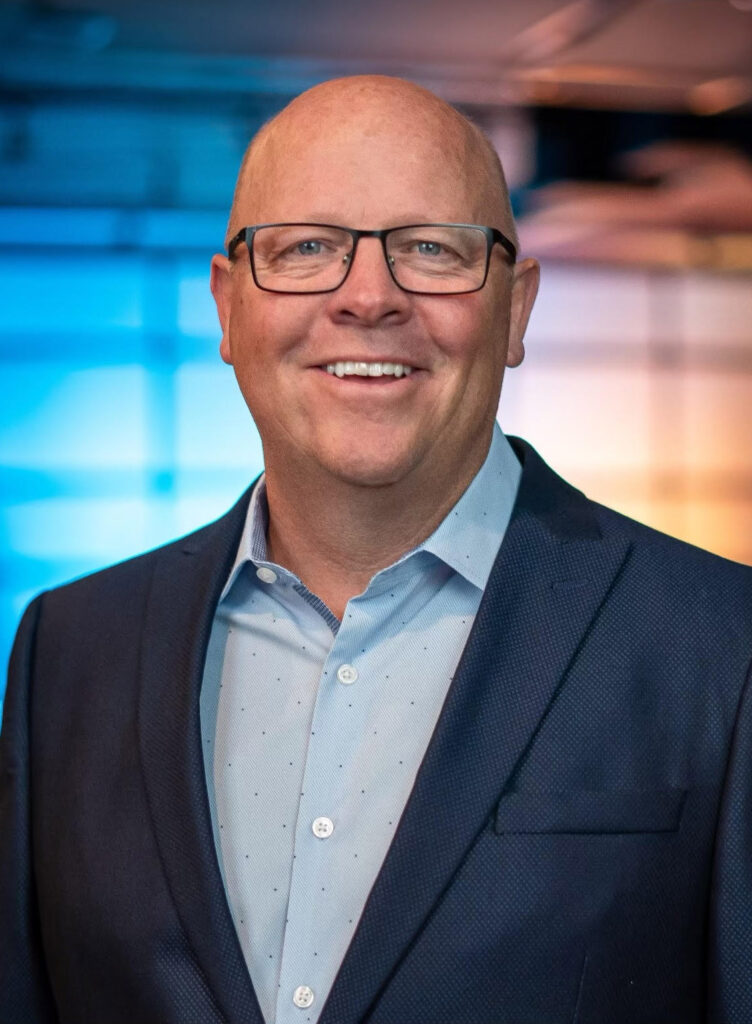
Michael Nortune serves as president of Open Bible Churches. He has ministered in the local church faithfully for thirty-five years. From his start as a janitor and groundskeeper to church planter and lead pastor of Life Church in Concord, California, Michael has had the opportunity to gain experience in every capacity within the church throughout his ministry. Not only does he have hands-on experience on the local level, but Michael has also led at the district, regional, and national levels within Open Bible Churches. Michael and his wife, Julie, currently reside in Colorado and love living near five of their six children and their spouses. They also treasure the time they spend with their other daughter who lives in Alabama with their first (but not the last) grandson!