
Archive
The Challenge of Conforming to the Image of Christ

By Gary L. Wyatt, Sr.
Few people think about the challenges that come with conforming to the image of Christ as a Black man living in America, a country filled with racism on all levels. This is not to say that Whites do not have challenges in conforming to the image of Christ, but I am saying that there are more challenges for people of color in America to conform to Him since people of color have to deal with the evil that racism projects daily in our society. God help us!
Unfortunately, this includes people of color having to deal with racism in the body of Christ as well. I will add that whatever the race, God can be counted on as being faithful to give more grace when He is requiring His people to be conformed into the image of Christ. Those people who accept this challenge can expect “all things” to work together for their good according to the Romans 8:28 promise. This promise levels the playing field personally for me as a Black man.
When I was asked to write about racism, I asked God what He would have me write. I didn’t just want to pour my heart out as it relates to my Black context and Black experiences although they are very real, relevant, and do matter. It was more important for me to convey things from a Kingdom perspective, which matters much more than anyone’s context and experiences. It didn’t take long for God to respond. In fact, God responded within ten minutes of my prayer, and by the Holy Spirit’s leading I knew exactly what to write.
Here is my issue as a Black man. If I approach the challenge of conforming into the image of Christ based only on the lens of my unfortunate racist experiences at the hands of some evil people who are white, then I would never ever reach out to White people who need Christ. However, if I approach the challenge of conforming to the image of Christ based upon the lens of Christ’s own example then I would reach out to all people, including some evil Whites, which is the lifestyle Christ exemplified. Right or wrong, I do have a choice. As a believer, I choose to use the lens of Christ’s example and submit to what He is requiring of me, which is not easy but is doable with His sufficient grace.
God immediately captured my mind and caused me to focus on the story of Jesus and the woman at the well found in John 4. This story serves as one Kingdom template for all believers to study, consider, and apply no matter the color of their skin. From it the Holy Spirit revealed to me six Kingdom specifics that I hope to convey to all races. The challenge of conforming to the image of Christ requires us to do these:
- Be daring (verses 4-6). Jesus was daring enough to cross the racial divide because He was being led by the Spirit to a woman that needed His living water. The woman at the well stated that Jews and Samaritans had no dealings with each other, and yet Jesus was daring enough to cross that line because He was the one that God was sending to meet this woman’s need for His living water.
As a Black man, I became a member of a predominately White organization simply because there was a “need” for me to do so. The boldness and courage were given to me by the Lord as I walked in obedience to His call; I could not do this in my own strength. If we are going to conform to the image of Christ, there will be times when God will require us to be daring enough to cross the racial divide in hopes of addressing a need that God desires to use us to address. In these cases, we can expect God to give us the courage to do so.
- Initiate dialogue (verse 7). Jesus initiated dialogue with the Samaritan woman – not just for reconciliation between races, but mainly and more specifically for revealing Himself as the Messiah and reconciling this Samaritan woman to God.
There is a whole lot of dialogue between Blacks and Whites right now due to the heightened awareness of the racism that is prevalent and should be eradicated in our country. We must not forget as believers that our conversations with those of other races should not mainly be for the purpose of eradicating racism, although this is very needed. Conforming to the image of Christ is more about eradicating sin and reconciling all races to God, which is what Christ was demonstrating as He went to Samaria.
- Start dealing (verse 9). The Samaritan woman was conveying to Jesus that typically there was no association between Jews and Samaritans, and yet here Jesus was, not only daring and dialoguing but also dealing with this Samaritan woman. I wonder how many Kingdom opportunities people have missed to reconcile men and women to God simply because they didn’t want to deal with people outside their race. If we are going to conform to the image of Christ, His example is that of dealing with those of other races – again for the sake of reconciling all races to God. There is no transformation without association.
- Offer drink (verses 10-15). Jesus’ motive for daring to start a dialogue and deal with this Samaritan woman was to create the opportunity to offer her a drink of the living water that would quench her thirsty soul and meet the longing for real love which she so desperately needed. This is the Kingdom point of conforming into the image of Christ: being daring, initiating dialogue, and dealing with other races in hopes that all people will drink of the living water that comes from the well of salvation.
It would be a shame as well as an error to offer the living water to people only of our own race. This would be like saying that the only people that need to be redeemed are White people or Black people or Hispanic people, etc. The reason for offering a drink to all people of all races is that that’s what God had in mind when He so loved the world (John 3:16). Offering a drink to all reflects God.
- Be discerning (verses 16-18). I like that these verses reveal that Jesus discerned what the woman’s real issue was, and His discernment was not to hurt her but to help her. As believers it’s imperative to discern the real issues other races are personally dealing with. This too reflects the image of Christ – discerning what people are dealing with in order to reconcile them to the God who alone can solve their issues. This requires being sensitive to the Spirit’s promptings, which is something we must work on because it’s lacking.
Sometimes we won’t even have to discern; sometimes it just takes listening to people while they are talking. Often if we listen well enough they will tell us what their issue is. While Jesus was discerning, Jesus was also listening.
- Building Kingdom dominion (verses 28-30). The homerun in this story is found in verses 28-30: “The woman left her water jar beside the well and ran back to the village, telling everyone, ‘Come and see a man who told me everything I ever did! Could he possibly be the Messiah?’ So the people came streaming from the village to see him.” The Kingdom of God had come to this woman, and through her testimony to the Samaritans, the Kingdom of God was beginning to dominate the city. Thy Kingdom come!
Now, what does all of this have to do with my being a Black man facing the challenges of conforming into the image of Christ? To me, Kingdom dominion means drawing and converting all races into the “Kingdom Race.” In my domain this only happens when I, a Black man battling with racism, see the Kingdom picture and resolve to conform to the image of Christ, the only image that loves, saves, and redeems all. I’m resolved that Kingdom matters (Matthew 6:10)!
About the Author

Gary Wyatt, Sr. has been the lead pastor of SureHouse Open Bible Church, an urban ministry in the inner city of Tacoma, Washington, for over 25 years. He is the author of The Art of Blending, a book intended for racial reconciliation within the body of Christ. He is the Northwest District Director for Open Bible’s Pacific Region and serves on the Open Bible Unity Commission.





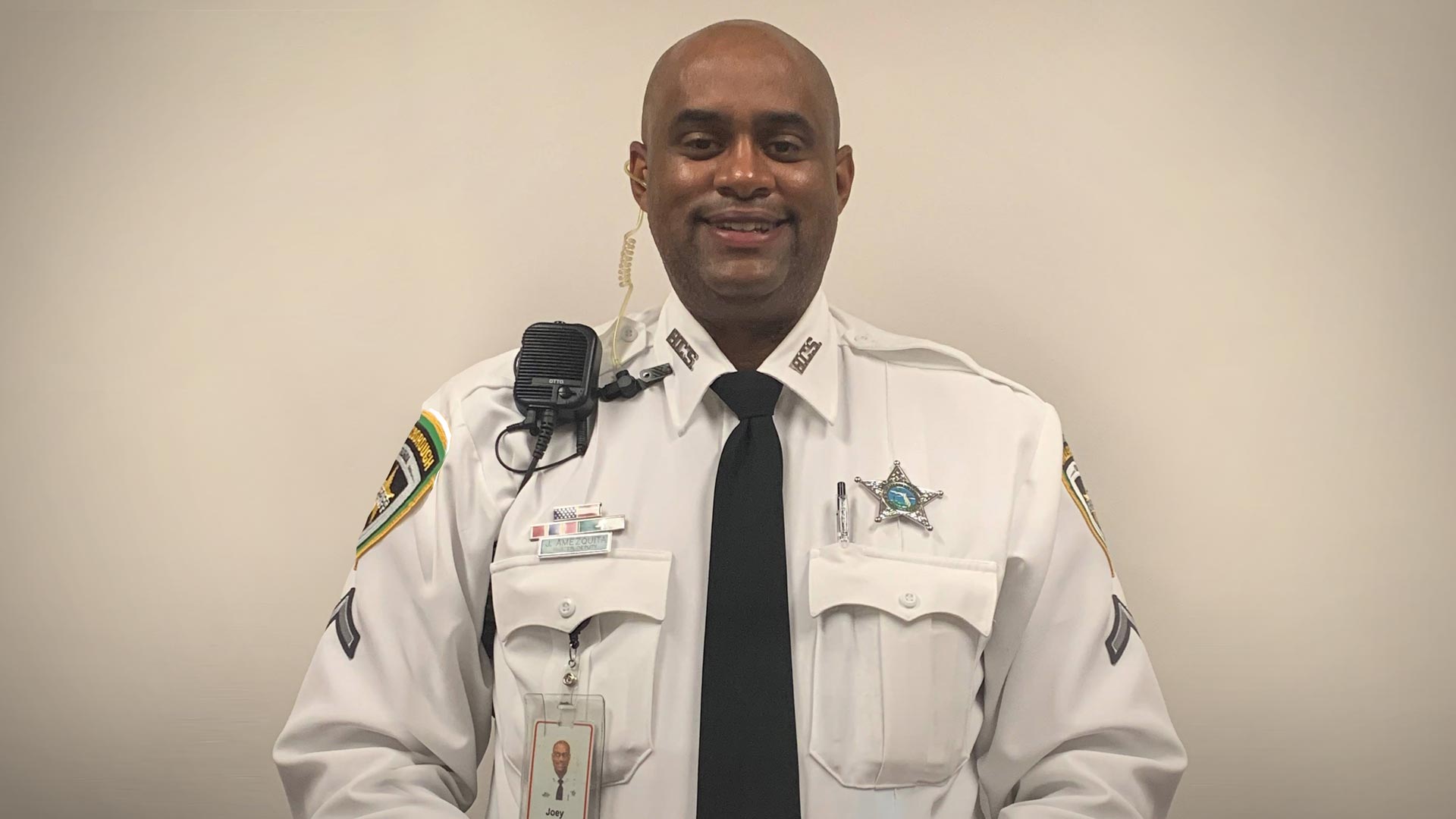
Por Joey Amezquita
Nací en Villa Palmeras (Shanghai), Santurce un barrio de Puerto Rico, soy el segundo de cuatro hijos. Como muchos proyectos de vivienda, está plagado de problemas sociales asociados con la pobreza crónica y multigeneracional.
Liberarse de la Pobreza
Mi padre, queriendo una vida mejor para su familia, se alistó en el ejército de los EE. UU. (Desde 1899 los puertorriqueños, como ciudadanos americanos, han participado en todos los compromisos militares importantes de los Estados Unidos). Esto nos permitió un estilo de vida mucho más seguro y de clase media que el que hubiéramos tenido si nos hubiéramos quedado en Villa Palmeras, pero nos mudamos mucho. Las primeras órdenes de mi padre fueron ir a Maryland. Desde allí nos trasladaríamos a Fort Lewis, en el estado de Washington; luego a Long Island, Nueva York; después a Fort Dix, Nueva Jersey; y después a la base de Strassburg Kaserne en Idar-Oberstein, una ciudad del suroeste de Alemania.
Yo amaba Alemania. En diciembre de 1984 nos mudamos allí, y aunque solo tenía nueve años recuerdo lo increíblemente hermoso que era. En lugar de vivir en el cuartel, vivíamos en una hermosa casa de cuatro pisos. Jugábamos afuera en la nieve y corríamos por los pasadizos secretos de la casa que los antiguos ocupantes habían utilizado para esconder a los judíos
Después de doce años de servicio a su país, mi padre decidió dejar el ejército en 1987 y trasladar a nuestra familia a Florida. Dejar Alemania fue difícil. Tenía once años y tuve que dejar atrás un fuerte grupo de amigos.
Jugábamos afuera en la nieve y corríamos por los pasadizos secretos de la casa que los antiguos ocupantes habían utilizado para esconder a los judíos.
¡Empecé a trabajar en las fuerzas del orden a la avanzada edad de 19 años! Aunque de pequeño era algo así como el «payaso de la clase» y el cabecilla de las travesuras entre mis hermanos y amigos, mi sueño siempre había sido convertirme en agente de policía para ayudar a la comunidad. Por aquel entonces, mi padre trabajaba en el departamento de libertad condicional y él y Christina, mi novia de secundaria, me animaron a alcanzar mi sueño.
El 15 de agosto de 1995 trabajé como oficial correccional en la Institución Correccional de Polk, una prisión estatal para hombres ubicada en Polk City, Florida. Los presos asignados a esta institución eran hombres y habían sido sentenciados por un período que iba desde un año y un día hasta toda la vida. A los reclusos del campo de trabajo donde yo trabajaba les quedaban menos de cinco años de sentencia antes de que se les permitiera irse a casa.
Como residía en Brandon, Florida, a una hora de distancia de la Institución Correccional Polk, decidí transferirme a la Cárcel Orient Road con la Oficina del Sheriff del Condado de Hillsborough en Tampa, y el 3 de noviembre de 1997, comencé mi nueva asignación trabajando en el turno de noche en la Cárcel Orient Road. En enero de 2000, me trasladé a la cárcel de Morgan Street y continué trabajando en el turno de noche. Morgan Street albergaba presos federales y a unos 50 reclusos de la cárcel del condado.
Liberarse del Pecado
En junio de 2001 mi vida cambió para siempre. Aunque mi padre era un padre amoroso, no tenía una relación con Jesús y no me había modelado un estilo de vida piadoso. Me habían criado sabiendo que había un Dios, pero me faltaba una relación con él. Tenía miedo de morir y de lo desconocido.
Christina me invitó a unos servicios especiales en una iglesia llamada Tabernáculo de la Fe de Tampa (Tabernacle of the Faith). Dos semanas antes, su compañera de trabajo, Kathy, había invitado a Christina a la iglesia y, sin que yo lo supiera, Christina le había entregado su vida a Jesucristo. Ahora ella tenía vida eterna.
Acepté asistir al servicio y me encontré entrando al Tabernáculo de la Fe. Cuando me senté en el banco y escuché al pastor Tejara predicar, sentí como si me estuviera mirando directamente. Cuando el pastor Tejara dijo que yo era un pecador y estaba destinado al infierno, que si moría ese día, me separaría de Dios para siempre y pasaría el resto de la eternidad atormentado en el infierno, me asusté mucho. No quería ir al infierno para siempre.
En ese momento, el pastor Tejara pidió a cualquier persona del público que quisiera entregar su corazón y su vida a Jesús que levantara la mano. Yo estaba nervioso, pero también sentí que una paz que nunca antes había experimentado me invadía. Levanté mi mano, me arrepentí de mis pecados y acepté a Jesucristo en mi corazón como Señor y Salvador. Christina y yo fuimos las primeras personas de nuestra familia en entregar nuestros corazones al Señor. Compré mi primera Biblia y empecé a leer la Palabra de Dios y a asistir a estudios bíblicos con Christina.
Cuando recibía una asignación, oraba en el camino, pidiéndole al Señor que enviara a Sus ángeles y que me ayudara a ser lento para hablar y lento para la ira y para darme una paz sobrenatural.
Christina y yo habíamos estado juntas desde abril de 1994, y el Espíritu Santo comenzó a tratar con nosotros acerca de casarnos. Mi buen amigo y colaborador Ed, que era cristiano, nos animó a ir al juzgado y casarnos por obediencia a la Palabra de Dios. Tomamos la decisión de no esperar más, y el 22 de febrero de 2002, Christina y yo fuimos al centro de la ciudad al juzgado de Tampa y nos casamos. Esta fue la segunda decisión más importante de mi vida.
Dios honró y bendijo nuestra obediencia al casarnos. Cuando comencé a leer la Biblia, la Palabra de Dios cobró vida y sentí tanta emoción, gozo, paz y satisfacción. En realidad, nunca antes me había gustado leer, pero ahora estaba impaciente por leer la Palabra de Dios. La amo mucho. La Biblia es la guía para la vida. Todo está en la Palabra de Dios: consejos sobre las finanzas, el matrimonio, los hijos, la depresión, el pecado, los profetas y la vida piadosa.
Cuanto más leía la Palabra de Dios, más aumentaba mi fe. Ya no tenía miedo a lo desconocido ni a la muerte. Tenía una paz y una alegría asombrosamente sobrenatural. Oraba antes de ir a trabajar. A menudo entraba en una celda con 30 reclusos que habían sido condenados por asesinato y otros crímenes violentos, y una paz me invadía. .
Una vez, uno de los reclusos, tratando de intimidarme, me preguntó: «Si la puerta se cerrara detrás de ti “accidentalmente” y estuvieras atrapado aquí con nosotros, ¿estarías asustado?” Respondí con valentía: «No, no estaría asustado porque tengo un ángel asignado y Dios me protegerá y no dejará que ningún daño me sobrevenga». Cité Isaías 54:17: «Ninguna arma forjada contra ti prosperará»(RVR-60). Le dije al recluso que no tenía que pelear con él físicamente porque Dios peleará todas mis batallas. Le hice saber que temía a Dios y no a los hombres, terminé el registro de la celda y salí de ella.
Liberarse de la Esterilidad
Comencé aplicar lo que estaba aprendiendo de la Biblia en mi vida diaria con mi matrimonio y con mi trabajo. Fue asombroso. Años atrás, los médicos le habían dicho a Christina que no podía tener hijos. Sin embargo, en 2003 mi esposa me dio una gran noticia: ¡estaba embarazada! ¡Estábamos muy contentos! Creo que el Señor nos bendijo con este milagro al permitirle tener hijos porque estábamos alineados con Dios.
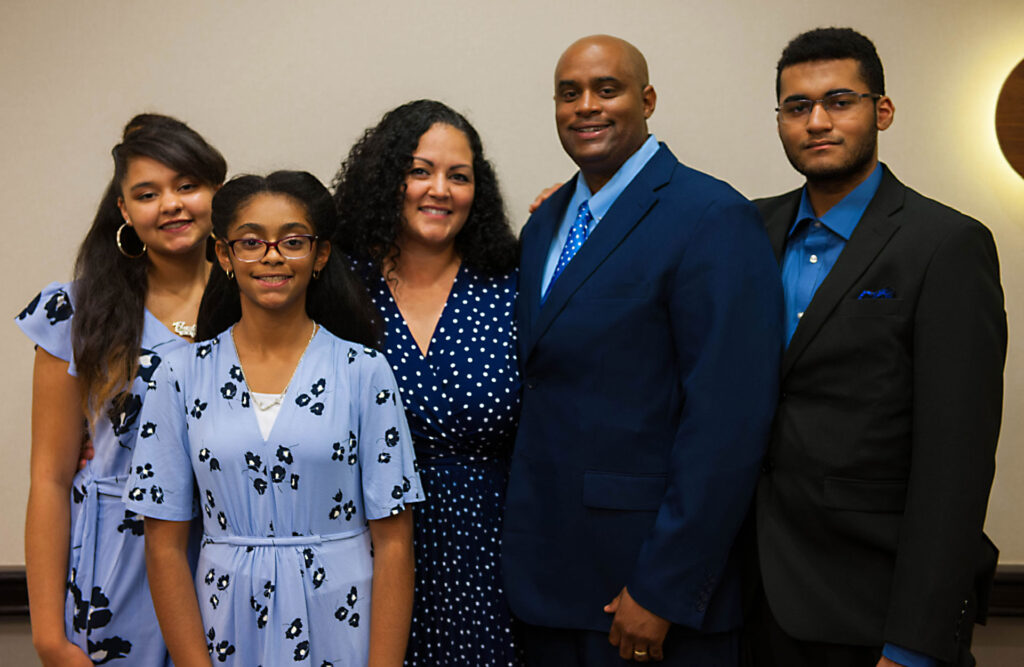
Por aquel entonces, estaba leyendo 2 Reyes 22:1 y aprendí acerca de este rey joven llamado Josías de tan solo ocho años. El rey Josías, cuyo nombre significa «el Señor te apoyará», fue uno de los pocos reyes del Antiguo Testamento que hizo lo que Dios le pidió que hiciera sin dudarlo. Amo su historia, así que quería nombrar a mi hijo Josías. Sin embargo, mi esposa quería que ese fuera su segundo nombre, no el primero. Bueno, mi mamá no crió a ningún tonto, así que llamamos a nuestro hijo Justin Josías. (¡Esposa feliz, vida feliz!). En diciembre de 2005, el Señor nos bendijo con una hermosa niña a la que llamamos Jayla. Y en febrero de 2009, el Señor nos bendijo con otra hermosa niña a la que llamamos Julia.
Mi esposa solía preocuparse por mí, pero le decía: «No te preocupes; sólo ora», y lo hizo. Ella oró por la protección de Dios sobre mí. Yo también oré. Cuando recibía una asignación, oraba en el camino, pidiéndole al Señor que enviara a Sus ángeles y que me ayudara a ser lento para hablar y lento para la ira y para darme una paz sobrenatural. Enfrentaba una situación con la autoridad de Dios y los presos podían sentir que era cristiano. Un recluso de Cuba me dijo que sabía que algún día yo iba a ser pastor. En 2003 la cárcel de Morgan Street cerró, así que comencé a trabajar en la Unidad de Vivienda de la Cárcel de Falkenburg Road 11. Soy una «persona sociable», y cuanto más leía la Biblia, más me di cuenta de lo fácil que era proclamar el Evangelio (las Buenas Nuevas) a los reclusos en las celdas, aunque tuviera que ser creativo en mi metodología.
Liberarse Hacia la Fecundidad
Las normativas no permitían que nos tomáramos de las manos y orar por los presos, pero se les permitió tener una Biblia. Hacía que algunos de ellos se acercaran a mi escritorio y abrieran sus Biblias en Juan 3:3-18, el pasaje sobre nacer de nuevo y recibir la vida eterna. Luego les pedía que fueran a Efesios 2:8-9, donde dice: «Porque por gracia sois salvos por medio de la fe; y esto no de vosotros, pues es don de Dios; no por obras, para que nadie se gloríe» y también Romanos 10:9: «que si confesares con tu boca que Jesús es el Señor, y creyeres en tu corazón que Dios le levantó de los muertos, serás salvo». Quería que experimentaran la Palabra de Dios escrita. En una oportunidad habían cinco presos alrededor de mi escritorio con sus Biblias abiertas. Luego procedí a hacer un llamado al altar allí mismo en la celda, y los cinco presos entregaron sus vidas a Cristo. ¡Alabado sea el Señor! Los animé a seguir leyendo la Palabra de Dios y a inscribirse en los servicios religiosos no denominacionales.
Mi familia también llegó a la fe en Cristo. En 2002, Christina y yo tuvimos la bendición de guiar a su hermana menor Zenia al Señor, quien la transformó de una joven tímida a una mujer joven que usa sin vergüenza sus increíbles talentos para dirigir la adoración. En 2005 tuve el privilegio de presenciar a mi padre entregar su vida a Cristo en una cruzada de Promise Keepers (Cumplidores de Promesas). Mi madre dudaba un poco más, no estaba segura de que la conversión de mi padre fuera sincera. Pero en 2007, mientras luchaba contra un el cáncer de mama fase cuatro, también aceptó a Cristo como su Salvador. De hecho, experimentó sueños y visiones de Dios. Tuvo un sueño sobre el huracán María antes de que devastara el noreste del Caribe en 2017. Le pidió al Señor que evitara que sucediera, pero Él le dijo que tenía que suceder porque su pueblo se había alejado de Él. Mi madre también guió a otros miembros de la familia al Señor.
Podemos proclamar el evangelio a muchos acusados y hemos llevado a varios de ellos a arrepentirse de sus pecados y aceptar a Cristo en sus corazones.
Hoy soy uno de los dos alguaciles que trabajan en el juzgado en la división de delitos menores. Mi compañera, la diputada Wright, también es una gran cristiana, una mujer de fe. Todas las mañanas, antes de comenzar el tribunal matutino, clamamos a la sangre de Dios por protección sobre el tribunal y el personal. Nos aseguramos de establecer una atmósfera piadosa en la sala del tribunal. Podemos proclamar el evangelio a muchos acusados y hemos llevado a varios de ellos a arrepentirse de sus pecados y aceptar a Cristo en sus corazones. Estoy agradecido a Dios porque usó mis 26 años de trabajo en las fuerzas del orden/correccionales para compartir el Evangelio.
En septiembre de 2019, la hermana de Christina, Zenia, y su esposo, Carlos, comenzaron a asistir a un estudio bíblico dirigido por Calbert y Beverly Mark, pastores de Open Bible Prayer Chapel en Wesley Chapel. El estudio fortaleció tan poderosamente la fe de Zenia y la de su esposo que nos dijeron a mi esposa y a mí que teníamos que ir a verlo. Los Marks llevaron nuestra fe a otro nivel. Pronto toda nuestra familia, incluida mi suegra, Carmen, y la otra hermana de Christina, Yaritza, asistieron al estudio. ¡La amiga de Christina, Kathy, también comenzó a asistir! Ahora Christina y yo estamos planeando hacer otro cambio en nuestras vidas, mientras trabajo para convertirme en un ministro licenciado con la Biblia Abierta. Calbert y Beverly Mark son nativos de Trinidad. Enviados como misioneros desde Trinidad hace más de 27 años, los Mark establecieron doce obras pioneras en Venezuela y fueron instrumentales para plantar iglesias en Trinidad y Colombia. Calbert todavía sirve como director de campo de las Iglesias de la Biblia Abierta en Venezuela. Me sorprendió que Dios enviara a Wesley Chapel, Florida, a una pareja trinitense que servía como misionera en Venezuela para bendecir a nuestra familia, ¡pero Él lo hizo!
Sobre el Autor
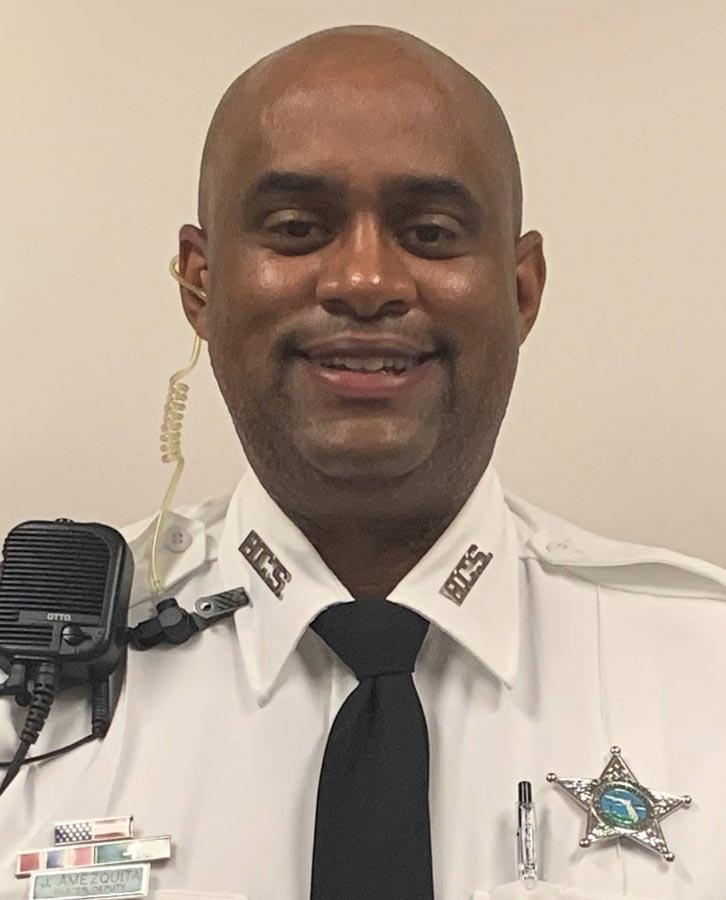
Joey Amezquita, después de haber trabajado en la aplicación de la ley durante 26 años, es alguacil de la Oficina del Sheriff del Condado de Hillsborough en Tampa, Florida. Él es un miembro comprometido y maestro de escuela dominical en la Open Bible Prayer Chapel en Wesley Chapel, Florida, que pastorea Calbert Mark. Joey y su esposa, Christina, tienen tres hijos.
By Bill Francavilla
We all have days when we question what has gone wrong in society. The cause can be an event we see on the news or on social media. But very few of us see it firsthand.
I will never forget the morning of April 17, 2016. Early Sunday morning before the rest of my family woke up, I headed to the grocery store to buy a few things for breakfast. I was completely unaware that another person was headed to the same grocery store with a very different purpose.
I would like to say that I played the part of a hero, but when I heard shots fired and one of the cashiers screaming for everyone to get out, my response was to run as fast as I possibly could. I made it safely out the front door along with two employees and collapsed in the front of the church next door where I called 911.
The local police and paramedics did a top-notch job and soon apprehended the shooter. It was determined he had acted alone. Unfortunately, a man my age who had gone to the same grocery store with a similar purpose as mine was now dead. He left behind a wife, a young daughter, and an unborn baby.
In the news reports later that day many people who did not witness the incident were quoted as saying, “This sort of thing never happens here!”
Nonetheless our town had to face the fact that we had just had a fatal shooting.
In the five years since, I have asked myself how such a violent occurrence could have happened in such an innocent setting. More important, I wanted to know how to keep something like this from ever happening again.
It is no secret that we have seen a decline in the morality of our culture since the mid-twentieth century, and as a result we have seen an increase in crime, poverty, sexual perversions, and apathy.
Perhaps more alarming and not by coincidence, we are living in an age where our culture is more and more strongly opposed to the things of our God.
We have seen the Ten Commandments removed from court buildings, pushes to remove “under God” from the Pledge of Allegiance, and a devaluing of an elected official swearing his or her oath of office on the Bible.
When prayer was taken out of public school in 1962, suddenly millions of young Americans were no longer praying with childlike faith for their country. As Christians it is easy to ask ourselves, “What did we expect?”
Of course, sin was going to creep in and hit small-town America; it was just a matter of when. We are far from the first culture with Christian roots to face the secularization of society, and we will certainly not be the last. The question that faces us is this: What are we, the people of God, to do about it?
Every four years many Christians vote as if their lives count on it. Without ever engaging with their neighbor, they pull the lever on the voting booth and walk out as if they have accomplished something noble.
While it is of the utmost importance to vote, that act can only go so far. Sure, from time to time we happen to get an elected official that we think is going to “set things right.” But do we really expect reform to come by an act of legislation?
There is still a culture out there to whom we are commissioned to minister.
When King Josiah came to the throne, he was put in perhaps one of the most awkward positions in the history of Israel. At the age of eight, Josiah was tasked with reigning over a people who were openly rebellious to their God.
His father, King Amon, reigned for only two years and had proven to be weak and ineffective. His grandfather was the infamous King Manasseh, a king so evil he sacrificed his own sons to false gods. After 45 years, though, Manasseh had been humbled by God and lived out the remaining ten years of his reign serving God.
While Manasseh tried to reform his kingdom in the latter part of his reign, the culture had already taken a dangerous turn towards idolatry and false worship. There was little he could do to change the hearts of the people.
Now the boy-king Josiah was tasked by none other than his distant cousin, the prophet Zephaniah, with reforming his new kingdom. Nonetheless, Zephaniah did not tell Josiah that change would come from his government; it would come through an act of repentance and prayer.
Seek the Lord, all you humble of the land, you who do what he commands. Seek righteousness, seek humility; perhaps you will be sheltered on the day of the Lord’s anger.
Zephaniah 2:3
In 2 Chronicles 34 we are told that by the time Josiah was 16, he began seeking after the Lord, and by the time he was 20, he purged Jerusalem and Judah of all its idols and false gods. But nothing could prepare him for what he would see at the age of 26. As his reforms continued, Josiah made the decision to repair the temple of the Lord where the “Book of the Law of the Lord” was discovered, and for the first time in a long time, the people heard the law and repented.
I believe that the words of Zephaniah can apply to us today. Since we are Americans and do not have a king, the people must seek the Lord, seek righteousness, and seek humility. Unless the people of this nation seek the Lord and pray for a true revival, electing a righteous man or woman to the presidency can only be so helpful.
Believe it or not, this is not the United States’ first moral slump. Just after the revolution, our new country had unbelievably high rates of drunkenness, crime, and profanity. Churches were losing more members than they were gaining.
The late Baptist minister and historian J. Edward Orr wrote about this in his article “Prayer and Revival.” He quotes Chief Justice of the United States, John Marshall, who wrote to the Bishop of Virginia, James Madison, that the Church “was too far gone ever to be redeemed.”1
How did the situation change? It was through a concerted effort of prayer. It happened when the people of God decided to ask our Lord for His wonderful favor upon our nation. Every revival in history has the same story.
It was true in Josiah’s day just as it is true in ours.
When small-town America no longer feels safe, people tend to ask themselves how we got to this place and what must we do to turn the tide? The answer is always going to be prayer.
If you consider your church a house of prayer, then you should be praying for the coming revival we so desperately need, a movement that will be felt for generations.
Josiah’s revival did not last long, but thankfully we still have the words of Zephaniah to guide us back to our spiritual heritage as the people of God.
1 Orr. J. Edwin. “Prayer and Revival.” https://jedwinorr.com/resources/articles/prayandrevival.pdf
About the Author

Bill Francavilla and his wife, Jessica, pastor Living Hope Church in Williamsburg, Virginia. Bill has served in many different ministries from teaching middle school Bible classes to serving as a chaplain at a retirement community. He holds a master’s degree in theological studies from Liberty University and has been active in missions to Mexico, Dominican Republic, and Cuba. Bill and Jessica have four children: Alex, Liam, Rita Grace, and Gino.

By Marvin Lumbard
During our devotions together the other day, I told my wife, Diana, that I’ve been struggling in prayer recently. Later that same day I opened an email from Andrea, the Message editor, asking me to consider writing an article on prayer. As I read it, my initial response was “No.” Who was I? What was I? And of all times now…when my Father’s ear seemed distant. When reading Psalms recently, I had been nodding my head in agreement as David asked God why He wasn’t answering or why He wasn’t doing the “God things” when they seemed so necessary “right now.”
Yet now as I write, the sun isn’t up yet, not because early mornings are some part of my spiritual pattern but because this morning I can’t sleep. God is speaking. Before I even took the time to formally pray about Andrea’s request, He spoke. My friend and former boss, Spencer Keroff, pastor of First Church of the Open Bible in Des Moines, Iowa, says, “Prayer is a two-way conversation with God.” I guess this is me experiencing that conversation.
Knowing His Voice – Hearing
I wouldn’t say that I receive many “words” from the Lord. Oh sure, I know His anointing when I preach or teach, but aside from the written Word of God that I have hidden in my heart, I don’t recall very many phrases that He has spoken to me. Most of His leadings, which I expect daily, are more like nudges.
One phrase from the Lord that I do remember came many years ago when I was in my quiet place. He said, “Music is not your ministry; prayer is.”
Since music had been a prominent part of my life, this word was timely. It wasn’t a corrective word, but a directive word. I knew it was Him. It bore all the characteristic features of something He would say: it was in the stillness, it was gentle, it carried with it the peace that I have come to expect with any of His leadings, it fell into a thematic pattern of what I knew He had already said in Scripture, and . . . it wasn’t something I would tell myself. His directive didn’t change much on the outside; you probably wouldn’t have seen any difference at all in my life, but it was “the voice behind [me] saying, ‘This is the way; walk in it’” (Isaiah 30:21).
I cherish the story about Elijah in 1 Kings 19. Elijah was at what may have been the lowest point of his life, hiding in a cave in the wilderness afraid for his life. It was at this point that God spoke to him. I think the narrative is for us mostly (Elijah already knew the voice of God).
In essence God said to Elijah, “We need to talk. Meet me on the mountain.” As God passed by the cave where Elijah waited, rock-breaking winds tore at the mountain, then an earthquake shook the ground under Elijah’s feet, and then there was fire. (Wouldn’t we love to experience any of these as vehicles of God’s voice!) Only after the fire did Elijah hear the voice that He recognized – the quiet one, the one that required Elijah’s heart to be still enough to hear. Such a familiarity comes only with time spent in His presence.
Obeying His Voice – Doing
One of the keys in Elijah’s narrative that I missed for a long time was the part Elijah played in his meeting with God. God told Elijah where the meeting would take place, but Elijah still had to go there. Even though he was waiting in a cave on the mountain, Elijah still had to get up and go meet God when he heard God’s voice.
As much as God has done to clear the path for us to be near Him, He stops a distance away and says, “Draw near, seek, knock, ask.” Part of the maturity of knowing God is certainly the recognition of His voice, but of equal importance is saying “yes” when we hear it. Perhaps the greater struggle is not in hearing His voice but in being willing to do what we hear Him say. More often than not, the call to come is heard when there is plenty to do and we’re buried in the midst of it all.
I’m reminded of the time when I was an eleven-year-old lying under a ’66 Dodge Polara with my grandad, doing my part to swap out a 318 under a big, old tree. Suddenly Grandad stopped working, so I looked at him to see what was going on. There he was, hands raised in that narrow space between the earth and the underside of the car, giving glory to our God who had given us the strength, the provision, and the understanding to fix one of life’s necessities. Grandad had heard the voice call to him, and he responded instantly. Long before I met his God, I learned a timeless lesson.
Drawing Near is the Solution to the Dryness
I mentioned earlier a recent season where God’s voice seemed faint. I find that unless I am harboring sin, the faintness or distance is just His calling me to a deeper place.
The busier we become, the easier it is for our secret place to lose its significance. Loud and desperate voices clamor for our attention. Jesus too was called on to meet the needs of many well-meaning, loved, and godly people. I think of Lazarus’s family (John 11) and the godly Greeks with whom Jesus refused an audience in His final week (John 12:20-26). In these times of busyness the still, small voice will lead us to pray when we should pray and to pray with whom we should pray. Without this leading we find ourselves submitting to the pressures of others’ priorities. (My dad always says, “Everybody has a plan for your life.”) As we listen and obey, God leads us into deeper places of dedication, deeper places of victory, and deeper places of responsibility (Matthew 25:14-30).
Jesus was misunderstood much of the time because His teachings were from a source that was higher than that of His listeners’ understanding. His leading was also from a higher source. Not until after Lazarus’s resurrection did his family get over the offense they felt by Jesus’ tardiness. Perhaps the Greeks never did understand why he couldn’t give them a few minutes. One thing is for sure, His timing was always spot on; so was His prayer time. Walking in the peace of the Father, near to His voice, Jesus was confident that the day would be directed by the Spirit. With His mind fixed on the Father, Jesus walked in the peace of God all the time (Isaiah 26:3). We can too.
About the Author
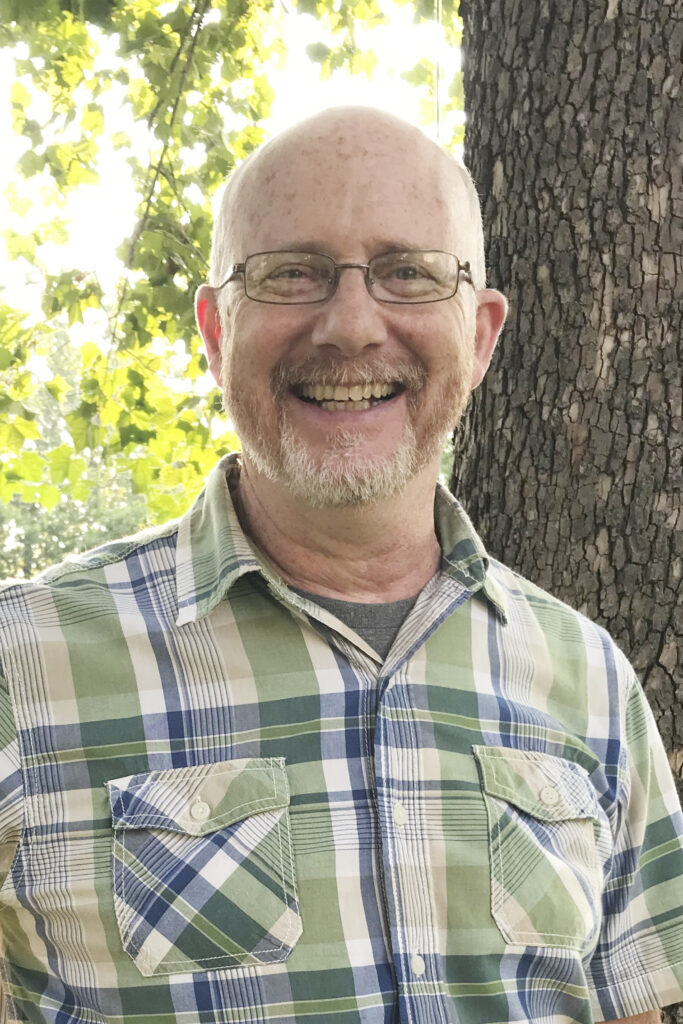
Marvin Lumbard is the husband of Diana Lumbard. “To everyone’s amazement” (according to Marvin), she has been married to him for 43 years. After spending 22 years in the aircraft industry, Marvin’s focus became ministry. He served as the worship director/worship pastor at First Church of the Open Bible in Des Moines, Iowa, for 11 years. Ordained with Open Bible Churches, Marvin has served as pastor of Community Chapel, an Open Bible church in Des Moines, since January of 2018.