
Featured Articles
Cómo escuchar a Dios


Por Dyrie M. Francis
En medio del caos y el ruido de la vida cotidiana, algunos relegarían el escuchar la voz de Dios a pastores y líderes espirituales cuya vocación les exige estar en comunión con Dios para poder ministrar a Su Iglesia. La verdad es que a Dios le complace hablar a sus hijos y que ellos le escuchen. Las Sagradas Escrituras están llenas de ejemplos de individuos, e incluso de una nación, que escucharon hablar a Dios.
Desde el principio, Dios disfrutó de la comunión con Adán y Eva en el Jardín del Edén, hasta que el pecado interrumpió la relación entre Dios y la humanidad (Génesis 3:1-10). Dios habló a Abram (cuyo nombre se cambió más tarde por el de Abraham) y le ordenó que se fuera a una tierra que le daría a él y a sus descendientes si obedecía los mandatos de Dios. Dios prometió bendecir a todas las naciones a través de Abraham (Génesis 12:3). Imagínense a Samuel, un jovencito que oye a Dios llamarlo por su nombre para tener una conversación con él. Jeremías, a quien Dios llamó como profeta a las naciones, se sentía inadecuado para la tarea, pero Dios prometió capacitarle (Jeremías 1:4-10). Éxodo 33:11 dice que Dios habló con Moisés «como un hombre habla con su amigo». Josué, el sucesor de Moisés, tuvo un encuentro con Dios como libertador y Salvador en un momento de derrota militar contra la nación de Hai. Dios reveló a Josué la razón por la que Israel fue derrotada y los pasos para recuperar la victoria (Josué 7:4-11).
El Nuevo Testamento registra muchos momentos en los que Dios habló a los discípulos; por ejemplo, en el Monte de la Transfiguración (Lucas 9:35); a Saulo, el perseguidor de la Iglesia, mientras iba de camino a Damasco (Hechos 9:1-6); y a Pedro mientras estaba en éxtasis en la azotea (Hechos 10:9-16). Por último, Juan, el amado apóstol, quien dejó escrito la revelación de Jesús al final de los tiempos (Apocalipsis 1:11; 2, 3, 22:12,16, 20).
¡Dios quiere hablar todavía hoy con cada uno de sus hijos! Dios habla a través de sueños, visiones, las Escrituras, por sentimientos o pensamientos, y menos comúnmente, audiblemente. Pero. a menudo Sus hijos son insensibles a la dulzura de Su voz.
En una ocasión, cuando mi hijo tenía cuatro años, me preguntó: «Mami, ¿por qué Dios habla tan bajito?».
Le pregunté: «¿Qué quieres decir?».
Él respondió: «¡He intentado oír a Dios, pero habla tan bajito!».
Fue un gran momento de enseñanza unido a un profundo sentimiento de gozo por el hecho de que mi hijo de cuatro años deseara oír a Dios de forma audible. Le animé a que escuchase con más atención e incluso a que le pidiera a Dios que le hablase más claramente. Dios respondió aproximadamente un año después, cuando mi hijo se despertó de repente y preguntó por una misionera por la que nuestra familia oraba con regularidad. Él nos dijo que algo andaba mal con ella. También nos dijo que uno de nuestros pastores locales (a quien mencionó por su nombre) estaba pasando por un problema. Le animamos a orar por ambas personas y nos unimos a él en oración. Poco después, el pastor nos contó que su iglesia estaba atravesando por una grave división. También nos llegó la noticia de que la misionera estaba atravesando dificultades en el extranjero.
Existen cuatro factores que nos ayudan a escuchar la voz suave de Dios: La concentración, el tiempo, la autodisciplina y la fe. Gracias a la bondad y la gracia de Dios, podemos escucharle mientras crecemos en estas áreas.
Factor #1 — LA CONCENTRACIÓN
La distracción es nuestro principal enemigo cuando se trata de escuchar a Dios.
Desde que nos despertamos hasta que nos acostamos, la plétora de distractores en nuestro entorno personal reclama atención y desvía la atención del Espíritu Santo que mora en nosotros, que es nuestro maestro y guía. Nuestros hogares y automóviles están llenos de aparatos tecnológicos. La cacofonía de géneros musicales, películas, noticias mundiales, deportes y juegos electrónicos compiten por la mente y cautivan el corazón. Beneficiaría a nuestra cultura la orden de Jacob a su familia de despojarse de sus dioses ajenos, purificarse y volver a buscar juntos a Dios en Betel (Génesis 35:2-3). Tristemente, algunos aparatos se llevan ahora a la casa de adoración. Independientemente de la edad, los creyentes deben ser conscientes del impacto de las distracciones y deben apartar en forma intencional un lugar «tranquilo» para reunirse con Dios. Incluso un rincón tranquilo, un clóset si es necesario, un lugar fuera de la casa o apartamento, o un vehículo estacionado puede cambiar la trayectoria de la distracción a la capacidad de discernir la presencia de Dios y escucharlo hablar.
Factor #2 — EL TIEMPO
Todos tenemos las mismas 24 horas diarias, es decir, 1.440 minutos o 86.400 segundos. El dicho popular nos recuerda que «el tiempo perdido no se recupera». Considere los beneficios para la persona promedio que reflexiona sobre el desperdicio de los segundos, minutos u horas gastados en actividades que no fomentan el crecimiento espiritual y opta, en cambio, revertir su rumbo y escuchar y meditar más en las Escrituras y en escuchar a Dios.
Por lo general, nuestras oraciones son más bien monólogos. Hablamos, Dios escucha, y salimos corriendo sin permitirle que nos hable. Culpamos a nuestros horarios sobrecargados por nuestra falta de oración, meditación y de escuchar a Dios. La vida se convierte en un ciclo interminable de actividad tras actividad. Sin embargo, en 1 Reyes 19:12, cuando Elías necesitaba oír a Dios, observó que Dios no se encontraba en el viento ruidoso, ni en el terremoto, ni en el fuego. Elías escuchó a Dios en Su silbo apacible y delicado. ¡Debemos escoger escuchar para oír!
Jesús dijo a sus discípulos: «Apartaos… y descansad» (Marcos 6: 31). Este descanso era más que un reposo físico. Era descansar en Dios, lejos incluso de los milagros de sanidad y liberación y del poderoso avivamiento. Era aprender del amor y la compasión de Dios por los perdidos y quebrantados y recibir poder para ministrar en forma eficaz. El trabajar para Dios no sustituye el descansar en Dios. Jesús elogió a María por elegir «la mejor parte» en contraste con Marta, que se había sumergido en la preparación de las necesidades físicas de Jesús, pero descuidó Su alimento espiritual vivificante en el proceso (Lucas 10:41-42). El ajetreo y las actividades a menudo no edificantes son los enemigos del tiempo que pasamos con Dios, que consumen los insustituibles 86.400 segundos asignados cada día.
Factor #3 – LA AUTODISCIPLINA
La autodisciplina tiene un impacto en nuestra capacidad de oír hablar a Dios. El diccionario Oxford define la autodisciplina como: «La capacidad de ir en pos de lo que uno considera correcto a pesar de las tentaciones de desistir hacerlo». Se cuenta la historia de un pastor asiático que había ministrado todo el día en las aldeas y llegó a casa después de la medianoche. Sin embargo, se despertó a las cuatro de la mañana para orar y buscar la ayuda de Dios para el día. Su compañero occidental, que estaba de visita, se alarmó al ver que el pastor se levantaba tan temprano. El pastor que oraba respondió que necesitaba escuchar a Dios mucho más de lo que su cuerpo necesitaba dormir.
David meditaba en el Señor día y noche (Salmo 63:6; 119:164) y nos exhortaba a ofrecer a Dios los sacrificios de alabanza y acción de gracias. Jesús, modelo de autodisciplina, se levantaba temprano y se iba a un lugar tranquilo para orar y estar en comunión con el Padre (Marcos 1:35). En su momento de mayor tristeza, se separó de los discípulos y suplicó a Dios Padre que le diera fuerzas para afrontar su «Copa» de sufrimiento en el Calvario por nuestros pecados.
Protéjase de la autoindulgencia, enemiga de la autodisciplina. Tenemos la tentación de complacernos más de lo debido a expensas de la autodisciplina, que nos impulsa a seguir haciendo lo correcto a pesar de los desafíos que podamos encontrar. Los versos de un famoso himno, «Llévame al Calvario» (Lead Me to Calvary), refuerzan mi decisión de buscarle a pesar de mis dificultades y limitaciones.
Que esté dispuesto,
Señor, a llevar mi cruz por Ti
Incluso a compartir Tu copa de dolor
Tú lo has llevado todo por mí
No sea que olvide Getsemaní
No sea que olvide Tu agonía
No sea que olvide Tu amor por mí
Llévame al Calvario
Factor #4 – FE EN DIOS
La fe en Dios es fundamental para oírle hablar. Jesús prometió enviar al Consolador, al Espíritu Santo que nos enseñaría todas las cosas (Juan 14:16-17, 26). A menudo, optamos por nuestros caminos y tomamos decisiones basadas en los principios del mercado. Pero la fe se aferra firmemente a las promesas de Dios y no se deja intimidar por las pruebas. El enemigo de la fe es la incredulidad (Efesios 6:16). El escritor del libro de Hebreos enfatizó: «Sin fe es imposible agradar a Dios» (Hebreos 11:6).
Crecer en estas cuatro áreas puede ayudarnos a ser más sensibles a la voz de Dios. Algunas denominaciones cristianas enseñan que Dios no sigue hablando fuera del texto escrito. A lo largo de mi experiencia cristiana, Dios me ha hablado claramente muchas veces. Una vez fue en voz alta, sonando como un trueno. La mayoría de las veces me ha hablado a través de mis pensamientos y las Escrituras. Algunos de Sus mensajes fueron instructivos; otros correctivos o acerca del futuro. Dos de los mensajes advertían de un desastre inminente para nuestra nación que ocurrió el 11 de septiembre y en la Villa Olímpica de Georgia. Testigos pueden testificar sobre estos dos últimos, ya que les informé de la revelación de Dios en una reunión de oración antes de que ocurrieran.
Una de las tareas más difíciles que recibí fue cuando recibí un mensaje para una pareja a la que respetaba mucho y consideraba modelos a seguir. El mensaje de Dios era un llamado al arrepentimiento, o de lo contrario «serían como Ananías y Safira» (Hechos 5). Me quedé petrificada y poco dispuesta, rogándole a Dios que me liberara de esta tarea, ¡pero no lo hizo! Esperaba que no hubiera nadie en casa de ellos, toqué al timbre y corrí literalmente hacia mi coche. Pero antes de que pudiera encender el vehículo, la puerta principal se abrió y alguien dijo: «¡Espera!».
Brotaron lágrimas de temor. Comuniqué el mensaje y emprendí una precipitada retirada. Sólo estaba presente la esposa, que me pidió que no me marchara. Comenzó a llorar y a confesarse.
Me quedé estupefacta. Había juzgado a Dios por ser duro con estos «buenos cristianos». Oré por la familia y me marché entristecida y destrozada. Dios se preocupa de todo lo que nos concierne.
Necesitamos seguir orando para ser sensibles al Espíritu de Dios, tener oídos atentos, un espíritu que discierne y un corazón obediente. Que Él nos ayude a enfocarnos en la «mejor parte» como lo hizo María, a cuidar los segundos y los minutos porque suman días, semanas, meses y años; a crecer en la autodisciplina, y a crecer en la fe alimentada por la Palabra de Dios. De este modo, es más probable que oremos, escuchemos y oigamos a Dios hablarnos. Mantenga abierta la línea espiritual. ¡Dios sigue hablando en nuestra generación (Apocalipsis 3:20)!
Sobre la Autora
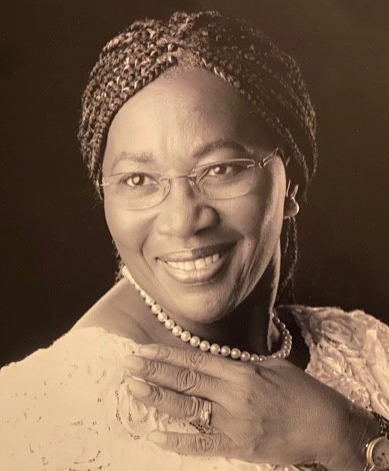
Dyrie Francis Obtuvo un Diploma en Enfermería, con un máster en Ciencias de la Enfermería y un máster en Liderazgo Cristiano, vive en el sur de Florida, donde ella y su marido, Karl, fundaron hace treinta años la Iglesia de la Biblia Abierta Living Word, en Cooper City. La congregación está formada por creyentes de 22 países, incluida una minoría de estadounidenses caucásicos. La iglesia celebra la unidad en la diversidad y busca con ahínco el cumplimiento de la Gran Comisión sin distinción de raza o color. Dios y la familia son fundamentales en la vida y el paradigma ministerial de Dyrie. Ella ama a la gente y sirve a través de la enseñanza de la Palabra y el ministerio de la oración. En su vocación de servicio subyace una profunda e ineludible sensibilidad hacia el corazón de Dios sobre la justicia y la situación de los oprimidos. Ella sirve como un puente para muchos y continuará por la gracia de Dios. Dyrie y Karl tienen dos hijos adultos, Jonathan (casado con Andrea) y Bryan (casado con Terrone) y una nieta, Christine Noelle.






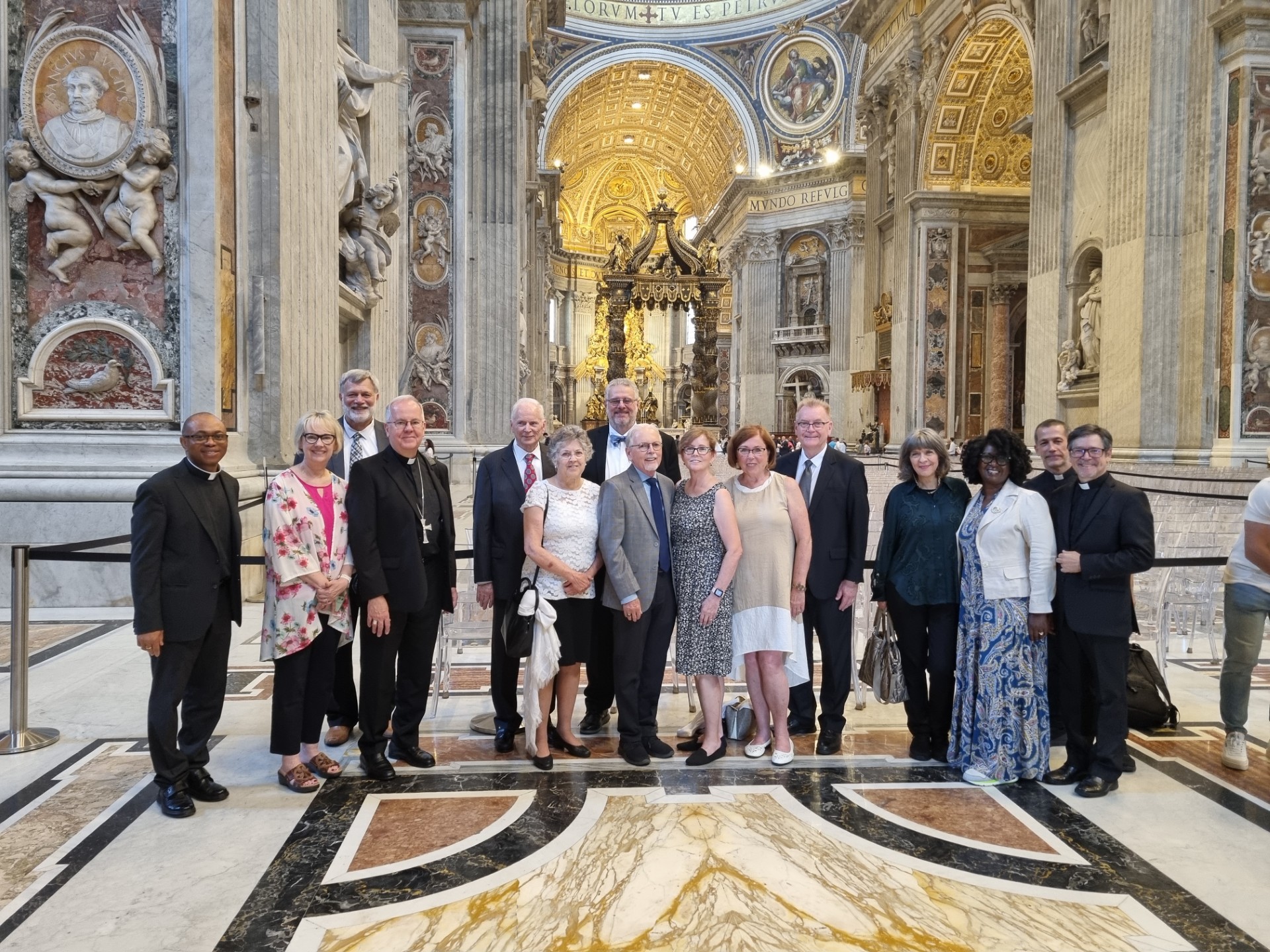
I am proud to have been a credentialed minister with Open Bible Churches for over four decades. What a privilege to have served in a variety of contexts across our wonderful family of several hundred congregations in the US, along with several thousand globally. Over those decades, God has gradually expanded my understanding of what it means to belong to His Church.
I’ve enjoyed the enriching experience of embracing so many of the distinctives of what makes Open Bible, well, Open Bible: our unwavering commitment to Scripture as the inspired, authoritative Word of God; our resolve to plant and sustain healthy, vibrant local churches; our passion for the fullness and gifts of the Holy Spirit operating in our daily lives; and so much more.
And yet, with the beauty of these ecclesial distinctives so evident in our movement, I believe I have come to realize that what we share together as our core values and practices are not completely unique to us. As a matter of fact, when we take a step back and consider just who is a part of the Body of Christ, we can discover that we have much in common with our brothers and sisters across the US and around the world. It took one unexpected friendship to deepen my understanding of what it means to belong not only to Open Bible Churches, but to the Church.
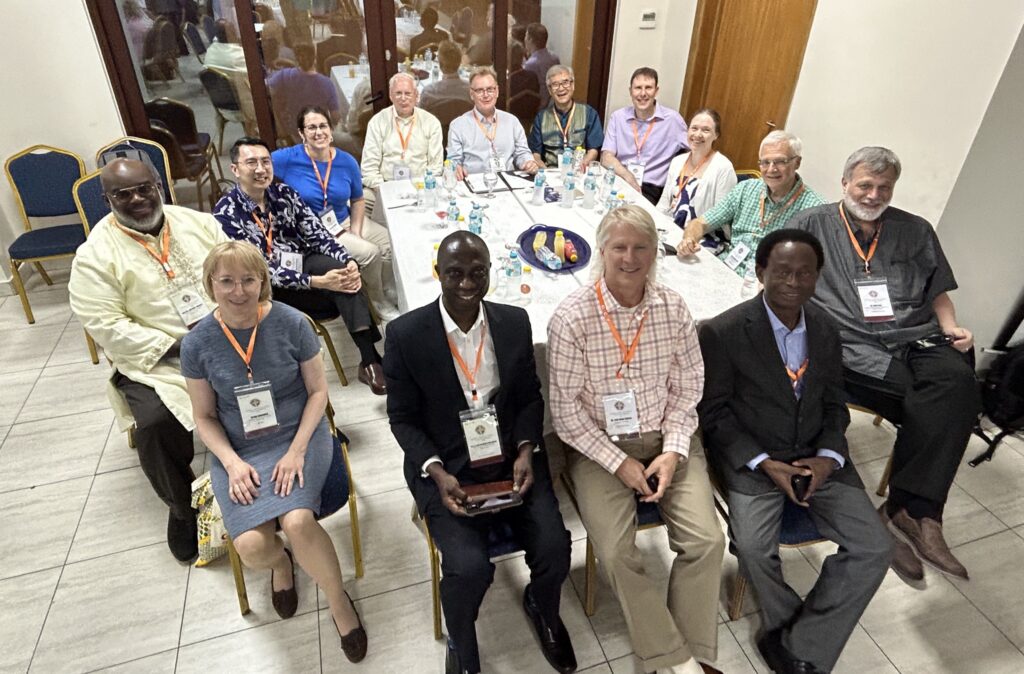
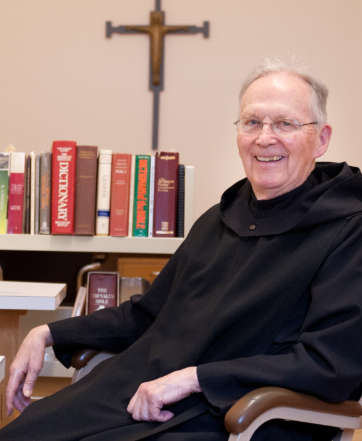
A humbling experience for me has been to receive grace and love from others who are different than me even before I was prepared to offer the same to them. One example for me comes from my years as a participant in the International Catholic-Pentecostal Dialogue. This ongoing annual conversation was begun in the 1970s by David du Plessis, the Pentecostal known as “Mr. Pentecost,” and Father Kilian McDonnell, a Catholic theologian, and continues to this day. When I attended a session of this Dialogue for the first time in 1993, I was so focused on my disagreement with Catholic doctrines and practices that I was not in a place to show much hospitality. But over the next several decades I got to know the Catholic co-chair, Father Kilian, quite well. I was amazed at how well he knew Pentecostals like me, how much he wanted to learn more, and how much he cared for us. He was respectful, honest, and compassionate. We didn’t agree on everything, obviously. But he became a mentor to me, showing me how to treat others who were different than I was. And we became friends. He passed away last year at the age of 100, and I was honored to attend his memorial service. That experience changed how I think about the global Church.
The following numbers paint a remarkable picture of the global family that shares our evangelical, Pentecostal, and charismatic faith. According to the 2026 Status of Global Christianity report, more than 1.1 billion Christians around the world identify as Evangelical, Pentecostal, or Charismatic. Of those, approximately 676 million are Pentecostal or Charismatic believers.
That global family is wonderfully diverse, including classical Pentecostal denominations like Open Bible Churches, independent charismatic networks, Catholic Charismatics, and charismatic believers within many Protestant traditions (Anglican, Methodist, etc.).
So why do these numbers matter? They remind us that we are part of something much larger than ourselves. We are not alone, and we are certainly not “small.” Along with our evangelical, Pentecostal, and charismatic brothers and sisters around the world, we are a fierce contingent in the Lord’s army. It’s both humbling and encouraging to remember that we belong to the CHURCH in all its vastness.
But that doesn’t mean we have to give up our wonderful heritage, culture, and beauty that make us Open Bible Churches. We have something to contribute to the rest of the Church. I’m reminded of the prophetic word delivered a few decades ago at one of our conventions: “Open Bible Churches is a vital organ in the Body of Christ!” That statement has never been more true.
“Open Bible Churches is not ‘the Church.’
Open Bible Churches is part of the Church
— a wonderful part,
but a part.”
And yet, we also do not want to be guilty of isolation or sectarianism. Open Bible Churches is not “the Church.” Open Bible Churches is part of the Church. A wonderful part, but a part. So, it is healthy for us to remember our brothers and sisters in other denominations and networks, to pray for them, and even to cooperate with them in community and regional initiatives so that together we may faithfully steward our callings and responsibilities to advance the Kingdom of God on the earth.
One of the most important ways we can grow in unity as believers is to start by acknowledging and valuing diversity in the Body of Christ. God didn’t make us all the same. Unity is not uniformity. The old adage still rings true: “in essentials, unity; in non-essentials, diversity; and in all things, charity.” May we agree to disagree with one another with clarity, respect, and most of all love. We can embrace grace and truth at the same time, and indeed we are called to it.
No doubt you know some followers of Jesus in your community (and probably in your own family) who do not belong to Open Bible Churches. The invitation for us all is to love them, to be grateful for all that we share with them, and to offer some space (and some grace) for our differences. This is not easy. In fact, it is hard work. Remember the words of the apostle Paul: “As a prisoner for the Lord, then, I urge you to live a life worthy of the calling you have received. Be completely humble and gentle; be patient, bearing with one another in love. Make every effort to keep the unity of the Spirit through the bond of peace” (Eph. 4:1-3 NIV). If maintaining unity was easy, Paul wouldn’t have needed to admonish us to “make every effort” to do so.
Jesus reminds us that unity isn’t just for our benefit: it’s one of the clearest testimonies to a watching world.
But if we are willing to pay the price of seeing God’s big Church, and loving it the way He does, we’ll be more Christlike, and we’ll participate in being an answer to one of the last prayers Jesus prayed before He went to the cross on our behalf: “…that they may be one as we are one— I in them and you in me—so that they may be brought to complete unity. Then the world will know that you sent me and have loved them even as you have loved me” (John 17:22-23 NIV). Jesus reminds us that unity isn’t just for our benefit: it’s one of the clearest testimonies to a watching world.
Together, let’s allow the Lord to give us eyes to see the breadth and beauty of His Church, recognizing and loving our brothers and sisters in Christ in such an obvious way that we actually become answers to the prayer of Jesus in John 17. Amen?
Here are a few resources that explore some of these issues related to Christian Unity:
That They May Be One – Podcast
That They May Be One – Film
PCCNA Christian Unity Commission
Forum for Unity
International Charismatic Consultation
Global Christian Forum
About the Author
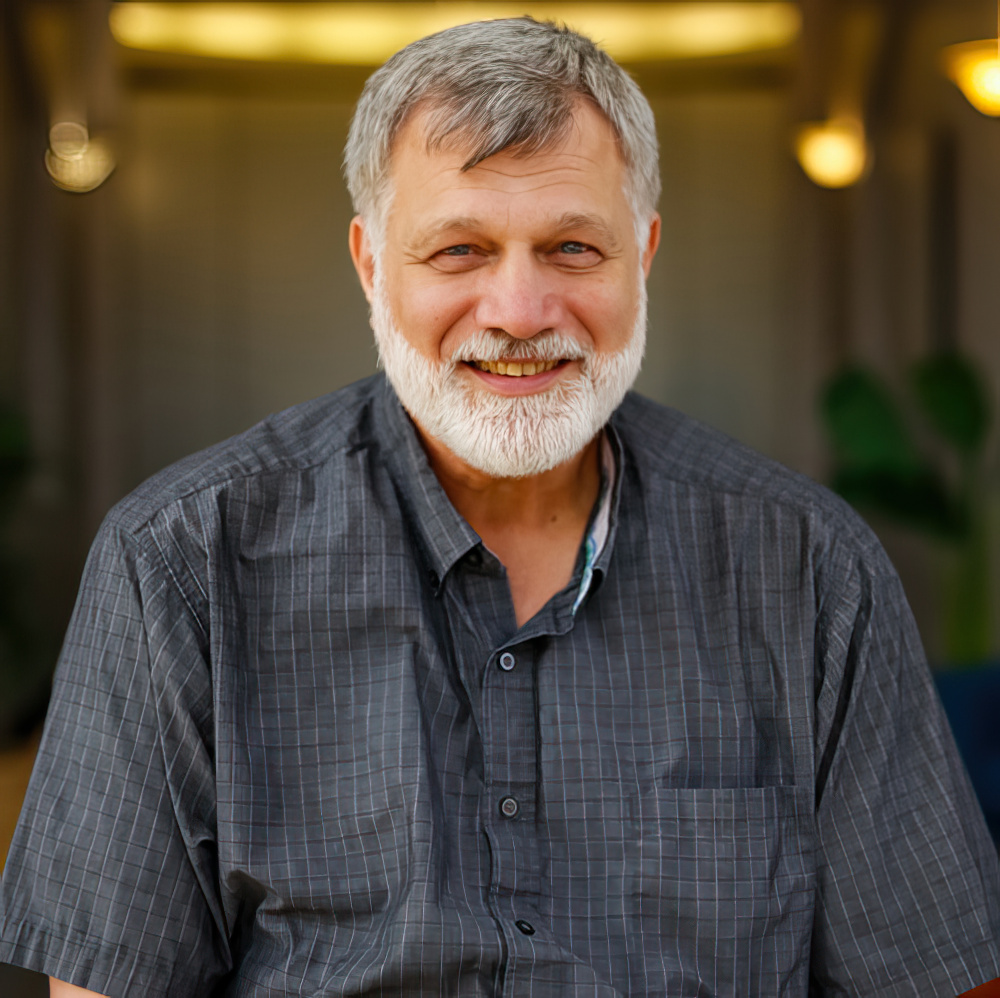
David Cole has been a credentialed minister with Open Bible Churches since 1984. He is currently Professor of Historical Theology at The King’s University in Southlake, Texas. He is also involved in a variety of initiatives related to his calling to encourage the pursuit of unity among believers in Jesus, and to that end currently serves as chair of the Christian Unity Commission with the Pentecostal/
Charismatic Churches of North America. He and his wife, Julie, are parents of four, grandparents of ten, and are currently located in Newberg, Oregon, where they attend College Street Church.


I woke up unable to speak. A breathing tube filled my throat. Machines surrounded my hospital bed. I was confused, intubated, and lying in an ICU room with no memory of how I got there. But strangely, I was not afraid. In the middle of the chaos, God gave me an unexplainable peace.
I motioned desperately for paper and pencil so I could ask two questions: What happened? And where is George?
My son’s father explained that I had been in a serious car accident. The car was completely destroyed. I had been found trapped beneath the steering wheel with severe facial injuries.
That morning — January 22, 2026 — had started like any other Thursday. I got ready for work, buckled my 18-month-old son George into his car seat, and pulled out of the driveway expecting an ordinary day.
It became anything but ordinary.
My neighbor, who had left home at the same time I did, later explained what happened. We were both driving around fifteen miles per hour when the car I was driving suddenly lost control. I still do not know why, and I have no memory of the moment itself.
By the grace of God, George was almost completely untouched.
The car hit a cement light pole, crossed into oncoming traffic, and was struck head-on by another vehicle. Both vehicles spun, and the car I was driving slammed into another cement light pole.
By the grace of God, George was almost completely untouched.
The back windshield shattered directly above him, yet the glass never harmed him because of the position his car seat landed in. The entire back left side of the car was crushed inward, but George had been seated on the back right side. Even now, I can only thank God for His protection.
I was taken by ambulance to the hospital and admitted into the Trauma ICU. Doctors told my family that I had suffered severe head trauma resulting in a brain bleed. I was also bleeding internally in my abdominal area, and they began preparing my family for the possible loss of my pregnancy.
… the doctors did not know the God my family and I serve — and how merciful He is.
But the doctors did not know the God my family and I serve — and how merciful He is.
My family immediately began to pray. Members of my church, Open Bible Church of Homestead, began arriving at the hospital, and soon an entire army of people was interceding for me.
During those first two days, I drifted in and out of consciousness and remember very little. But one moment remains clear in my mind: I heard the song “I Surrender” by Hillsong Worship playing in my hospital room. The lyrics, “Like a rushing wind, Jesus breathe within, Lord have Your way, Lord have Your way in me,” stayed with me and brought a deep sense of comfort in the middle of everything happening around me. In that moment, those words became my prayer as I quietly prayed, “I leave this in Your hands.”


After three days in the ICU, I was successfully extubated and began making remarkable progress. Ultrasounds showed a happy, active baby, and the bleeding had stopped.
On the fourth day, I was transferred out of the ICU into intermediate care before eventually moving to the medical-surgical floor. Doctors then began preparing me for maxillofacial surgery to reconstruct my face after multiple fractures.
On January 30, I underwent an eight-hour surgery. By God’s grace, the procedure was successful, and another ultrasound afterward showed my unborn baby remained active and healthy. On February 3, I was finally discharged and able to return home.
Since then, my recovery has gone smoothly. I am now twenty-eight weeks pregnant and waiting expectantly for the arrival of my baby. Through every frightening moment, God gave me strength and peace, and I never doubted His mercy.
Today, I am a living testimony of His grace.
About the Author

Thammy Castro is a behavior technician living in Miami and a soon-to-be mother of two. In her free time, she enjoys traveling with her family. She is a member of Open Bible Church of Homestead, where her parents, Jose and Maria Castro, serve as pastors.


There has been much discussion about the future of the Church. While I’m not a futurist or researcher, I’m grateful for voices that help us think wisely about pursuing the mission of the Church in an ever-changing culture. Researchers like Ed Stetzer and Carey Nieuwhof highlight some encouraging trends, such as revivals on college campuses, rising Bible sales, and Gen Z’s hunger for authentic faith.
I carry deep conviction and a faith-filled anticipation about what I see and am praying for. When I think about the Church and the days ahead, I don’t see a Church in retreat, but I do see a Church being refined – prepared for what God is getting ready to do. A victorious and glorious Church (Eph. 5:27).
When I think about the Church and the days ahead, I don’t see a Church in retreat, but I do see a Church being refined.
Jesus said, “I will build my church, and the gates of hell shall not prevail against it” (Matt. 16:18 ESV). That promise has no expiration date. Jesus is still building His Church today.
As the church advances, it will not stand on programs, buildings, or production. . . it will be built on the authority of Christ and the power of the Holy Spirit.
Across the body of Christ, there is a growing recognition that the future of the Church will not be built by addition alone, but by multiplication. Disciples will make disciples, leaders will develop and release leaders, and churches will plant churches. There are many voices helping to bring clarity to this, and we are seeing that same conviction take shape within Open Bible through our Mission to Multiply and the Power of We.
So, when I think about the Church and what is ahead of us, what do I see?
I SEE A MULTIPLYING CHURCH
We often measure success by attendance, budgets, and programs. While salvations and baptisms remain central, we must expand the scorecard. As Larry Walkemeyer describes in The River Church, we must move from “lake churches” that gather to “river churches” that send – becoming disciple makers who multiply.
The book of Acts shows us a model of a church that did not just meet but multiplied. The future will not belong to churches that simply gather a crowd, but it will belong to churches that make and send disciple makers. Jesus did not commission us to build an audience. He commanded us to go and make disciples (Matt. 28:19). Multiplication begins there – in intentional, relational, Spirit-led disciple making.
Multiplication is not just a strategy or a motto we adopt. It is the culture of Spirit-empowered, disciple-making churches. The Church I see measures health not only by attendance, but by how many are discipled, equipped, and sent to reproduce what’s been invested in them. This is our Mission to Multiply.
I SEE A SPIRIT-EMPOWERED CHURCH
We live in a time of rapid change. Technology, AI, and social media shape how we communicate and connect. These tools can be helpful, but they don’t transform lives. The Holy Spirit does.
These tools can be helpful, but they don’t transform lives. The Holy Spirit does.
Pentecost was Heaven’s defining moment for the birth of the Church and the fulfillment of what Jesus said in Acts 1:8. The early followers of Jesus did not have the influence, resources, or tools we have today. What they had was the power of God. That has not changed!
In the days ahead, more than ever, the Church will move forward not through innovation alone but through consecration. The church I see is unapologetically dependent on the Spirit of God.
I SEE A COURAGEOUS CHURCH
In the book of Acts, every step forward required courage – Peter and John before the Sanhedrin, Stephen in the face of death, Peter going to Cornelius’s home, the sending out of Paul and Barnabas. These were not small steps; they were courageous steps across cultural and spiritual boundaries. The early Church moved from gathering to going, from addition to multiplication. The expansion of the early Church was not accidental. It followed obedience and courage.
The Church I see will walk in that same Spirit.
Courage to preach the truth in love.
Courage to plant in hard places.
Courage to raise and release the next generation.
Courage to choose multiplication over comfort.
Courage to link arms with others for the sake of the greater mission.
Courage to build the Kingdom over our own castles.
We can stand on His promise and by His Spirit knowing “God has not given us a spirit of fear but of power and of love and of a sound mind” (2 Tim. 1:7 NKJV).
I SEE THE POWER OF WE
As we look forward, one of the strongest convictions I carry is this: our future will be stronger through the Power of We.
Individualism limits impact; partnership multiplies it. When we share vision, develop leaders, and align around mission, we step into something far greater than any one church could accomplish alone. I believe the future Church will not thrive through isolation but will flourish through collaboration. The church I see understands that “we” is stronger than “me.”
When we share vision, develop leaders, and align around mission, we step into something far greater than any one church could accomplish alone.
I am confident in what God has called us to:
The church that makes disciple makers will multiply.
The church that depends on the Holy Spirit will endure.
The church that walks in courage will advance. This is the church I see, and I believe we are being invited to build it together.
About the Author
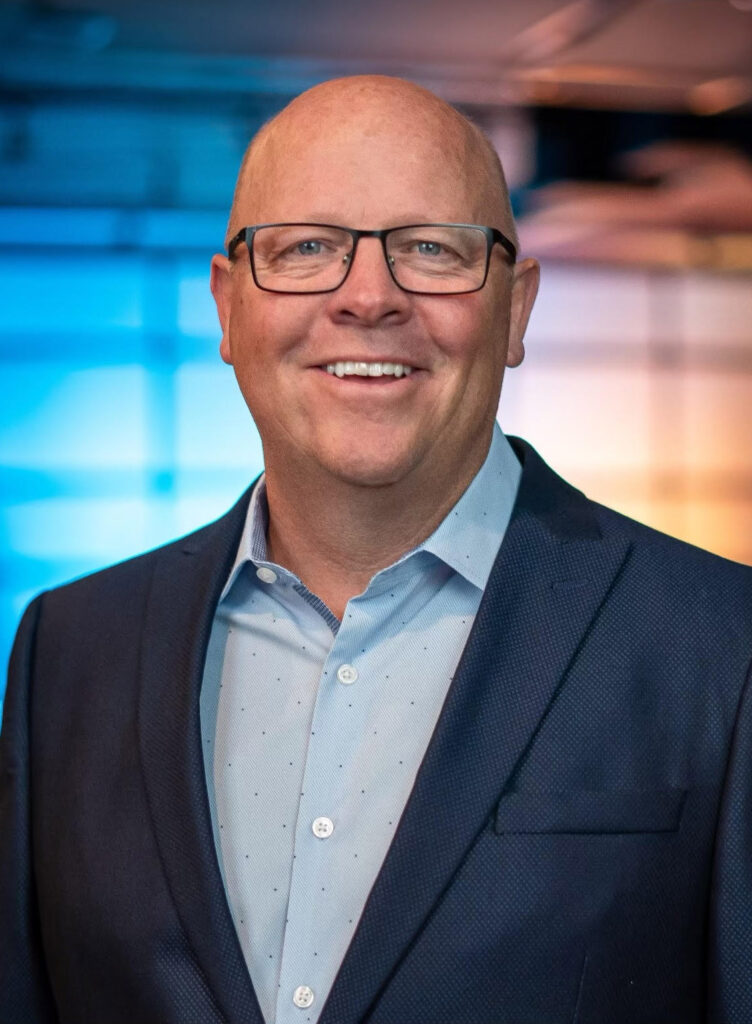
Michael Nortune serves as president of Open Bible Churches. He has ministered in the local church faithfully for thirty-five years. From his start as a janitor and groundskeeper to church planter and lead pastor of Life Church in Concord, California, Michael has had the opportunity to gain experience in every capacity within the church throughout his ministry. Not only does he have hands-on experience on the local level, but Michael has also led at the district, regional, and national levels within Open Bible Churches. Michael and his wife, Julie, currently reside in Colorado and love living near five of their six children and their spouses. They also treasure the time they spend with their other daughter who lives in Alabama with their first (but not the last) grandson!