
Spotlight
My Son is Not Going to Die!

By Betty Brown
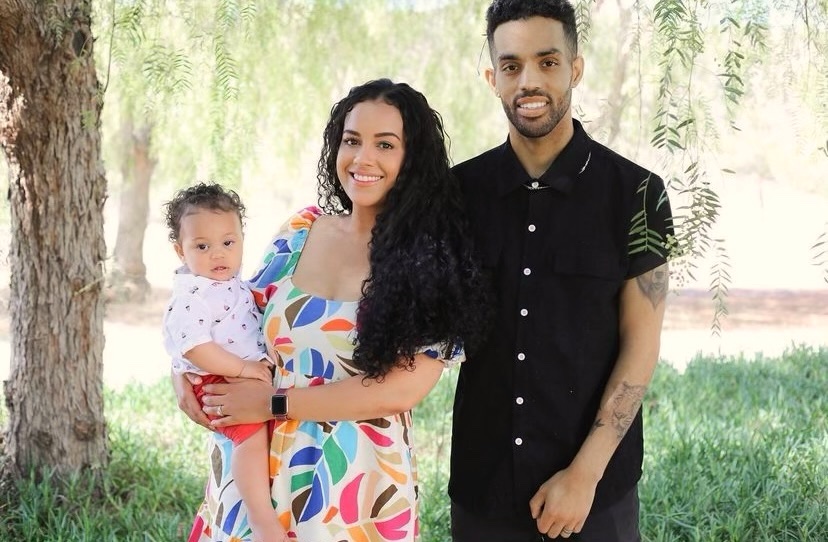
My son Aaron was diagnosed with a rare liver disease called sclerosing cholangitis when he was age 18 and on his way to study at Liberty University. In those first few years he managed the disease well, amongst many of life’s milestones. In October of 2019 he married Felicia. On July 31, 2021, he and Felicia welcomed their beautiful son, Ezra James, into the world. Both Aaron and Felicia faithfully served in various ministries at the church my husband, Jim, and I pastored, Open Bible Church in Portland, Oregon. In May of 2022, my husband stepped down as senior pastor, and Aaron was appointed to take the lead.
That same year Aaron’s health suffered a setback. Two episodes of Covid 19 wreaked havoc on his system; his health deteriorated to the point that his liver specialist felt it was time for a transplant. We researched facilities for those that boasted the best outcomes and picked Mayo Clinic in Rochester, Minnesota.
Having set up an appointment and making the necessary arrangements, including sending Aaron’s records on ahead, we reserved a spot at a local Airbnb to stay during Aaron’s treatment. We were supposed to leave Thursday, October 6, 2022, which was good because for two weeks prior, Aaron had not been feeling well. Our whole family was worried about him. In fact, his brother Timothy had flown in from Mason, Ohio, to be with him until he left for Mayo.
Unfortunately, that Wednesday, while Aaron was leading worship rehearsal at church, he passed out. Timothy caught him and immediately called 911. Aaron did not want to go to the hospital though; he thought he would be fine. However, a couple of hours later he couldn’t breathe. Timothy took him to the hospital in Portland, where he was diagnosed with sepsis and liver failure. Extremely ill, he was placed in ICU.
Friday was a terrible day. We had been in contact with the doctors at Mayo and the Portland ICU doctors. The doctors from Mayo wanted Aaron flown to Rochester. The ICU doctors told me that Aaron was in complete organ failure, that he would already be gone if it were not for his young age.
That did not set well at all with me. I found myself smiling at the doctors, but on the inside, I was breaking down. They were dismissive of me, treating me as if I were a child. They seemed to be saying, “Your son is dying and there is nothing we can do about it. Just accept it.”
After another dire diagnosis from another doctor, I knew I needed to be alone somewhere. I made my way over to a spot next to a window hidden by dozens of wheelchairs where no one could see me, collapsed onto a stool there, and wept.
God! I cried out. I need your help. I need to get my son out of here or he will die.
Then I called Mayo and pleaded with them to help me get Aaron out of Portland.
Finally, I got in contact with a nurse who listened and assured me that she would talk to the head of the liver transplant department there, and she did. Dr. Leise, the director of hepatology, told the nurse to tell the staff in charge at Portland to call him directly.
I accompanied the Portland doctor when she went to a quiet place to call Mayo. I was thinking, “You do not understand. My son is not going to die here!”
When the doctor made the call, I told the operator at Mayo my son’s name. She asked if he had ever been seen at Mayo and if I had a medical record number. When I replied that he did have a medical number, the local doctor was shocked. She looked at me as if to say, “You have a medical record number?” (She apparently hadn’t believed me when I had told her Aaron had already been accepted at Mayo.)
Finally, the Portland doctor and Dr. Leise talked doctor to doctor. It was a very professional conversation; the emotional mother (me!) had been taken out of the equation. Dr. Leise had already reviewed Aaron’s records and asked the local doctor questions related to Aaron medical status, which she quickly answered.
Throughout our stay in the Portland hospital, the medical staff had warned me that Mayo did not have a bed for Aaron. They said there was a shortage of beds all over the country and Mayo was no different.
However, Dr. Leise said, “We want Aaron Brown life-flighted here to Mayo as soon as he is out of ICU.” When he checked on available beds, he was assured that anytime Aaron arrived he would have a bed. Dr. Leise then asked the local doctor to make all the necessary discharge arrangements for Aaron as soon as possible to get him transferred.
God had given us favor! Our local doctor was helpful and immediately began making the arrangements. The other two doctors who had been so dismissive of me never spoke to us again for the rest of our time there.
Early that Monday morning everything proceeded like clockwork. Aaron and I were taken by ambulance to a small medical plane equipped for all types of emergencies. By now my daughter, April, had flown in from California. She, Felicia, and baby Ezra would fly out on a commercial flight later that same day. Everyone had been fighting these past few weeks to keep Aaron from giving up. Now they gathered to see us off. My dear husband, Jim, was isolated at our home, having contracted COVID himself.
April said the best moment of her life was seeing her brother being placed on a stretcher, wheeled out of the hospital where he had been expected to expire, and lifted into the ambulance.
By the time we had boarded the private plane I was exhausted, but my favorite moment was touching down in Rochester. Watching Aaron, I wondered how we would get him from the airport to the clinic. His breathing was so shallow. But the moment I stepped off the plane, I saw a large ambulance coming toward us emblazoned with the Mayo Clinic emblem on the side.
It sunk in: “Mayo sent a private ambulance to get us!” I thought, “Does anyone else think this is the most amazing miracle that God and God alone could have orchestrated?”
The ambulance driver started telling me about Mayo Clinic. I was amazed by the level of attentiveness they convey. They treat you like there is no other patient except you and your family. When we got to a room, the doctor checked in with us. Everything was wonderful. When I saw a picture of Jesus on the wall in the room, I knew we were where we were meant to be.
The next morning around 8:30, eight doctors walked into the room and surrounded Aaron’s bed. They said, “Mr. Aaron Brown, we have been waiting for you!” It was the most amazing feeling.
Because he could walk, they let Aaron stay with Felicia, Ezra, and me at the Airbnb to prevent Aaron from catching any hospital borne infections. Our schedule filled with appointments, and Aaron immediately started getting better.
We met Dr. Watt, the head hematologist at the clinic. She showed amazing concern and told me, “You need to know I am going to do everything I can to advocate for your son to get a liver as soon as possible. Do not worry about this.”
It is hard to get on the transplant list. People can stay on these lists for months, but Aaron was so sick that he quickly went to the top of the list. Even so, we did not immediately get a call. Since Aaron was so young, they wanted to make sure he received a liver from another young person because they wanted it to last a long time.
Several weeks later, at 5:25 a.m. on Tuesday, December 6, we received the call we had been waiting for; a liver was being flown in. We needed to be at the clinic within the hour. I called everyone I could think of to pray, and that same day Aaron got his new liver. The transplant went well, and after three more weeks we were able to fly back home to Oregon in time for New Year’s Eve.
This whole experience has been such an amazing miracle. Every single week Aaron must have his blood drawn and sent to Mayo. As of the day this testimony was written, January 25, 2023, every single liver enzyme has been normal, and he has gained over twenty pounds!
People should never give up! We went from being instructed in October to prepare for Aaron’s death to being told in December and again in January that his liver enzymes were all headed in the right direction. So many people prayed, and we are grateful for God’s favor. Otherwise, we would still be in Minnesota or at a funeral.
I went to God begging Him to help me. He did!
About the Author
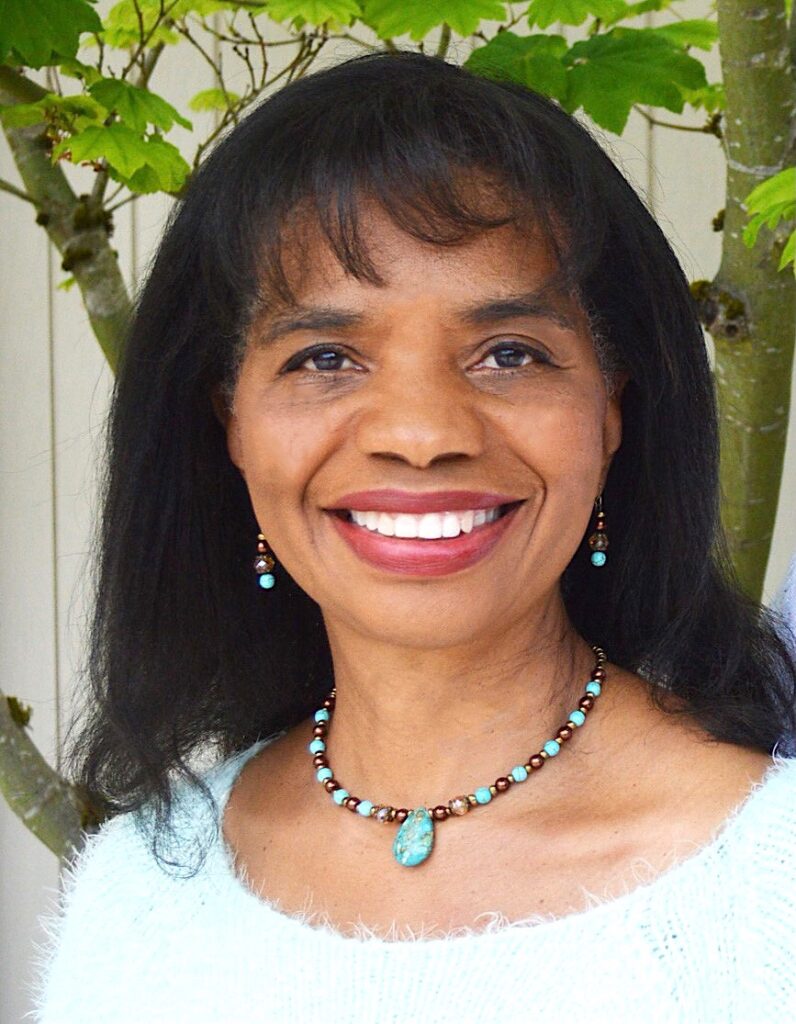
Betty Brown is the wife of Pastor Jim Brown. They have three amazing grown children (Timothy, April, and Aaron) and four absolutely perfect grandkids (Mercy, Grace, Ezra, and Honor). Betty is the executive director of Portland Open Bible Community Pantry and serves in supporting Pastor Aaron and Felicia Brown at Open Bible Church of Portland.







By every human measure, my story should have ended differently. The wounds of my childhood, the choices I made, and the life I built all pointed me away from God, not toward Him. Yet here I am—a follower of Jesus Christ, an author, teacher, and witness to the transforming power of God’s grace.
When I look back on my life, the words of the hymn Amazing Grace come to mind: “I once was lost, but now am found; was blind, but now I see.”
I know what it means to be lost.
My childhood was marked by deep brokenness. My father’s alcoholism cast a long shadow over our family, and I grew up yearning for his love and acceptance. My parents divorced when I was six. I hoped the turmoil would end, but new struggles emerged, including verbal and physical abuse within our home. I also experienced sexual and emotional abuse at the hands of older boys, girls, and adults in my community. Those wounds followed me into adulthood, shaping my view of myself, relationships, and identity in ways I would not fully understand until Christ began healing them.
As I grew older, I searched for acceptance and fulfillment in places that could never truly satisfy. I married early and had a daughter. I earned an advanced degree and took on increasingly responsible work. Eventually, I entered a same-sex relationship that lasted three decades.
The Lord was not exposing my sin to destroy me.
He was revealing it so He could save me.
Outwardly, life appeared successful. I enjoyed a corporate career in New York, entrepreneurial ventures, financial success, and early retirement on the North Carolina coast. But beneath the surface, something was missing. I had achieved many of the things people spend their lives pursuing, yet I lacked peace. God, however, had not given up on me.
In His providence, God began rearranging my life. A deep longing to be closer to my daughter and granddaughter led me to leave retirement on the coast and relocate to Ohio in 2020. At the time, the move seemed irrational to many people. Looking back, I can see the hand of God directing every step. Then came the moment that changed everything.
One afternoon in early 2021, I was sitting alone when I came across a brief teaching based on Matthew 7:21-23. Jesus’ words struck me with a force I had never experienced before: “Not everyone who says to Me, ‘Lord, Lord,’ shall enter the kingdom of heaven.” And then the words that shook my soul: “I never knew you; depart from Me.”
For the next 24 hours, those words would not leave me. I found myself asking questions I had spent years avoiding. Was I truly following Christ? Had I created a version of Jesus that accommodated my desires rather than submitting to the Jesus revealed in Scripture?
Desperate for answers, I opened my Bible. I expected to find acceptance and affirmation that I had fabricated in my mind for decades. Instead, I encountered the holy, righteous Christ of Scripture. As I read through the Gospel of Matthew, God’s Word exposed my heart. Hebrews describes the Word of God as “living and powerful,” and that is exactly how I experienced it. The Bible was no longer just words on a page. God was speaking. Truth began replacing the lies I had believed.
As conviction grew, so did my understanding of God’s mercy. The Lord was not exposing my sin to destroy me. He was revealing it so He could save me.
The issue was no longer simply sexuality. The deeper question was lordship.
Eventually, I reached a crossroads. The issue was no longer simply sexuality. The deeper question was lordship. Would I trust Jesus? Would I trust that His design was better than my own? Would I surrender my identity, plans, relationships, and future to Him? By God’s grace, I did.
Repentance was painful. Obedience required sacrifice. But what I discovered on the other side was not loss—it was freedom.
Over time, God renewed my mind through His Word, healed many of the wounds that had shaped my life, and taught me that my true identity is not found in my past, my temptations, or my feelings. My identity is found in Jesus Christ.
Today, I have the privilege of sharing that message with others. Through writing, speaking, and ministry, I encourage people who are wrestling with sexual brokenness, identity confusion, shame, and hopelessness. My testimony is not ultimately about leaving a former lifestyle. It is about encountering a Savior who transforms lives.
If there is one truth I hope readers take away from my story, it is this: no one is beyond the reach of God’s grace. The same Jesus who pursued me is still pursuing people today. He still calls sinners to repentance. He still heals wounded hearts. He still makes all things new.
I know because He did it for me.
About the Author
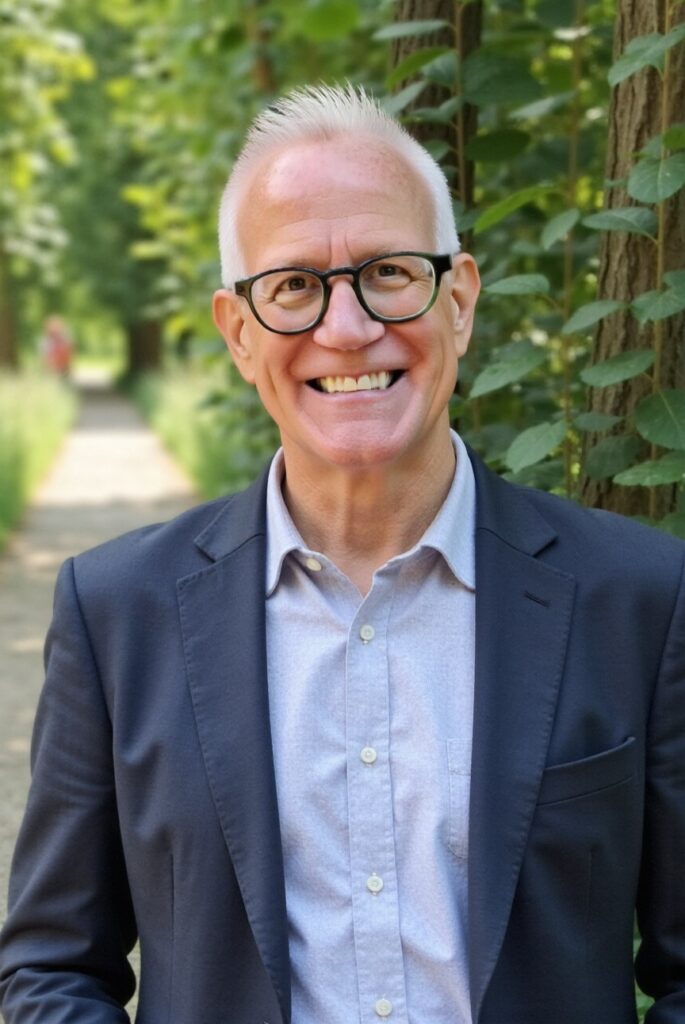
Mark Richard is an author, speaker, and follower of Jesus Christ whose life was transformed by the truth and grace of God. After spending nearly three decades in a same-sex relationship, he encountered the living Christ through Scripture and surrendered his life fully to Him. Today, he encourages and equips individuals, families, and churches with the truth of the Gospel and the power of God’s transforming grace.

He is the author of Sacred Sexuality: Grace and Truth Revealed in a Culture of Confusion. Mark lives in Toledo, Ohio, near his daughter and granddaughter. You can find more information on his website: www.MarkRichardMinistry.com


My life has been full of divine appointments. Lately it seems like every week God sets me up with a life-changing conversation. I’ve learned that when we’re willing and available, God is always at work. Sometimes He asks us to do something that doesn’t make sense at the time, but later we realize He was arranging something far bigger than we could see.
One day I was preparing a meal for a team that was visiting us. I kept hearing that I needed to prepare salsa. I argued with myself, saying, “I don’t have anything for salsa. I would need to go to the store.” But I couldn’t shake it, so I went.
At the store I ran into a woman who was also picking out Roma tomatoes. “Are you making salsa?” she asked me. When I said yes, she asked if I had a recipe and who I was making it for.
I told her I was making it for a team because I am a missionary. Immediately, she started to cry. I asked if she had someplace to go and invited her to come back to my house with me. She said yes.
Sometimes He asks us to do something that doesn’t make sense at the time, but later we realize He was arranging something far bigger than we could see.
As we talked at my home, she began sharing details about her life, and I began sharing parts of my own story that I don’t normally tell people. It quickly became clear that those experiences spoke directly to what she was going through. They were exactly what she needed to hear that day.
Finally, she confessed, “I told God if He was real, to send me someone who believed in Him, or I would kill myself.”
You know what’s funny? I never made the salsa. It was never about the salsa.
I’ve learned not to lean on my own understanding. When God nudges us to do something, we often want to know why before we obey. But sometimes we don’t see His purpose until afterward. If I had waited until it made sense, I would have missed that divine appointment completely.
That seems to be happening a lot lately.
The day before I flew to visit my daughter in Springfield, Oregon, I had to get new tires for my car. After striking out at three different tire stores, I finally ended up at Pep Boys near the border. There was only one other person waiting.
He began telling me he had recently been diagnosed with Stage 4 cancer. He said it was so hard to get in to see the doctor because of the waiting lists. Then he quietly said, “I guess I’ll just die.”
I asked him, “Where will you go when you die?”
He got very quiet. I asked if he believed in God, and it opened the door for us to talk. I could tell he didn’t really know the Lord. I don’t know whether he accepted Christ that day, but I know I had the opportunity to share with him. Maybe someone else will water that seed. I believe that was another divine appointment.
You know what’s funny? I never made the salsa. It was never about the salsa.
The very next day I boarded my flight to Oregon. The woman in the window seat beside me was a Christian. Right away, we started talking about the Lord and prayer. She was a real prayer warrior. I was in the middle seat, and a man sat beside me on the aisle.
About an hour into the flight, the woman sitting directly in front of us suddenly stopped breathing. The man beside her realized something was wrong, alerted her husband, and soon a doctor on the plane pulled her into the aisle and began CPR.
The woman beside me and I immediately began praying and speaking life over her. Thankfully, she came back.
A little while later the man sitting next to me tapped me on the shoulder and said, “I heard what you said.”
I asked, “What did I say?” (We had been talking about the Lord for the whole flight.)
He replied, “You said, ‘Life is short.'”
“It is,” I said. “And where you go when you die is so important.” That opened the door for me to share Jesus with him.
Looking back, I can’t help but marvel. God placed a prayer warrior beside me, seated the woman who needed prayer directly in front of us, and had a doctor on board. At the same time, He gave me an opportunity to talk with the man beside me about eternity. God arranged every seat on that plane for His purposes.
When I got off the plane, my daughter Sherry asked, “Mom, what’s your story today?”
I said, “Oh, Sherry, you’re not going to believe it.”
There have been so many moments like that over the years.
Once, while my husband and I were itinerating, I sat next to a woman on a plane who told me she was traveling the world because she only had three months to live.
God is already at work in people’s lives;
He simply invites us to join Him.
I said, “Oh my goodness, you only have three months to live! You’re almost going to meet your Maker!”
When she told me she used to go to church, I asked if I could pray for her. She said no. We kept talking, and eventually she mentioned that her back was hurting terribly. This was completely out of character for me, but I asked if I could rub her back. She leaned forward and said yes.
As I began rubbing her back, I felt the Holy Spirit come over me, and I started singing, “Be still and know that I am God.” When I finished, she quietly asked, “Would you pray for me?” This time she was ready.
I prayed with her and had the privilege of leading her to the Lord that day. When I got off the plane, my husband, who had been sitting three rows away, asked, “What was going on back there? I heard you singing.” I would never have done something like that on my own. It was definitely the Holy Spirit.
I’m becoming convinced that divine appointments really are everywhere. They happen on airplanes, in restaurants, at tire stores, in grocery stores, and wherever else God leads us.
Our part is simply to be available.
Not every conversation ends the way we wish it would. Sometimes we have the privilege of seeing someone place their faith in Christ, but other times, we just plant a seed. Someone else may water it later, and we trust God to bring the increase. When we are faithful to share His love, we can leave the results in His hands. God is already at work in people’s lives; He simply invites us to join Him.
About the Author
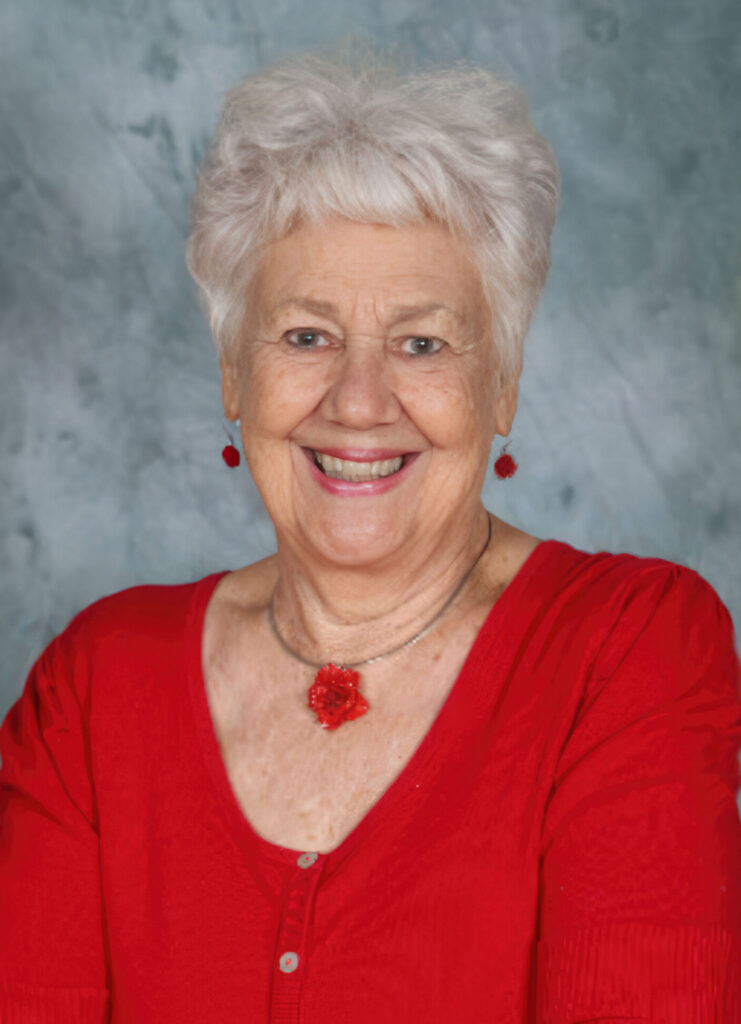
Fayth McConnell has felt God’s call on her life since childhood. She was blessed to share sixty-nine years of marriage with her husband, and together they raised one son, two daughters, and a brother. Throughout their life and ministry together, Fayth and her husband faithfully served the Lord as pastors and Open Bible missionaries to Mexico. Since 1998, they have shared the love of Christ and ministered to others throughout Mexico. Fayth continues to serve as an Open Bible missionary, carrying on the call God placed on her life many years ago.


Ruth Brauer spent decades wondering about the brother she never got to know. Born with Down Syndrome in the 1960s, he’d been sent away with little explanation, and she was discouraged from asking questions. After years of dead ends, a series of connections only God could have orchestrated led to the reunion she’d been praying for. Sixty years after his birth, Ruth finally saw her brother for the first time.
It was March 1960. Ruth was about to turn seven when her baby brother was born on March 8th at Iowa Methodist Hospital. The excitement of finally having a brother to join her and her three sisters quickly turned to confusion as she was unable to meet him. Later, she learned he had Down Syndrome and that doctors had advised her parents to place him in a care facility at the nearby Woodward State Hospital.

“Back in the sixties, that’s just what you did,” Ruth shared. “But I know it tore my parents apart.”
Questions about Alan were shut down. Ruth didn’t know where he was or even his exact birth date.
“I always wondered about him, but I’d get in trouble when I asked.”
Even without knowing him, Ruth had always felt drawn to him. That compassion shaped much of her life. After being invited to Journey Church in 2016 by a friend, Ruth was especially moved by the church’s outreach events for children with special needs. As a barber, her favorite clients were those with special needs, and she also volunteered for years with the Des Moines Special Olympics.
That’s where the first breakthrough came.
One day, she struck up a deeper conversation with a fellow volunteer named Ray. He mentioned he had worked at Woodward State Hospital starting in 1959. Ruth’s attention snapped into focus.
“My brother was there in 1960! His name was Alan Politsch.”
Ray’s reaction was immediate. His eyes widened and he began to walk away.
“Wait—what did I say?” Ruth called after him.

I had my hand on the table, and suddenly he was holding it.
“I’m not allowed to talk to you,” he replied. “Your parents banned me from talking to you.”
Still, she pressed him for one thing: a birthdate.
“Please, my parents are gone. I just want to find my brother.”
Before the day ended, Ray quietly gave her the month and day. It was enough to start, but not enough to get through the wall of privacy protections. Every group home she contacted turned her away.

Years passed.
Then another door opened—this time at a food pantry. Ruth shared her story with a volunteer named Bob, who offered to connect her with someone in the state department.
“They may not even call you,” he warned.
But they did.
The woman on the phone didn’t give her name, but simply said, “Bob said I needed to hear your story.” Ruth told her everything she knew: names, dates, places, family history. Weeks later, the phone rang again.
“Hi, this is Michelle,” the voice said. “I’m Alan’s guardian.”
Tears falling, Ruth began to speak.
“I don’t want to take anything from you. I just want to know he’s okay… maybe see a picture. And someday, maybe meet him.”
As she spoke, Ruth’s phone began to ping. Michelle was sending photos.
The call came in 2021, but it would take almost two years to build enough trust for a visit.
In August of 2023, Ruth was invited to a staff meeting at Alan’s care facility. As she sat in the room with nine other employees staring at her, Michelle walked into the room, Alan beside her, and guided him to the seat right next to Ruth.
I always felt like he was close by,” Ruth said. “I just didn’t know he was five miles away my whole life.
“He kept looking at me, nodding, with this little crooked smile,” Ruth said. “I had my hand on the table, and suddenly he was holding it.”
A nurse watching over video spoke up: “He knows you’re his sister.”
The bond was immediate and mutual.
“I always felt like he was close by,” Ruth said. “I just didn’t know he was five miles away my whole life.”

Since that day, they’ve spent birthdays and holidays together.
“He’s the best,” she said. “He fits right under my arm—he’s tiny. He loves Santa, the color red, Coke, and sunglasses.”
But the reunion has come with weight, too. Now 66, Alan’s health is declining, and Ruth has been asked to help plan his funeral.
“I just found him,” she said. “And now I’m helping plan his funeral… But he’s mine. He’s my baby brother. The one I waited for when I was seven.”
Looking back, Ruth continues to uncover the fingerprints of God. Ray, the man who first gave her Alan’s birthdate, later shared that he had cared for Alan during his first sixteen years at the hospital.
What are the odds?
When asked what this journey has taught her, Ruth doesn’t hesitate:
“Patience, persistence, prayer, and people.” That’s what it took to find her brother, and it’s what the Lord provided along the way.
Some stories don’t unfold quickly. Many of them take time, and it’s only later that we realize how God was working in our waiting. Ruth’s story serves as a reminder that no prayer is forgotten, no relationship is beyond reach, and that even in life’s chapters that feel long or uneventful, God is still writing.
About the Author

Hannah Bemis currently serves as the editor and director of Message of the Open Bible. She always wanted to do too many things when she grew up, and God has been kind enough to let her do most of them in different seasons. After seasons of mothering, teaching, writing, and staff pastoring, Hannah’s most recent adventure is planting and pastoring College Street Church in Newberg, Oregon, with her husband, Jordan. After Jesus and all her favorite people, she spends the remainder of her passion on pizza and dark chocolate in equal measure.