
Featured Articles
Show Me How


By Tim Zakarian
So, what happens after a person gets saved? Is our job done? How do we help them take their next steps of faith?
I was not raised in the church, and I did not make the decision to follow Christ until I was in middle school. I was excited to live for Christ, but that excitement lasted about three months, and then I fell away. I just did not know how to take my next steps of faith. It was not until my senior year of high school that I became so tired of my life that I decided to follow the Lord again. This time I had the support of a youth group and a good Christian friend to walk with me through my next steps. Some would call it discipleship.
Helping a person in their next steps of faith is vital. In fact, Jesus commanded us in Matthew 28:19 to “go and make disciples.”
Yes, it is important that a person accepts the Lord, but it is also important they learn what it means to have a relationship with Christ. We all have the opportunity to help new believers in this journey. But how do we do that?”
Since becoming a pastor, I have had the privilege to disciple many people and see them become incredible leaders for Christ. I learned about discipleship from my own faith experience, but I also learned by helping others in their next steps of faith. So, when you disciple someone, where do you start?
It starts with relationship.
And relationships take time. When I got saved, a Christian coworker spent months building a relationship with me. Because we had a friendship, that person was able to help me move forward in my faith. The relationship was important; it enabled me to ask the hard questions to someone I trusted. It also allowed me to observe someone else’s life to see how a Christian really lived. Because I came from an unchurched background, I also needed accountability to deal with my former way of life.
If living life with others (His disciples) was the model used by Jesus, then maybe we should do the same. Jesus spent lots of time with His disciples. This was His example: I will show you, you model after Me, then go do what I showed you and I’ll watch. Jesus sent the disciples out town to town to share the Good News. That is how they started the early church (Mark 6:7-13).
Guiding a new believer to an authentic relationship with Christ is an important next step.
It may be easy to point to the rules of our faith or to godly morals, and these things are important. But real transformation happens through a relationship with Christ. When I first became a Christian, I tried so hard to follow the rules without knowing Christ very well. The result was I kept falling short. My failures caused guilt, and I began to wonder if I could really follow Christ. Then someone helped me develop my relationship with Christ by showing me how to grow closer to Him. They helped me get involved in a small group that was geared for new believers, and I began to understand who Jesus really is. This is when I found real change and true freedom in my life. Relationship with Christ is what brings real transformation.
Helping a new believer get plugged into a good church is another a vital step.
It is important they have the support of other Christians. This was hard for me at first. I was afraid of church, especially the church service. But my friend encouraged me to attend and get involved. I learned how to worship, fellowship, and understand the Bible. I got involved in a small group, and with that I had six guys holding me accountable and helping me grow in my faith. The church’s new believer’s class was where I learned the basics of being a Christian. It is where I learned the importance of baptism and got baptized. It is where I received my calling to be a pastor. Some people try to skip church involvement in their process of faith, but the church is critical in our growth. It is the model Jesus gave us to help us in our journey.
The next step is to help a new believer find their new identity in Christ.
They need to go from the role of a spectator to that of a participator. Often this is where people get stuck. They do not know how to get involved or make real connections. When I became a Christian, my whole life was changed. I lost many friends because I changed how I lived and how I spent my time. I was a new person in Christ, but I had to learn what that meant. There are many ways to help a new believer in this season. Offer them a personality test or spiritual gift assessment that will help them identify God-given traits, talents, and gifts they didn’t even know they had. Give them the opportunity to serve alongside mature believers in the local church and the community. This will also help them identify their passions and gifts.
Training is crucial. As I shared earlier, that’s exactly what Jesus did with His disciples. He showed them what to do, had them go do it, and then released them to lead. Showing someone how to serve so they understand what is expected is important in the growth of a believer. Often we tell someone to go serve without offering training or explaining expectations just to later watch them fail. When a person is well trained and they know what is expected from them, they have a much better chance to succeed and grow in their talents and gifts.
How long does this “discipleship” process take? The reality is if you’re a believer, this should be a lifelong process. Be patient with someone else’s spiritual growth. Be there for the long haul. Maybe they will take some hard steps backwards. Be there to love them and help them get back on track. Be honest with them and love them with a love not based on their actions, but on who they are. It is how Jesus loves us. I am so thankful He never gave up on me through my process. I am so thankful God also placed people in my life that never gave up on me. Be that person for someone else. Ask the Lord how you can help someone else grow in their faith. It is an incredible honor to watch someone you have invested in love Jesus and make an impact on the Kingdom.
About the Author
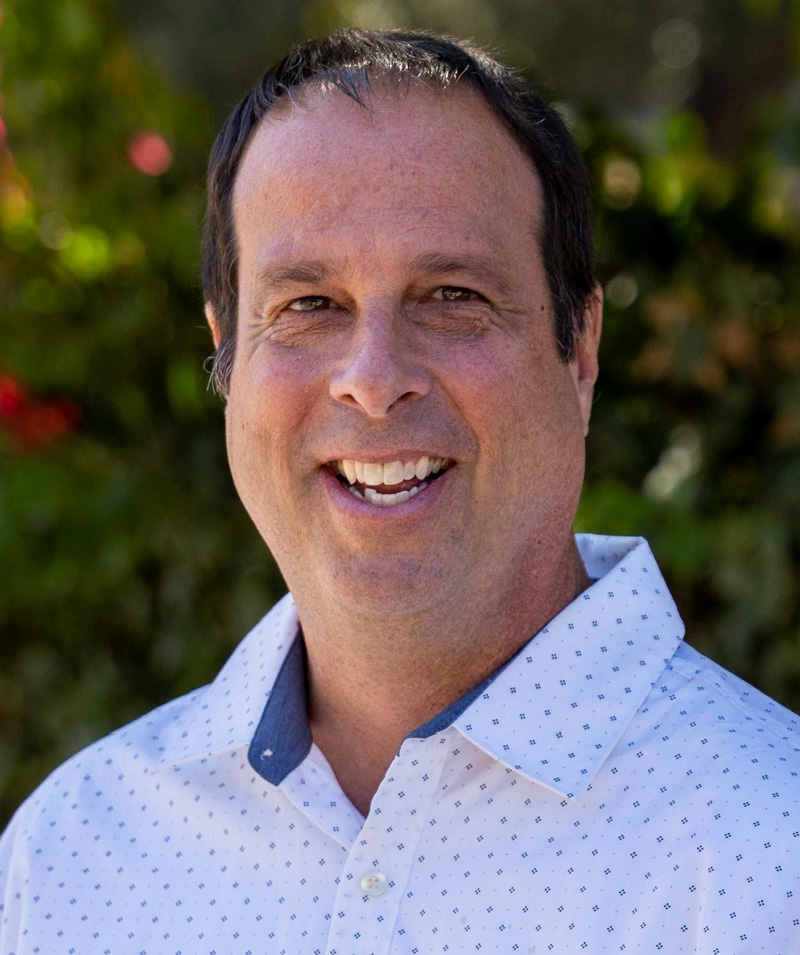
Tim Zakarian is the associate director for the Pacific Region of Open Bible Churches. He lives in Springfield, Oregon, with his wife, Tina, to whom he has been married 36 years. The Zakarians have two adult, married children who are serving in ministry. Michael and his wife, Cheyenne, are the youth pastors at Summit Christian Church of the Open Bible in Los Angeles. Christine McAndrew and her husband, Aaron, are the youth pastors at Waypoint Community, an Open Bible church in Springfield, Oregon. Tim has had many roles in ministry, including youth pastor, regional youth director, associate pastor, executive pastor, church planter, and lead pastor. No matter his role, Tim’s passion for the ministry has always been to mentor and develop leaders.





I woke up unable to speak. A breathing tube filled my throat. Machines surrounded my hospital bed. I was confused, intubated, and lying in an ICU room with no memory of how I got there. But strangely, I was not afraid. In the middle of the chaos, God gave me an unexplainable peace.
I motioned desperately for paper and pencil so I could ask two questions: What happened? And where is George?
My son’s father explained that I had been in a serious car accident. The car was completely destroyed. I had been found trapped beneath the steering wheel with severe facial injuries.
That morning — January 22, 2026 — had started like any other Thursday. I got ready for work, buckled my 18-month-old son George into his car seat, and pulled out of the driveway expecting an ordinary day.
It became anything but ordinary.
My neighbor, who had left home at the same time I did, later explained what happened. We were both driving around fifteen miles per hour when the car I was driving suddenly lost control. I still do not know why, and I have no memory of the moment itself.
By the grace of God, George was almost completely untouched.
The car hit a cement light pole, crossed into oncoming traffic, and was struck head-on by another vehicle. Both vehicles spun, and the car I was driving slammed into another cement light pole.
By the grace of God, George was almost completely untouched.
The back windshield shattered directly above him, yet the glass never harmed him because of the position his car seat landed in. The entire back left side of the car was crushed inward, but George had been seated on the back right side. Even now, I can only thank God for His protection.
I was taken by ambulance to the hospital and admitted into the Trauma ICU. Doctors told my family that I had suffered severe head trauma resulting in a brain bleed. I was also bleeding internally in my abdominal area, and they began preparing my family for the possible loss of my pregnancy.
… the doctors did not know the God my family and I serve — and how merciful He is.
But the doctors did not know the God my family and I serve — and how merciful He is.
My family immediately began to pray. Members of my church, Open Bible Church of Homestead, began arriving at the hospital, and soon an entire army of people was interceding for me.
During those first two days, I drifted in and out of consciousness and remember very little. But one moment remains clear in my mind: I heard the song “I Surrender” by Hillsong Worship playing in my hospital room. The lyrics, “Like a rushing wind, Jesus breathe within, Lord have Your way, Lord have Your way in me,” stayed with me and brought a deep sense of comfort in the middle of everything happening around me. In that moment, those words became my prayer as I quietly prayed, “I leave this in Your hands.”


After three days in the ICU, I was successfully extubated and began making remarkable progress. Ultrasounds showed a happy, active baby, and the bleeding had stopped.
On the fourth day, I was transferred out of the ICU into intermediate care before eventually moving to the medical-surgical floor. Doctors then began preparing me for maxillofacial surgery to reconstruct my face after multiple fractures.
On January 30, I underwent an eight-hour surgery. By God’s grace, the procedure was successful, and another ultrasound afterward showed my unborn baby remained active and healthy. On February 3, I was finally discharged and able to return home.
Since then, my recovery has gone smoothly. I am now twenty-eight weeks pregnant and waiting expectantly for the arrival of my baby. Through every frightening moment, God gave me strength and peace, and I never doubted His mercy.
Today, I am a living testimony of His grace.
About the Author

Thammy Castro is a behavior technician living in Miami and a soon-to-be mother of two. In her free time, she enjoys traveling with her family. She is a member of Open Bible Church of Homestead, where her parents, Jose and Maria Castro, serve as pastors.


There has been much discussion about the future of the Church. While I’m not a futurist or researcher, I’m grateful for voices that help us think wisely about pursuing the mission of the Church in an ever-changing culture. Researchers like Ed Stetzer and Carey Nieuwhof highlight some encouraging trends, such as revivals on college campuses, rising Bible sales, and Gen Z’s hunger for authentic faith.
I carry deep conviction and a faith-filled anticipation about what I see and am praying for. When I think about the Church and the days ahead, I don’t see a Church in retreat, but I do see a Church being refined – prepared for what God is getting ready to do. A victorious and glorious Church (Eph. 5:27).
When I think about the Church and the days ahead, I don’t see a Church in retreat, but I do see a Church being refined.
Jesus said, “I will build my church, and the gates of hell shall not prevail against it” (Matt. 16:18 ESV). That promise has no expiration date. Jesus is still building His Church today.
As the church advances, it will not stand on programs, buildings, or production. . . it will be built on the authority of Christ and the power of the Holy Spirit.
Across the body of Christ, there is a growing recognition that the future of the Church will not be built by addition alone, but by multiplication. Disciples will make disciples, leaders will develop and release leaders, and churches will plant churches. There are many voices helping to bring clarity to this, and we are seeing that same conviction take shape within Open Bible through our Mission to Multiply and the Power of We.
So, when I think about the Church and what is ahead of us, what do I see?
I SEE A MULTIPLYING CHURCH
We often measure success by attendance, budgets, and programs. While salvations and baptisms remain central, we must expand the scorecard. As Larry Walkemeyer describes in The River Church, we must move from “lake churches” that gather to “river churches” that send – becoming disciple makers who multiply.
The book of Acts shows us a model of a church that did not just meet but multiplied. The future will not belong to churches that simply gather a crowd, but it will belong to churches that make and send disciple makers. Jesus did not commission us to build an audience. He commanded us to go and make disciples (Matt. 28:19). Multiplication begins there – in intentional, relational, Spirit-led disciple making.
Multiplication is not just a strategy or a motto we adopt. It is the culture of Spirit-empowered, disciple-making churches. The Church I see measures health not only by attendance, but by how many are discipled, equipped, and sent to reproduce what’s been invested in them. This is our Mission to Multiply.
I SEE A SPIRIT-EMPOWERED CHURCH
We live in a time of rapid change. Technology, AI, and social media shape how we communicate and connect. These tools can be helpful, but they don’t transform lives. The Holy Spirit does.
These tools can be helpful, but they don’t transform lives. The Holy Spirit does.
Pentecost was Heaven’s defining moment for the birth of the Church and the fulfillment of what Jesus said in Acts 1:8. The early followers of Jesus did not have the influence, resources, or tools we have today. What they had was the power of God. That has not changed!
In the days ahead, more than ever, the Church will move forward not through innovation alone but through consecration. The church I see is unapologetically dependent on the Spirit of God.
I SEE A COURAGEOUS CHURCH
In the book of Acts, every step forward required courage – Peter and John before the Sanhedrin, Stephen in the face of death, Peter going to Cornelius’s home, the sending out of Paul and Barnabas. These were not small steps; they were courageous steps across cultural and spiritual boundaries. The early Church moved from gathering to going, from addition to multiplication. The expansion of the early Church was not accidental. It followed obedience and courage.
The Church I see will walk in that same Spirit.
Courage to preach the truth in love.
Courage to plant in hard places.
Courage to raise and release the next generation.
Courage to choose multiplication over comfort.
Courage to link arms with others for the sake of the greater mission.
Courage to build the Kingdom over our own castles.
We can stand on His promise and by His Spirit knowing “God has not given us a spirit of fear but of power and of love and of a sound mind” (2 Tim. 1:7 NKJV).
I SEE THE POWER OF WE
As we look forward, one of the strongest convictions I carry is this: our future will be stronger through the Power of We.
Individualism limits impact; partnership multiplies it. When we share vision, develop leaders, and align around mission, we step into something far greater than any one church could accomplish alone. I believe the future Church will not thrive through isolation but will flourish through collaboration. The church I see understands that “we” is stronger than “me.”
When we share vision, develop leaders, and align around mission, we step into something far greater than any one church could accomplish alone.
I am confident in what God has called us to:
The church that makes disciple makers will multiply.
The church that depends on the Holy Spirit will endure.
The church that walks in courage will advance. This is the church I see, and I believe we are being invited to build it together.
About the Author
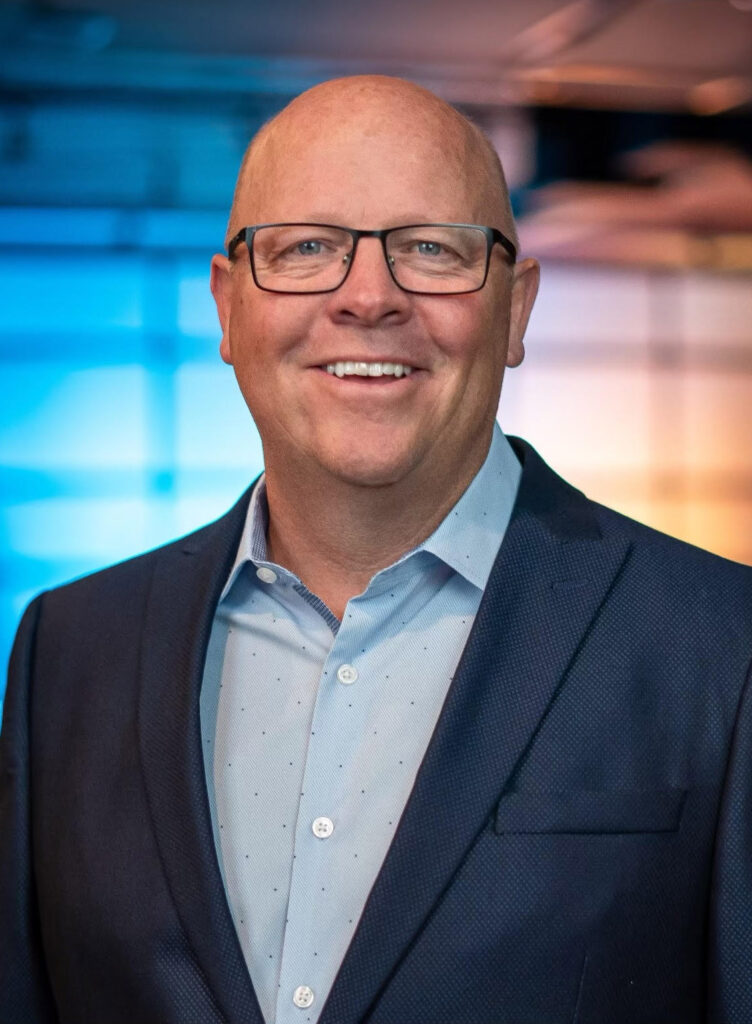
Michael Nortune serves as president of Open Bible Churches. He has ministered in the local church faithfully for thirty-five years. From his start as a janitor and groundskeeper to church planter and lead pastor of Life Church in Concord, California, Michael has had the opportunity to gain experience in every capacity within the church throughout his ministry. Not only does he have hands-on experience on the local level, but Michael has also led at the district, regional, and national levels within Open Bible Churches. Michael and his wife, Julie, currently reside in Colorado and love living near five of their six children and their spouses. They also treasure the time they spend with their other daughter who lives in Alabama with their first (but not the last) grandson!


Isaac dug out again the wells that were dug during the lifetime of his father Abraham. The Philistines had closed them up after Abraham’s death. Isaac gave them the same names his father had given them. Isaac’s servants dug wells in the valley and found a well there with fresh water. (Genesis 26:18-19 CEB).
I came to faith as a teenager and had very few church experiences up to that point. My earliest formation as a Christ follower took place within Open Bible church settings, where I found deep community and meaningful spiritual experiences that I continue to value. At the same time, as in many modern evangelical churches, there was limited exposure to the ancient liturgies and historic practices of the wider Church.

These traditional cornerstones that were foundational to ecclesial life for millennia had been almost eliminated in the churches I attended. It seemed to me that these practices were at best met with ignorance and at worst with grave suspicion. The predictable result was that any real understanding and appreciation for ancient liturgical practices was absent from the first two decades of my church life. I rarely thought about things like Ash Wednesday services, the Book of Common Prayer, and Advent, and if I did, it was with a healthy side dish of uninformed judgment. I viewed Lent the same way I viewed lentils: it was a cold and exotic experience that was both frightening to prepare and painful to consume.
I viewed Lent the same way I viewed lentils: it was a cold and exotic experience that was both frightening to prepare and painful to consume.
This was my context as a few of our church staff began asking whether we could introduce some of these ancient practices into our church worship experience. As you might imagine given my church background, it took me a while to warm up to the idea. I began a process of asking questions, listening, and learning, even reaching out to an Anglican priest friend to hear his take on the value of these long-held traditions. Through all this, Christ in His goodness and patience has allowed us now to incorporate many of these practices into our regular church experience. As a result, I am happy to report that we are experiencing wonderful depth and meaning in our gatherings as we’ve adopted and applied some of these long-proven elements of discipleship.

Our time of worship now always includes the public reading of a Psalm (a practice we have adopted from the Book of Common Prayer) to bring us back to the ancient hymn book of Israel. We have a fresh understanding of what it is to give up something physical in order to gain something spiritual as we fast in the forty days of Lent. Christmas time and the lighting of Advent candles help us celebrate Christ’s first arrival while reminding us to await His second arrival. And Ash Wednesday, with its outward sign of repentance and mortality, leads us to humble ourselves before God, understanding how desperately we need His saving grace. Finally, the celebration of life on Easter Sunday has far greater meaning now because it is preceded by the sobriety of the death we remember on Good Friday.
This is not to say that incorporating these elements has always been smooth. We’ve learned to introduce them slowly and with great attention to the “why” behind the “what.” Along the way, we’ve had our share of growth opportunities and mishaps. One example happened early on in our journey, when we tried to introduce some ancient call and response types of prayers. The practice led several people to worry that we had become a completely different kind of church. We haven’t yet reintroduced those prayers in our services.
We have found that moving slowly and consistently, explaining the meaning of the practices, and laughing at ourselves through our failed attempts have been the key ingredients to discovering the power of these ancient gifts.
Another example took place during last year’s Ash Wednesday service. During this type of service, ash is used to mark the sign of a cross on each believer’s forehead. This marking symbolizes our own mortality and repentance, as we take up our cross and turn from our sins. Well, our beloved worship leader wanted to add scent to the ashes to create a fuller sensory experience. To do so, he incorporated essential oils, including cinnamon, into the ashes. Little did any of us know that undiluted cinnamon oil burns on the skin. Talk about your full sensory experience. All of us in the service sat wondering what it reveals about our spiritual condition if the ash cross on our forehead feels like it’s on fire. There was a great sigh of relief when our executive pastor let people know what had happened, and a mad dash to the bathrooms ensued as people quickly washed away the painful marker. The next Sunday I formally apologized for turning their Ash Wednesday into a Rash Wednesday.
In these moments and more, we have found that moving slowly and consistently, explaining the meaning of the practices, and laughing at ourselves through our failed attempts have been the key ingredients to discovering the power of these ancient gifts. Just as Isaac reopened the ancient wells of his father to discover pure water, we too can rediscover the meaning of these ancient practices in our churches and experience their fresh water again.
About the Author

Aaron Sutherland is the founding pastor of Cove Church in Eugene, Oregon, and the Director of Multiplication for Pacific Region Open Bible. Along with his wife, Paula, he finds great joy in watching God reveal the new stories being written into the lives of people from every corner of the world.