
Spotlight
The Art of Mutual Accountability


By Monte LeLaCheur
Major changes in life have a way of bringing new perspectives into our thinking. That has certainly been the case for me personally, having stepped down as the senior pastor at Turning Point Open Bible Church in Spokane, Washington, after serving for 29 years.
In total, I have spent over 46 years in vocational ministry, and it is more clear to me than ever before that there is a correlation between a Christian leader’s ability to maintain spiritual health and integrity and their willingness to embrace biblical accountability.
Yes, all of you be submissive to one another, and be clothed with humility, for “God resists the proud, but gives grace to the humble.”
1 Peter 5:5, NKJV
Let me make it perfectly clear that by “accountability” I do not mean the graceless micro-management that many of us fear. I am talking about the biblical principle of mutual submission within the body of Christ that provides us with the wisdom and encouragement that we cannot experience without accountability in community. Any Christian leader who truly understands their own limited wisdom and tendency to be driven by their pride or insecurities (and that’s every one of us) should actively seek out and welcome godly accountability.
The way Christian leaders and organizations have defined and implemented accountability has swung like a pendulum over time, and we have clearly seen that either too much or too little accountability is problematic. Yet I firmly believe that the Holy Spirit will help those with a willing heart to find the “sweet spot,” a level of accountability that protects our integrity and empowers us to fulfill the mission that He’s given us.
What will it take for this generation of leaders to find that “sweet spot” of biblical accountability that will allow us to fulfill the mission God has given us and, at the same time, maintain our health and integrity?
It’s all about relationships.
Let us think of ways to motivate one another to acts of love and good works. And let us not neglect our meeting together, as some people do, but encourage one another, especially now that the day of his return is drawing near.”
Hebrews 10:24-25, NLT
Christian leaders need one another! In fact, the New Testament contains 59 “one another” statements that fly in the face of the excuses we tend to use for not getting together with other pastors and leaders. Busyness, pride, and insecurity are the enemies of “one another relationships.” We need friendships with our peers. We need to laugh with each other, pray with each other, and sometimes even cry with each other. We need to share our stories and learn from one another’s successes and failures because it is relationships with our Christian peers that provide the basis for healthy accountability.
We must maintain daily spiritual disciplines.
It’s during seasons of frustration and discouragement that Christian leaders become the most vulnerable to the attacks of the enemy. We will all experience those seasons, and we know that it is our daily spiritual disciplines that will keep us steady and healthy. But our daily time sitting at Jesus’ feet – getting into the Word, worshiping, and praying – can easily be crowded out by the pressure to prepare our next sermon or answer emails. Over time we begin to realize that we have traded our identity as a “disciple of Christ” for that of a “Christian professional.”
Nonetheless, ministry is not just “a job”; it’s a “calling.” And the first responsibility of a true disciple is spending time at Jesus’ feet. It’s our daily spiritual disciplines that, like a lighthouse, shine a light on the rocks that endanger our soul.
Paul’s words to Timothy apply to every Christian leader:
Cling to your faith in Christ, and keep your conscience clear. For some people have deliberately violated their consciences; as a result, their faith has been shipwrecked .”
1 Timothy 1:19, NLT
Recently I finally got around to listening to The Rise and Fall of Mars Hill, a podcast produced by Christianity Today several years ago. I had previously read a bit about the demise of the Seattle-based Mars Hill church and knew that its founding pastor, Mark Driscoll, had been accused of abusive leadership practices that eventually led to his resignation and the closure of the high-profile, multi-site, mega-church. Even so, listening to the firsthand accounts of the staff and church members who had been wounded and disillusioned by a pastor and a church that they had once loved was incredibly painful. It was also an important reminder that every church is made up of imperfect people with imperfect pastors. That’s why accountability is so necessary for spiritual leaders.
We all need guardrails.
Whenever a Christian leader or church is “shipwrecked,” it leaves a multi-generational impact on the lives of people both inside and outside the church. This is true whether the original issue was a moral failure, financial misconduct, abusive leadership style, or some type of theological heresy. Yet many Christian leaders continue to resist any meaningful accountability.
Christian researcher George Barna writes this about the state of accountability in American churches:
One of the cornerstones of the biblical concept of community is that of mutual accountability. But Americans these days cherish privacy and freedom to the extent that the very idea of being held accountable by others – even those with their best interests in mind, or who have a legal or spiritual authority to do so – is considered inappropriate, antiquated, and rigid.*
Throughout my years of ministry, I have seen enough “shipwrecked” pastors and churches to realize that accountability is something we should not neglect. In fact, accountability is something we must embrace!
Embrace the “short leash.”
Early in my years of ministry I prayed, “Lord, please keep me on a short leash” in response to having witnessed the painful aftermath of several Christian leaders falling into moral or ethical failure. These people were gifted, seemingly sincere leaders whose actions had eventually destroyed their ministries, devastated their families, and severely damaged the body of Christ. It was heartbreaking to watch, but it also helped me realize how easy it is for any leader to go off the rails without the protection of serious guardrails and accountability in place. We should not depend on our denomination, or our church, or some other authority to be the sole source for those guardrails. The most effective guardrails in our lives are those born out of our personal convictions. But without meaningful accountability, there is no protection against the damage that can be done by careless or blatantly sinful leaders within our churches.
We need accountability with “teeth.”
In a podcast with Carey Nieuwhof, Tim Keller, author and former pastor of Redeemer Presbyterian Church in Manhattan, talked about current attitudes among Christians toward church denominations. He especially caught my attention when he said that although denominationalism is on the decline, there will always be a need for the oversight of churches because there will always be situations that require someone (other than the local pastor or church board) who has the spiritual and legal authority to intervene when things fall apart. In other words, situations can arise in a church or Christian organization that require a level of accountability with “teeth.”
There are times when a pastor and his board are unable to come into agreement. There are situations in which conflicts in a church have escalated beyond the church’s ability to even discuss in a constructive manner. For the sake of everyone involved, someone needs to have the authority to step in and make the tough decisions.
Obey your spiritual leaders, and do what they say. Their work is to watch over your souls, and they are accountable to God. Give them reason to do this with joy and not with sorrow.”
Hebrews 13:17, NLT
Every church and Christian organization needs to have leaders who will lovingly and firmly hold their members accountable to their doctrinal statement and their policies and principles. It’s a tough job that requires making some very tough decisions, decisions not everyone will fully understand or agree with. But without leaders who will hold God’s people accountable, the name of Jesus gets dragged through the mud.
That’s why I want to encourage my fellow brothers and sisters in Christ to continually pray for our leaders and, as Hebrews 13 directs, “Give them reason to do this with joy and not with sorrow”.
Consider the following steps:
- Take a minute right now to evaluate your own commitment to building positive relationships with other pastors and leaders. What needs to happen to make this a priority in your life?
- Evaluate the state of your daily spiritual disciplines. If you are too busy to spend time sitting at Jesus’ feet, what adjustments can you make as soon as possible?
- Consider what it would mean for you to make peace with the concept of letting God keep you on a “short leash” – not because it’s being forced on you, but because you never want to wander far from Him.
- Last, take time right now to pray for our leaders who are tasked with holding others accountable. Ask the Lord to strengthen and encourage them. Maybe take a minute to write or email them.
*barna.com/research/national-study-describes-christian-accountability-provided-by-churches
About the Author
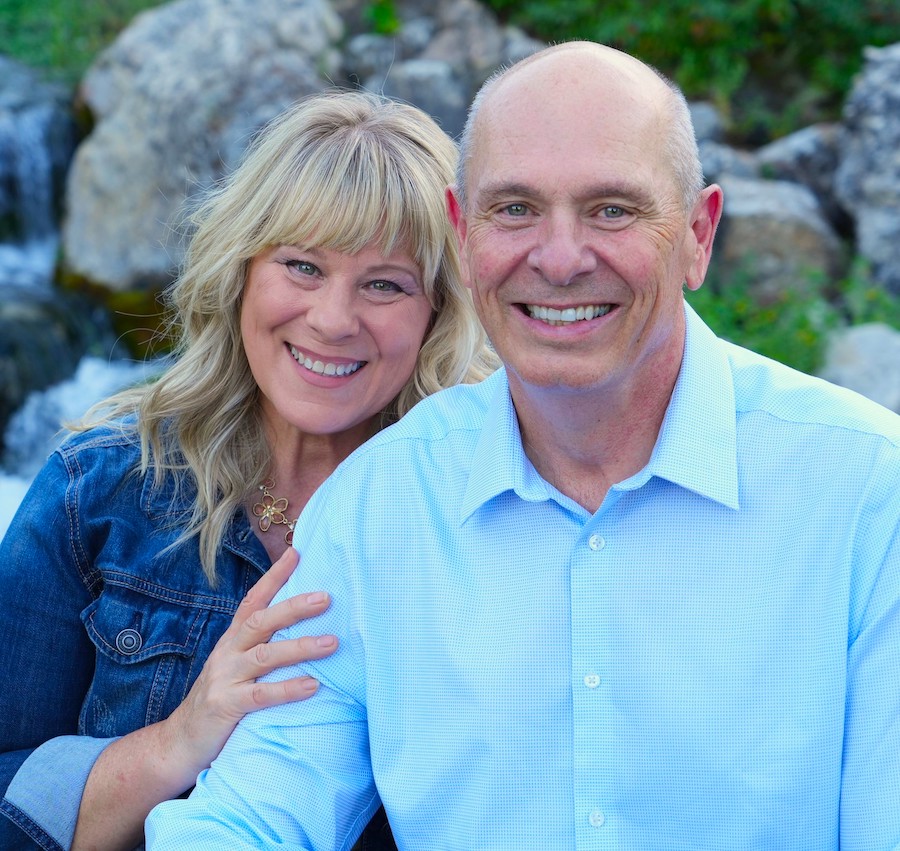
Monte LeLaCheur and his wife, Amy Jo LeLaCheur, have recently stepped down after serving 29 years as the senior pastors at Turning Point Open Bible Church in Spokane, Washington. Monte graduated from Open Bible College in 1978 and received his master’s degree in counseling from Whitworth University in 1980. He has served on both the national board for Open Bible Churches and the Pacific Region board and is looking forward to the next season of his life and ministry.






By every human measure, my story should have ended differently. The wounds of my childhood, the choices I made, and the life I built all pointed me away from God, not toward Him. Yet here I am—a follower of Jesus Christ, an author, teacher, and witness to the transforming power of God’s grace.
When I look back on my life, the words of the hymn Amazing Grace come to mind: “I once was lost, but now am found; was blind, but now I see.”
I know what it means to be lost.
My childhood was marked by deep brokenness. My father’s alcoholism cast a long shadow over our family, and I grew up yearning for his love and acceptance. My parents divorced when I was six. I hoped the turmoil would end, but new struggles emerged, including verbal and physical abuse within our home. I also experienced sexual and emotional abuse at the hands of older boys, girls, and adults in my community. Those wounds followed me into adulthood, shaping my view of myself, relationships, and identity in ways I would not fully understand until Christ began healing them.
As I grew older, I searched for acceptance and fulfillment in places that could never truly satisfy. I married early and had a daughter. I earned an advanced degree and took on increasingly responsible work. Eventually, I entered a same-sex relationship that lasted three decades.
The Lord was not exposing my sin to destroy me.
He was revealing it so He could save me.
Outwardly, life appeared successful. I enjoyed a corporate career in New York, entrepreneurial ventures, financial success, and early retirement on the North Carolina coast. But beneath the surface, something was missing. I had achieved many of the things people spend their lives pursuing, yet I lacked peace. God, however, had not given up on me.
In His providence, God began rearranging my life. A deep longing to be closer to my daughter and granddaughter led me to leave retirement on the coast and relocate to Ohio in 2020. At the time, the move seemed irrational to many people. Looking back, I can see the hand of God directing every step. Then came the moment that changed everything.
One afternoon in early 2021, I was sitting alone when I came across a brief teaching based on Matthew 7:21-23. Jesus’ words struck me with a force I had never experienced before: “Not everyone who says to Me, ‘Lord, Lord,’ shall enter the kingdom of heaven.” And then the words that shook my soul: “I never knew you; depart from Me.”
For the next 24 hours, those words would not leave me. I found myself asking questions I had spent years avoiding. Was I truly following Christ? Had I created a version of Jesus that accommodated my desires rather than submitting to the Jesus revealed in Scripture?
Desperate for answers, I opened my Bible. I expected to find acceptance and affirmation that I had fabricated in my mind for decades. Instead, I encountered the holy, righteous Christ of Scripture. As I read through the Gospel of Matthew, God’s Word exposed my heart. Hebrews describes the Word of God as “living and powerful,” and that is exactly how I experienced it. The Bible was no longer just words on a page. God was speaking. Truth began replacing the lies I had believed.
As conviction grew, so did my understanding of God’s mercy. The Lord was not exposing my sin to destroy me. He was revealing it so He could save me.
The issue was no longer simply sexuality. The deeper question was lordship.
Eventually, I reached a crossroads. The issue was no longer simply sexuality. The deeper question was lordship. Would I trust Jesus? Would I trust that His design was better than my own? Would I surrender my identity, plans, relationships, and future to Him? By God’s grace, I did.
Repentance was painful. Obedience required sacrifice. But what I discovered on the other side was not loss—it was freedom.
Over time, God renewed my mind through His Word, healed many of the wounds that had shaped my life, and taught me that my true identity is not found in my past, my temptations, or my feelings. My identity is found in Jesus Christ.
Today, I have the privilege of sharing that message with others. Through writing, speaking, and ministry, I encourage people who are wrestling with sexual brokenness, identity confusion, shame, and hopelessness. My testimony is not ultimately about leaving a former lifestyle. It is about encountering a Savior who transforms lives.
If there is one truth I hope readers take away from my story, it is this: no one is beyond the reach of God’s grace. The same Jesus who pursued me is still pursuing people today. He still calls sinners to repentance. He still heals wounded hearts. He still makes all things new.
I know because He did it for me.
About the Author
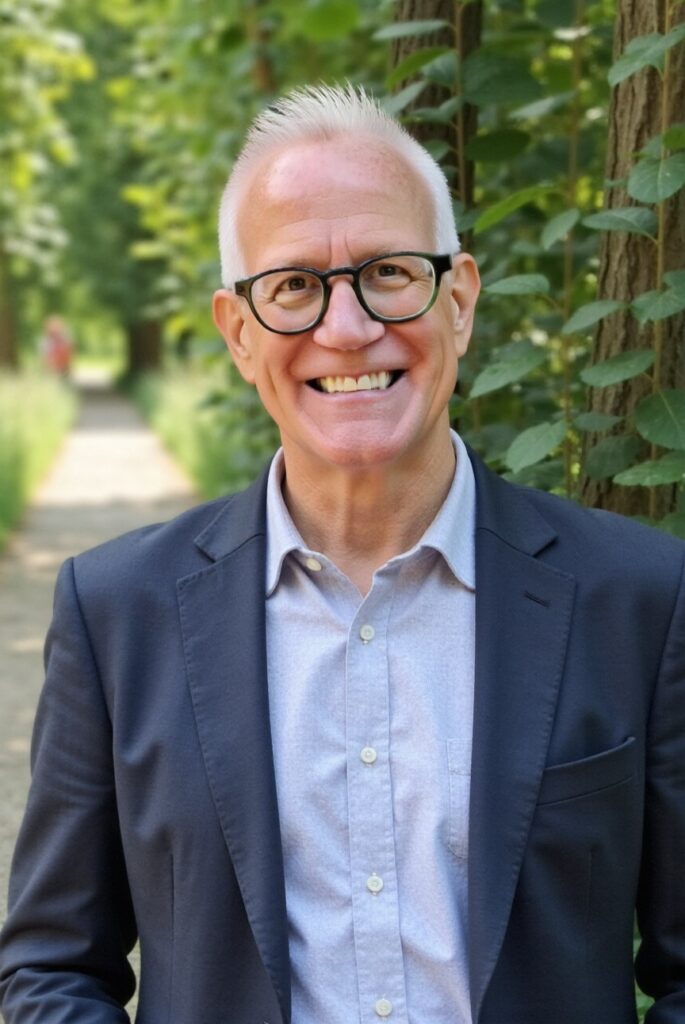
Mark Richard is an author, speaker, and follower of Jesus Christ whose life was transformed by the truth and grace of God. After spending nearly three decades in a same-sex relationship, he encountered the living Christ through Scripture and surrendered his life fully to Him. Today, he encourages and equips individuals, families, and churches with the truth of the Gospel and the power of God’s transforming grace.
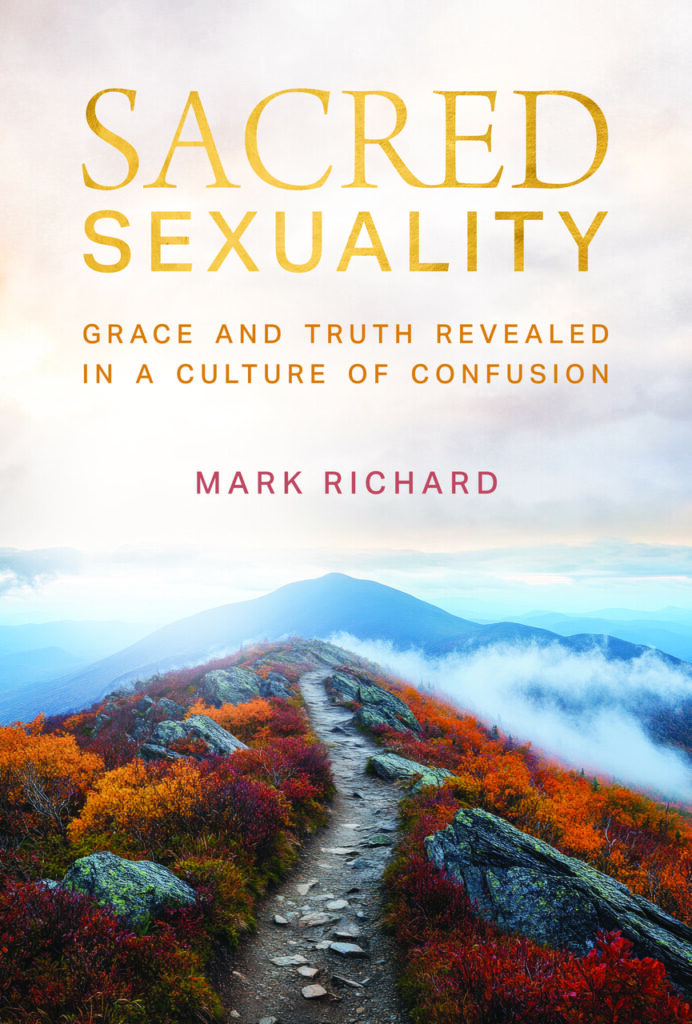
He is the author of Sacred Sexuality: Grace and Truth Revealed in a Culture of Confusion. Mark lives in Toledo, Ohio, near his daughter and granddaughter. You can find more information on his website: www.MarkRichardMinistry.com


My life has been full of divine appointments. Lately it seems like every week God sets me up with a life-changing conversation. I’ve learned that when we’re willing and available, God is always at work. Sometimes He asks us to do something that doesn’t make sense at the time, but later we realize He was arranging something far bigger than we could see.
One day I was preparing a meal for a team that was visiting us. I kept hearing that I needed to prepare salsa. I argued with myself, saying, “I don’t have anything for salsa. I would need to go to the store.” But I couldn’t shake it, so I went.
At the store I ran into a woman who was also picking out Roma tomatoes. “Are you making salsa?” she asked me. When I said yes, she asked if I had a recipe and who I was making it for.
I told her I was making it for a team because I am a missionary. Immediately, she started to cry. I asked if she had someplace to go and invited her to come back to my house with me. She said yes.
Sometimes He asks us to do something that doesn’t make sense at the time, but later we realize He was arranging something far bigger than we could see.
As we talked at my home, she began sharing details about her life, and I began sharing parts of my own story that I don’t normally tell people. It quickly became clear that those experiences spoke directly to what she was going through. They were exactly what she needed to hear that day.
Finally, she confessed, “I told God if He was real, to send me someone who believed in Him, or I would kill myself.”
You know what’s funny? I never made the salsa. It was never about the salsa.
I’ve learned not to lean on my own understanding. When God nudges us to do something, we often want to know why before we obey. But sometimes we don’t see His purpose until afterward. If I had waited until it made sense, I would have missed that divine appointment completely.
That seems to be happening a lot lately.
The day before I flew to visit my daughter in Springfield, Oregon, I had to get new tires for my car. After striking out at three different tire stores, I finally ended up at Pep Boys near the border. There was only one other person waiting.
He began telling me he had recently been diagnosed with Stage 4 cancer. He said it was so hard to get in to see the doctor because of the waiting lists. Then he quietly said, “I guess I’ll just die.”
I asked him, “Where will you go when you die?”
He got very quiet. I asked if he believed in God, and it opened the door for us to talk. I could tell he didn’t really know the Lord. I don’t know whether he accepted Christ that day, but I know I had the opportunity to share with him. Maybe someone else will water that seed. I believe that was another divine appointment.
You know what’s funny? I never made the salsa. It was never about the salsa.
The very next day I boarded my flight to Oregon. The woman in the window seat beside me was a Christian. Right away, we started talking about the Lord and prayer. She was a real prayer warrior. I was in the middle seat, and a man sat beside me on the aisle.
About an hour into the flight, the woman sitting directly in front of us suddenly stopped breathing. The man beside her realized something was wrong, alerted her husband, and soon a doctor on the plane pulled her into the aisle and began CPR.
The woman beside me and I immediately began praying and speaking life over her. Thankfully, she came back.
A little while later the man sitting next to me tapped me on the shoulder and said, “I heard what you said.”
I asked, “What did I say?” (We had been talking about the Lord for the whole flight.)
He replied, “You said, ‘Life is short.'”
“It is,” I said. “And where you go when you die is so important.” That opened the door for me to share Jesus with him.
Looking back, I can’t help but marvel. God placed a prayer warrior beside me, seated the woman who needed prayer directly in front of us, and had a doctor on board. At the same time, He gave me an opportunity to talk with the man beside me about eternity. God arranged every seat on that plane for His purposes.
When I got off the plane, my daughter Sherry asked, “Mom, what’s your story today?”
I said, “Oh, Sherry, you’re not going to believe it.”
There have been so many moments like that over the years.
Once, while my husband and I were itinerating, I sat next to a woman on a plane who told me she was traveling the world because she only had three months to live.
God is already at work in people’s lives;
He simply invites us to join Him.
I said, “Oh my goodness, you only have three months to live! You’re almost going to meet your Maker!”
When she told me she used to go to church, I asked if I could pray for her. She said no. We kept talking, and eventually she mentioned that her back was hurting terribly. This was completely out of character for me, but I asked if I could rub her back. She leaned forward and said yes.
As I began rubbing her back, I felt the Holy Spirit come over me, and I started singing, “Be still and know that I am God.” When I finished, she quietly asked, “Would you pray for me?” This time she was ready.
I prayed with her and had the privilege of leading her to the Lord that day. When I got off the plane, my husband, who had been sitting three rows away, asked, “What was going on back there? I heard you singing.” I would never have done something like that on my own. It was definitely the Holy Spirit.
I’m becoming convinced that divine appointments really are everywhere. They happen on airplanes, in restaurants, at tire stores, in grocery stores, and wherever else God leads us.
Our part is simply to be available.
Not every conversation ends the way we wish it would. Sometimes we have the privilege of seeing someone place their faith in Christ, but other times, we just plant a seed. Someone else may water it later, and we trust God to bring the increase. When we are faithful to share His love, we can leave the results in His hands. God is already at work in people’s lives; He simply invites us to join Him.
About the Author
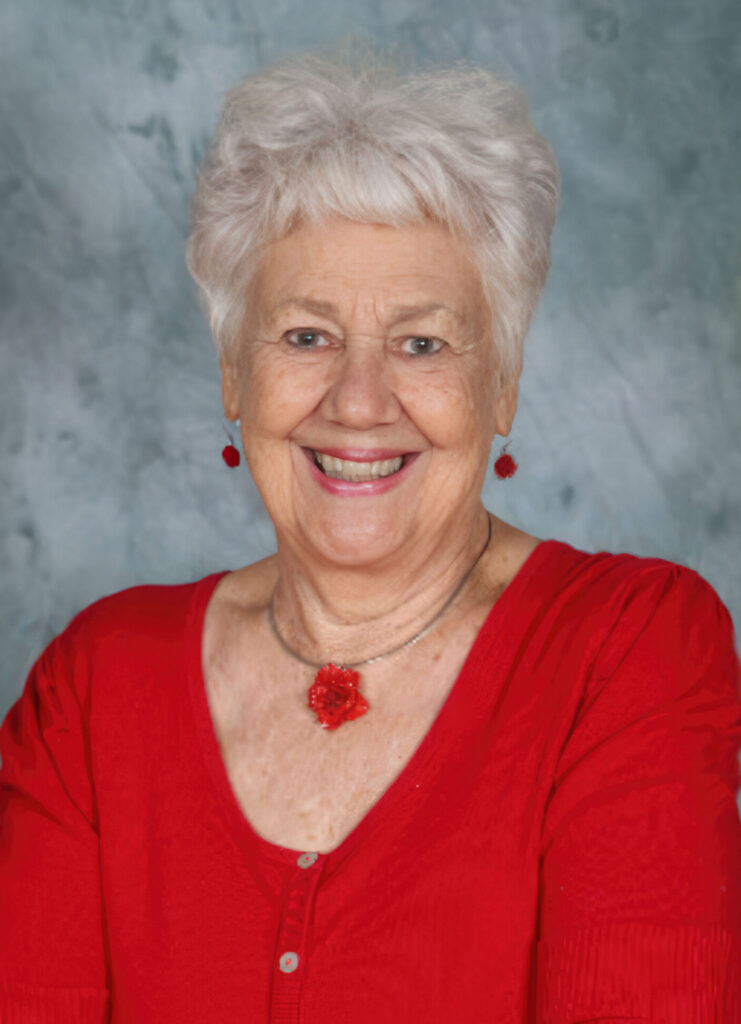
Fayth McConnell has felt God’s call on her life since childhood. She was blessed to share sixty-nine years of marriage with her husband, and together they raised one son, two daughters, and a brother. Throughout their life and ministry together, Fayth and her husband faithfully served the Lord as pastors and Open Bible missionaries to Mexico. Since 1998, they have shared the love of Christ and ministered to others throughout Mexico. Fayth continues to serve as an Open Bible missionary, carrying on the call God placed on her life many years ago.


Ruth Brauer spent decades wondering about the brother she never got to know. Born with Down Syndrome in the 1960s, he’d been sent away with little explanation, and she was discouraged from asking questions. After years of dead ends, a series of connections only God could have orchestrated led to the reunion she’d been praying for. Sixty years after his birth, Ruth finally saw her brother for the first time.
It was March 1960. Ruth was about to turn seven when her baby brother was born on March 8th at Iowa Methodist Hospital. The excitement of finally having a brother to join her and her three sisters quickly turned to confusion as she was unable to meet him. Later, she learned he had Down Syndrome and that doctors had advised her parents to place him in a care facility at the nearby Woodward State Hospital.

“Back in the sixties, that’s just what you did,” Ruth shared. “But I know it tore my parents apart.”
Questions about Alan were shut down. Ruth didn’t know where he was or even his exact birth date.
“I always wondered about him, but I’d get in trouble when I asked.”
Even without knowing him, Ruth had always felt drawn to him. That compassion shaped much of her life. After being invited to Journey Church in 2016 by a friend, Ruth was especially moved by the church’s outreach events for children with special needs. As a barber, her favorite clients were those with special needs, and she also volunteered for years with the Des Moines Special Olympics.
That’s where the first breakthrough came.
One day, she struck up a deeper conversation with a fellow volunteer named Ray. He mentioned he had worked at Woodward State Hospital starting in 1959. Ruth’s attention snapped into focus.
“My brother was there in 1960! His name was Alan Politsch.”
Ray’s reaction was immediate. His eyes widened and he began to walk away.
“Wait—what did I say?” Ruth called after him.

I had my hand on the table, and suddenly he was holding it.
“I’m not allowed to talk to you,” he replied. “Your parents banned me from talking to you.”
Still, she pressed him for one thing: a birthdate.
“Please, my parents are gone. I just want to find my brother.”
Before the day ended, Ray quietly gave her the month and day. It was enough to start, but not enough to get through the wall of privacy protections. Every group home she contacted turned her away.

Years passed.
Then another door opened—this time at a food pantry. Ruth shared her story with a volunteer named Bob, who offered to connect her with someone in the state department.
“They may not even call you,” he warned.
But they did.
The woman on the phone didn’t give her name, but simply said, “Bob said I needed to hear your story.” Ruth told her everything she knew: names, dates, places, family history. Weeks later, the phone rang again.
“Hi, this is Michelle,” the voice said. “I’m Alan’s guardian.”
Tears falling, Ruth began to speak.
“I don’t want to take anything from you. I just want to know he’s okay… maybe see a picture. And someday, maybe meet him.”
As she spoke, Ruth’s phone began to ping. Michelle was sending photos.
The call came in 2021, but it would take almost two years to build enough trust for a visit.
In August of 2023, Ruth was invited to a staff meeting at Alan’s care facility. As she sat in the room with nine other employees staring at her, Michelle walked into the room, Alan beside her, and guided him to the seat right next to Ruth.
I always felt like he was close by,” Ruth said. “I just didn’t know he was five miles away my whole life.
“He kept looking at me, nodding, with this little crooked smile,” Ruth said. “I had my hand on the table, and suddenly he was holding it.”
A nurse watching over video spoke up: “He knows you’re his sister.”
The bond was immediate and mutual.
“I always felt like he was close by,” Ruth said. “I just didn’t know he was five miles away my whole life.”

Since that day, they’ve spent birthdays and holidays together.
“He’s the best,” she said. “He fits right under my arm—he’s tiny. He loves Santa, the color red, Coke, and sunglasses.”
But the reunion has come with weight, too. Now 66, Alan’s health is declining, and Ruth has been asked to help plan his funeral.
“I just found him,” she said. “And now I’m helping plan his funeral… But he’s mine. He’s my baby brother. The one I waited for when I was seven.”
Looking back, Ruth continues to uncover the fingerprints of God. Ray, the man who first gave her Alan’s birthdate, later shared that he had cared for Alan during his first sixteen years at the hospital.
What are the odds?
When asked what this journey has taught her, Ruth doesn’t hesitate:
“Patience, persistence, prayer, and people.” That’s what it took to find her brother, and it’s what the Lord provided along the way.
Some stories don’t unfold quickly. Many of them take time, and it’s only later that we realize how God was working in our waiting. Ruth’s story serves as a reminder that no prayer is forgotten, no relationship is beyond reach, and that even in life’s chapters that feel long or uneventful, God is still writing.
About the Author

Hannah Bemis currently serves as the editor and director of Message of the Open Bible. She always wanted to do too many things when she grew up, and God has been kind enough to let her do most of them in different seasons. After seasons of mothering, teaching, writing, and staff pastoring, Hannah’s most recent adventure is planting and pastoring College Street Church in Newberg, Oregon, with her husband, Jordan. After Jesus and all her favorite people, she spends the remainder of her passion on pizza and dark chocolate in equal measure.