
From the Editor
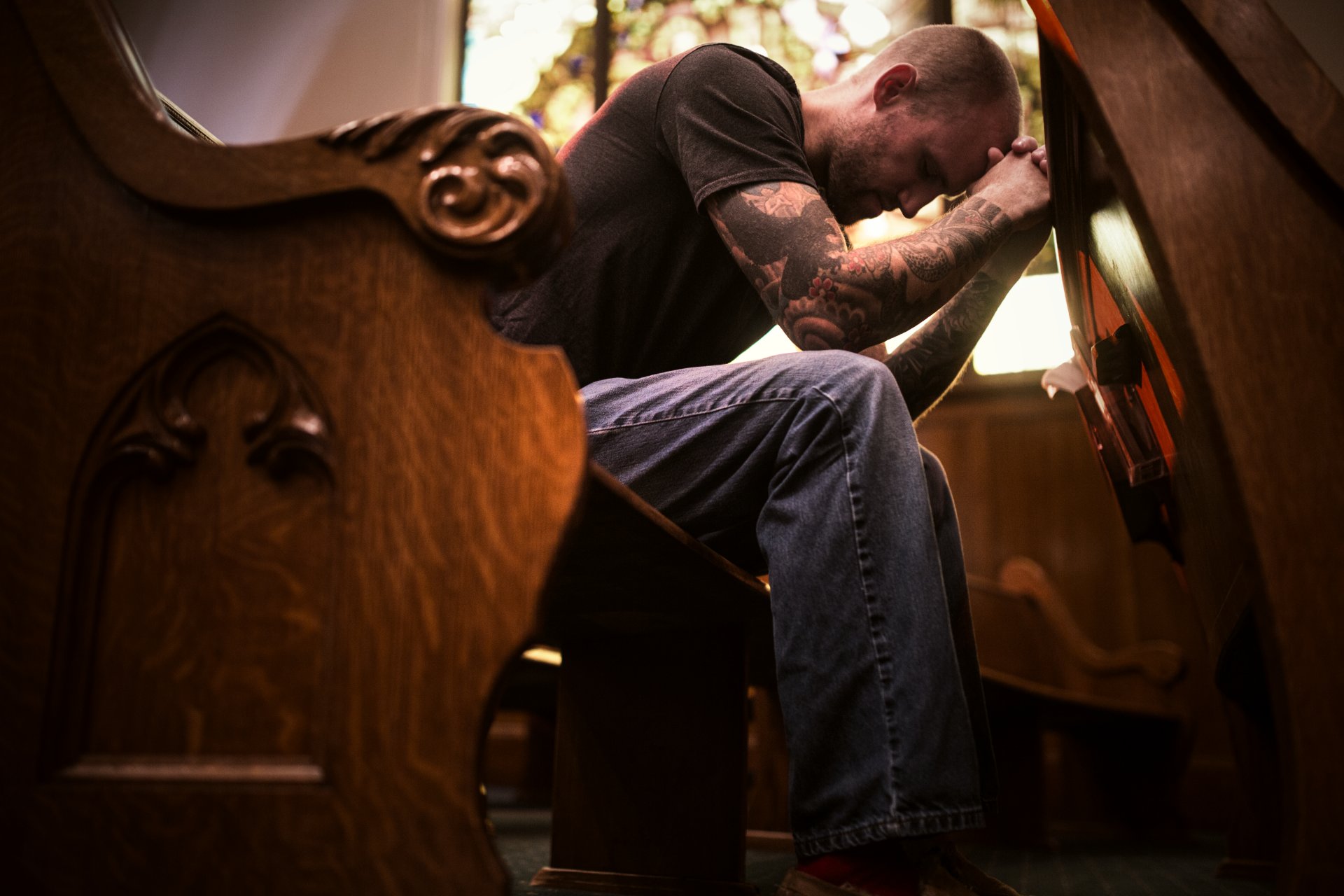
Pray Like You Mean It: We Often Give Up Too Easily

By Andrea Johnson
A few years back one of our daughter Leslee’s friends had a six-month-old son with an aggressive, malignant brain tumor. Doctors were not giving the parents much hope. In just days little Ari had gone from being a bouncing baby boy full of energy who loved to clap, babble, snuggle, and play peek-a-boo to not being able to hold his head up.
Leslee knew she could count on us and our friends to pray. But she had one stipulation: She didn’t want anyone praying mealy-mouthed prayers that lacked faith.
Honestly, the request made me feel a little like the father of the demon-possessed boy who had brought his son to Jesus to be healed (Mark 9:14-27, NLT). The boy’s father prayed his own mealy-mouthed prayer: “Have mercy on us and help us, if you can.”
I wonder if Jesus was a bit insulted as He answered, “What do you mean, ‘If I can’?” He then placed the responsibility for the healing squarely on the shoulders of the boy’s father when he said, “Anything is possible if a person believes.”
I love the father’s honesty as he replies, “I do believe, but help me overcome my unbelief!”
If I’m honest, I know deep down that God can do ANYthing! But I’ve also learned that His ways are not always mine. Healing doesn’t always take the form I want it to nor does it always occur on my timetable. So when I pray for healing, I wonder, What if God chooses not to heal? What if I’m not praying with enough faith? I think about the stories in the Bible of people who were healed. At some point, they died! In fact the Bible tells us that “each person is destined to die once” (Hebrews 9:27). Even Lazarus, whom Jesus raised from the dead, is no longer with us. Paul instructed Timothy to take a little wine to help with his stomach issues (1 Timothy 5:23). And on more than one occasion Paul had to leave one of his ministry partners behind because they were sick (2 Timothy 4:20). As well, a saint’s arrival into heaven is a glorious event.
Thankfully, God’s ability to heal doesn’t depend on us or whether we understand the concept of healing. And if we ask Him to, as did the father in the story, God will even help us overcome our unbelief. But to do that, we have to look to Him, not the medical reports nor the stories from the “negative Nancys” seeming to pop up out of the woodwork, so eager to share their sad tales as soon as we get a grim diagnosis. We need to immerse ourselves in Scriptures and acknowledge what a gracious and awesome God we serve. He’s the One who created and sustains the entire universe! And He’s the One who notes every tear that trickles down our cheeks. We need to recount the countless prayers He has answered for us in the past.
Thankfully, God’s ability to heal doesn’t depend on us or whether we understand the concept of healing. And if we ask Him to, as did the father in the story, God will even help us overcome our unbelief. But to do that, we have to look to Him, not the medical reports nor the stories from the “negative Nancys” seeming to pop up out of the woodwork, so eager to share their sad tales as soon as we get a grim diagnosis.”
When any of our seven grandchildren ask me for a snack, they know that I am able and more than willing to provide that for them. In fact, soon after our grand-twins were big enough to walk, upon their arrival they would immediately make their way to our kitchen table and climb atop the bench, expectantly awaiting their treat. I cherish those memories! And trust me, if the kids think I haven’t heard their request, they will not simply give up and go play, not if they are really hungry. When spending the night, my granddaughter used to come into our room at 4:00 in the morning and whisper excitedly, “Grandma, let’s go make breakfast!” These precious little souls will keep asking until I say yes and provide the treat (usually a chocolate chip cookie because that’s my favorite!) or until I say no because it’s too close to mealtime. Sometimes, not often, I may offer an apple or carrots if they’ve already had too much sugar. They are always appreciative, and I am more than happy to continue this tradition. They KNOW I love them beyond measure.
I wonder, do we KNOW God loves us and that He has the ability to heal us? If so, that should affect the way we pray. Are we willing to accept the fact that He may use doctors or a healthier lifestyle to provide the healing?
What about the times in the Bible where someone was not healed? Paul’s thorn in the flesh is a good example. Paul didn’t pray a mealy-mouthed prayer and then abandon his request. He kept asking God until He was certain of the answer.
So to keep me from becoming proud, I was given a thorn in my flesh, a messenger from Satan to torment me and keep me from becoming proud.
Three different times I begged the Lord to take it away. Each time he said, “My grace is all you need. My power works best in weakness”
(2 Corinthians 12:7-9).
We often give up too easily, before we’ve heard God’s answer and lacking the belief that He would heal us. And yet faith is not something we have to conjure up to get our own way. Faith is trusting in a God who is big enough and gracious enough to give us what is best for us. We need to pray like we believe that!
What about Ari? Thanks for asking! He has medical challenges, but he is winning his fight with cancer and improving daily. We continue to fight with him on our knees.







Several years ago, I had an enlightening moment with my dental hygienist. During the course of my health history interview, Christy, to whom I was a new patient, gradually pulled out the previous seven years of my life story. “So, you moved to L.A. after having your first son, then when you were pregnant with twins you moved here to Spokane?”
“Ugnnnhhh,” I assented around her gloved fingers in my mouth.
“Wow, twins, no wonder you haven’t had time for regular dental checkups,” she said.
(Sure, that’s the reason . . .)
“So, then it was two years after having twins that you found out your daughter was diabetic?” She removed her hands and awaited my reply.
“Uh-huh . . . and then this past year is when I had my back surgery,” I said with a cringe, knowing how dramatic those years of my life sounded on paper.
“Wow,” she said as she stuck the X-ray machine in my mouth, “you guys have really had a cool life.”
What a gift life is. In every bit of its messy glory, life is nothing less than a gift, a kiss on the brow from the Father who adores us. I am learning, ever so slowly, not to wish away the chapters of my story that I didn’t write. I’m learning, as my high school English teacher taught me, never to erase because you never know what can come from the sentences in your story that seem undesirable at first glance.
… every time I’ve broken
through discomfort, there’s been
a glory-soaked moment on the other side.
I’ve come to realize that many of the most meaningful stories are ones their authors never would have chosen for themselves. That truth echoes throughout this issue of Message of the Open Bible, where story after story reveals God’s beautiful work through circumstances that were anything but easy. If I had erased all the sentences in my own story that caused me discomfort, I would have nothing of consequence left; my life would be a stack of blank sheets of paper. Every uncomfortable moment led to a revelation of reality: who I really was, who God really was, what life was really about.
I’m learning to press into moments of discomfort instead of run from them, and here’s why: every time I’ve broken through discomfort, there’s been a glory-soaked moment on the other side. The fire, the waves, the wind — they’re all worth it, and we can pass through them knowing that God is both with us and waiting for us on the other side.
“And now, isn’t it wonderful all the ways in which this distress has goaded you closer to God? You’re more alive, more concerned, more sensitive, more reverent, more human…” (2 Corinthians 7:11 MSG).
We become more human, more fully ourselves after we’ve suffered some. While suffering was never part of God’s original design, He nevertheless uses it to restore us to His original design for us. As suffering draws us closer to Him, we begin to look more like the person He made us to be. Isn’t it incredible that to become “more human” means, in the truest sense, to become more like God? After all, humans were originally created in His image (Genesis 1:26). There could be no greater privilege, no sweeter gift.
We become more human, more fully ourselves after we’ve suffered some.
There is a passage in C.S. Lewis’s The Magician’s Nephew when Aslan the lion (the God-character in the story) has just brought to life all of creation, including the formerly “Dumb Beasts” of the land. Once everyone and everything has been awakened to new life, Aslan says something remarkable: “Creatures, I give you yourselves” (p. 118). This line, which incidentally makes me cry every single time, captures it all: our real, God-designed selves were given to us as a gift. Like Aslan, God crafts our lives and presents them to us unapologetically, fully certain of their worth and sufficiency. If He is so certain of this gift’s value, then I pray to be also.
Aslan reminds his creatures of the shells they came from, cautioning them not to return to those shells, not to forsake the vibrant and authentic life he has blessed them with. Aslan’s reminder has become my prayer. The real life God has gifted me with is worth everything I passed through to obtain it, and I never want to give it up. May I never return to the shell from which I came.
Here, then, is my life, infused with suffering and joy, kissed by God. This is my story, and I refuse to despise it.
About the Author

Hannah Bemis currently serves as the editor and director of Message of the Open Bible. She always wanted to do too many things when she grew up, and God has been kind enough to let her do most of them in different seasons. After seasons of mothering, teaching, writing, and staff pastoring, Hannah’s most recent adventure is planting and pastoring College Street Church in Newberg, Oregon, with her husband, Jordan. After Jesus and all her favorite people, she spends the remainder of her passion on pizza and dark chocolate in equal measure.

Want some Easter grass? Tiny hands held out bright green plastic grass as a gesture of friendship from the four-year-old South Korean girl, who I later learned was named Sammy. Sammy became one of my earliest friends and was architect of one of my earliest Easter memories.
To be honest, the Easter memories from the first half of my life revolve more around Easter grass, brightly colored candy-filled eggs, and straw Easter hats than they do the resurrection of Jesus.
To be honest, the Easter memories from the first half of my life revolve more around Easter grass, brightly colored candy-filled eggs, and straw Easter hats than they do the resurrection of Jesus. Easter was my mom’s favorite holiday, and we had several traditions. After buying and wearing a special Easter church outfit, we would eat out at a nice restaurant before our annual Easter basket search commenced. Instead of hiding individual eggs, my parents would hide the entire pre-filled basket. My siblings and I have formative memories of searching for hidden Easter baskets, which my father would hide in progressively more difficult places each year of my life. One of the four siblings would inevitably end up weeping because the hiding place was just too hard and it was so unfair. Ahhh, Easter.


A few of Hannah’s favorite Easter memories with family and friends.
It wasn’t until college that I began to grasp the weight and holiness of this time of year. I remember attending a sunrise Easter service and sensing the presence of God in a way that brought tears of gratitude to my eyes; He was alive and He was right here with me. Another memory involves attending a Serbian Orthodox Good Friday service as a college class assignment. The service was an all-night candlelight vigil. At scheduled times, we marched around the perimeter of the church while speaking liturgies about how Christ had “trampled death by death.” This was my first time sitting in the darkness (literally!) of Christ’s death.
This deeper internalization of both Christ’s death and resurrection stayed with me throughout my adult years. Easter became one of my own favorite holidays as I hid my own children’s Easter baskets while also making space to sit with what Christ had done for me.
… the responsibility of Easter has at times overshadowed its holiness.
And then I became a pastor. One might assume that serving as a spiritual leader would make this holy holiday feel even holier—that my anointing would allow me to experience Easter in a more present, rich way. Maybe this is true for some pastors. For me, the responsibility of Easter has at times overshadowed its holiness. There have been holy and joyful moments, such as experiencing Christ powerfully while leading an Easter worship set or the time I watched my husband dance in a bunny suit in children’s ministry. But there have been many more moments driven by the pressure to perform: to hit the harmonies just right, to fill 1,000 more eggs, to think of a really creative service opener, and to find the perfect outfit, not because it’s fun but because it’s EASTER and first impressions matter.
I know in my head what Easter is all about. I’ve experienced Christ’s death and resurrection. But the ability to experience the truth of Easter while also planning the event of Easter has proven elusive. The struggle has been about as frustrating as looking for an Easter basket that is hidden just a little too well.
“Do not be afraid, for I know that you are looking for Jesus, who was crucified. He is not here; he is risen, just as he said” (Matt 28:5-6).
I forget that Easter began with a search for Jesus. His resurrection was the onset of a search for His
presence …
I forget that Easter began with a search for Jesus. His resurrection was the onset of a search for His presence, a search that continued for the remainder of His disciples’ lives. He would pop in for a long walk or a fish breakfast, then would recede for a while. He would come as blinding light or in a dream, then recede again. While it is true that many of our traditions (both secular and Christian) can get in the way of experiencing Jesus, it is also true that much of life is a search for His presence—and sometimes the search is the point.
And there is always the promise of finding Him.
“He has risen from the dead and is going ahead of you into Galilee. There you will see him” (28:7).
You will see Him. Whether you are a mother filling eggs with candy for your kids, a college student internalizing your faith for the first time, a ministry leader feeling exhausted, or a pastor preparing a special service for twenty or 200 people, you will see Him. And maybe, as we relax into the truth of this promise, we can also remember that if He intends to make Himself known to us, He will do the same for those we love and lead. Maybe we can take some of the pressure off Easter, trusting that His promise of presence will hold true no matter how we choose to celebrate. As you prepare for and celebrate Christ’s resurrection this season, I hope you’ll enjoy the articles in this issue. We have stories about how Jesus is moving in new ways: in Africa, in a West Coast church plant, and in a Florida Next Gen leader with a huge heart for missions. God is also moving through old, rich traditions, as you’ll discover in this story. As you read, take a moment to recognize the familiar presence of God in each story. You will see Him!
About the Author

Hannah Bemis currently serves as the editor and director of Message of the Open Bible. She always wanted to do too many things when she grew up, and God has been kind enough to let her do most of them in different seasons. After seasons of mothering, teaching, writing, and staff pastoring, Hannah’s most recent adventure is planting College Street Church in Newberg, Oregon, with her husband, Jordan. After Jesus and all her favorite people, she spends the remainder of her passion on pizza and dark chocolate in equal measure.

When I was in first grade, I attended William Carey Academy, a small private school in Pasadena, California, that primarily served the children of missionaries who were on home assignment. The school was on the campus of the U.S. Center for World Mission, a collaborative mission base, which meant that I got to learn alongside students and be taught by teachers who had traveled the world. One specific perk of this season was learning Spanish. My teacher was a missionary to Guatemala who had a passion for the language and the Guatemalan people.

While most of my Spanish has left me, my love for Hispanic nations, culture, and people has not. One of the most fun parts of my job as Message editor has been working with teammates like Mindy Khanthavixay (Mexican-American), Areli Estrada (originally from Mexico), and Ximena Urra (originally from Chile) all of whom are fluent in Spanish. Without these women, it would have not been possible to launch our fully translated Spanish issues of Message of the Open Bible. As our current issue of the magazine is being released in tandem with Hispanic Heritage month (September 15 – October 15), we would be remiss not to honor our many Hispanic coworkers, pastors, and ministry partners within Open Bible. We would not be who we are without you!

Open Bible is currently active in eighteen Spanish-speaking countries and has 556 churches within these countries. Our Hispanic Ministries within the states is also flourishing with twenty-eight churches across the nation, many of which are leading the charge in church multiplication. I am so excited for you to read the story of Melissa Alvarez, who is a second-generation Mexican American and a second-generation church planter. You will also love reading the testimony of Mary Lou Wolfe, who grew up in a Hispanic Open Bible church (Templo Santo in Antioch, California) and whose parents come from Nicaragua and El Salvador. Mary Lou’s miraculous kidney transplant has made it possible for her to continue a vibrant ministry where she currently serves at Life Church in Concord, California.

In addition to these articles by Hispanic authors, don’t miss out on our other great articles, including a thoughtful reflection on modern discipleship by Gary Khan and
an important global missions update from Vince McCarty. And if you didn’t catch our special edition President’s Perspective article, you’ll want to read “The Power of We” by President Michael Nortune.
I am proud to be part of a movement that has honored and advocated for ministries in many languages, cultures, and nations. Let’s continue to celebrate every part of our Open Bible family as we fulfill the Great Commission together.
Hannah Bemis currently serves as the editor and director of Message of the Open Bible. She always wanted to do too many things when she grew up, and God has been kind enough to let her do most of them in different seasons. After seasons of mothering, teaching, writing, and staff pastoring, Hannah’s most recent adventure is planting College Street Church in Newberg, Oregon, with her husband, Jordan. After Jesus and all her favorite people, she spends the remainder of her passion on pizza and dark chocolate in equal measure.